“I meant,” said Ipslore bitterly, “what is there in this world that truly makes living worthwhile?”
Terry Pratchett, Sourcery
Death thought about it.
CATS, he said eventually. CATS ARE NICE.”
In Terry Pratchett’s Discworld, Death, through his eternal career of dealing with mortals and dispatching them to their fate, has absorbed many human qualities. One of these qualities is a terrific fondness for cats. In Sourcery, Ipslore the wizard, in an argument with Death, asks what there is in the world that truly makes living worthwhile. Death replies, in his voice that is ‘as hollow as a cave, as dense as a neutron star’:
“CATS…CATS ARE NICE.”
The idea that cats are nice – indeed, much more than nice – has been around for millennia. The Ancient Egyptians’ worship of cats is well known, but it’s believed that domesticated pet cats were around even earlier. In 2004, the 9,500-year-old grave of a human with a cat was found in the Neolithic village of Shillourokambos, in Cyprus. The remains were buried with seashells, polished stones and other artefacts, suggesting that this was a person of some social status and the cat was at least tame, if not a domesticated pet as we would recognise one. Nowadays, there are around 220 million pet cats around the world.
The Man of Kent is a great lover of cats. He will stop to pet any cat he comes across in the street, show me almost every cat reel he sees on social media, and befriend all manner of feline waifs and strays on holiday. I remember having to eat dinner in a restaurant in Morocco with a cat on my foot because one particularly mangy specimen had clocked The Man of Kent as a soft touch, and parked itself underneath our table in hope of scrouging scraps. (This tactic succeeded. As I said, he’s a soft touch.)
Living with The Man of Kent means that some of his affection for felines has rubbed off on me, and I have adopted the mantra that (most) cats are nice. As a Leo, I already had some affinity with lions. Since meeting The Man of Kent, I’ve had pet cats who have been simultaneous sources of delight and infuriation. What I’ve learned is, whether you regard cats as regal, furry bundles of joy, or selfish little gits who only tolerate humans as food sources (usually leaving a trail of shredded destruction in their wake), you have to admire their nonchalant style and cheerful arrogance. And some of them are undeniably, insufferably cute.
Today on Medway, She Wrote: It’s International Cat Day, so we’re celebrating famous cats of Kent, from Bagpuss to Charles Dickens’ cat-turned-paper-knife, Bob. Enjoy!
What is International Cat Day?
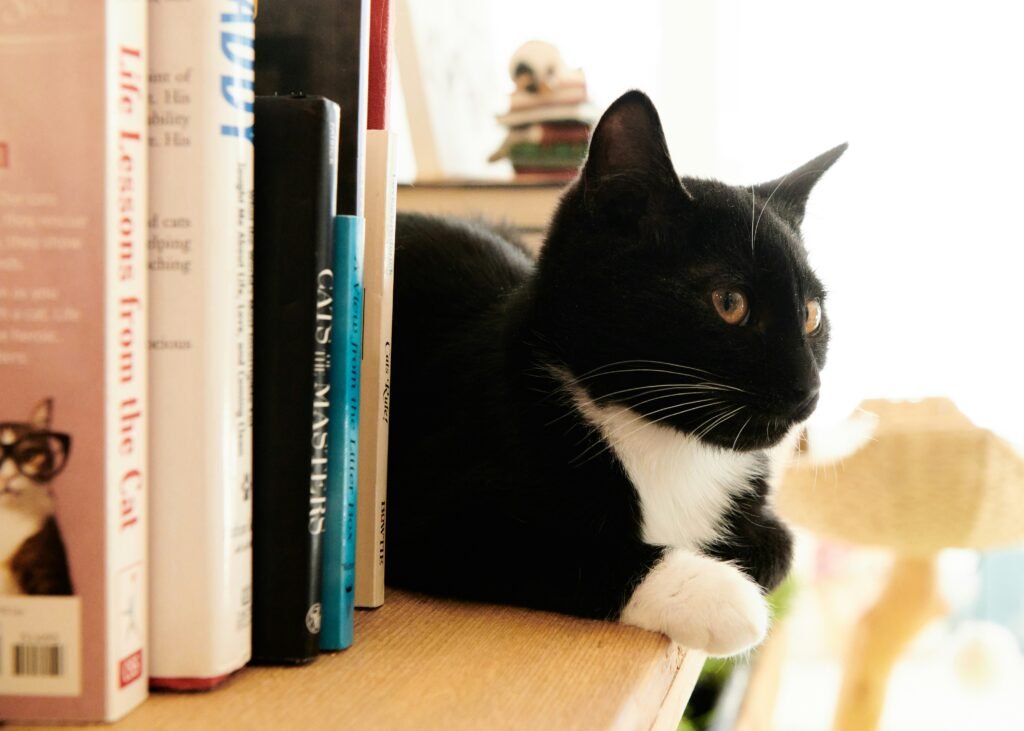
International Cat Day takes place annually on 8th August. It was started in 2002 by the International Fund for Animal Welfare, and since 2020 has been managed by British charity, International Cat Care.
International Cat Day’s aim is to raise awareness of cats, and ways to help and protect them. It’s also a global celebration of all things feline, and a perfect excuse to splash cat photos all over social media. (#InternationalCatDay trended in 47 countries in 2025.)
In 2026, the theme of International Cat Day is Cats for Climate, highlighting the fact that rescuing a cat saves around 1.5 tonnes of CO₂ compared to buying one from a breeder.
This year will also see the launch of the first ever Global Cat Census. Today, cat owners can upload a photo of their pet to help scientists track characteristics, and indoor/outdoor ratios across the globe. Cat lovers can also celebrate by taking part in #CatWindowChallenge2026.
(In case you’re wondering, and in the interests of balance, International Dog Day is 26th August.)
Right, onto those famous cats of Kent!
Famous cats of Kent!
Charles Dickens’ deaf cat, Bob
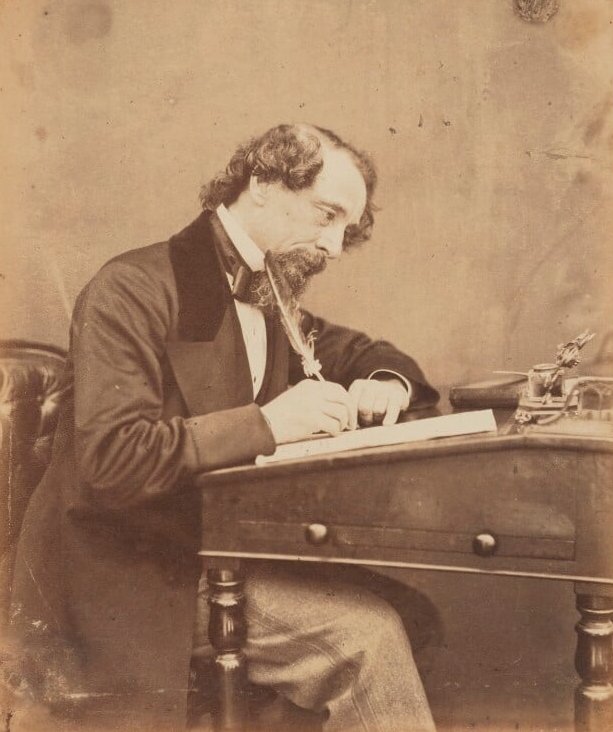
Noted Medway resident, Charles Dickens, had a whole menagerie of pets, including a talking raven, Grip, and a deaf cat named Bob. Writing about her memories of Bob, Dickens’ daughter Mamie recalled that he:
“became known by servants as ‘the master’s cat,’ because of his devotion to my father. He was always with him, and used to follow him about the garden like a dog, and sit with him while he wrote.”
Bob was so beloved that when he died, Dickens had one of his paws stuffed and attached to a paper knife. The knife’s blade is engraved, ‘C.D. In Memory of Bob 1862.’ Ghoulish, yes, but the Victorians were fascinated by taxidermy, and in those days, having part of your favourite pet stuffed and turned into a useful household object was not unusual. (Grip the raven was also stuffed).
Bob was born at Dickens’ home in Kent, Gad’s Hill Place. The Deaf Cat coffee shop in Rochester is named in tribute to him. The Bob paper knife is currently at the New York Public Library.
Speaking of the Victorians and their weird collecting habits…
The Mummified Cat at The Beaney
Cats were sacred to the Ancient Egyptians, and have been depicted in social and religious works as early as 1980BCE.
Because of the high regard in which they were held, many cats were mummified in the same way as humans. Archaeologists have discovered dedicated cat cemeteries at Bubastis, Saqqara and Speos Artemidos.
The Victorians enjoyed plundering such sites and bringing ancient treasures, including mummies, back home. One mummified cat found its way to The Beaney House of Art & Knowledge in Canterbury, where it’s on display today, its tiny little nose peeking out of its snugly wrapped bandages. Cute or creepy? Go and see it and decide for yourself. Courtesy of The Beaney, here’s a properly gruesome fact for you; in Victorian times, around 300,000 mummified cats were shipped to Liverpool for use as fertiliser. Delightful.
The famous old fat furry cat-puss – Bagpuss!
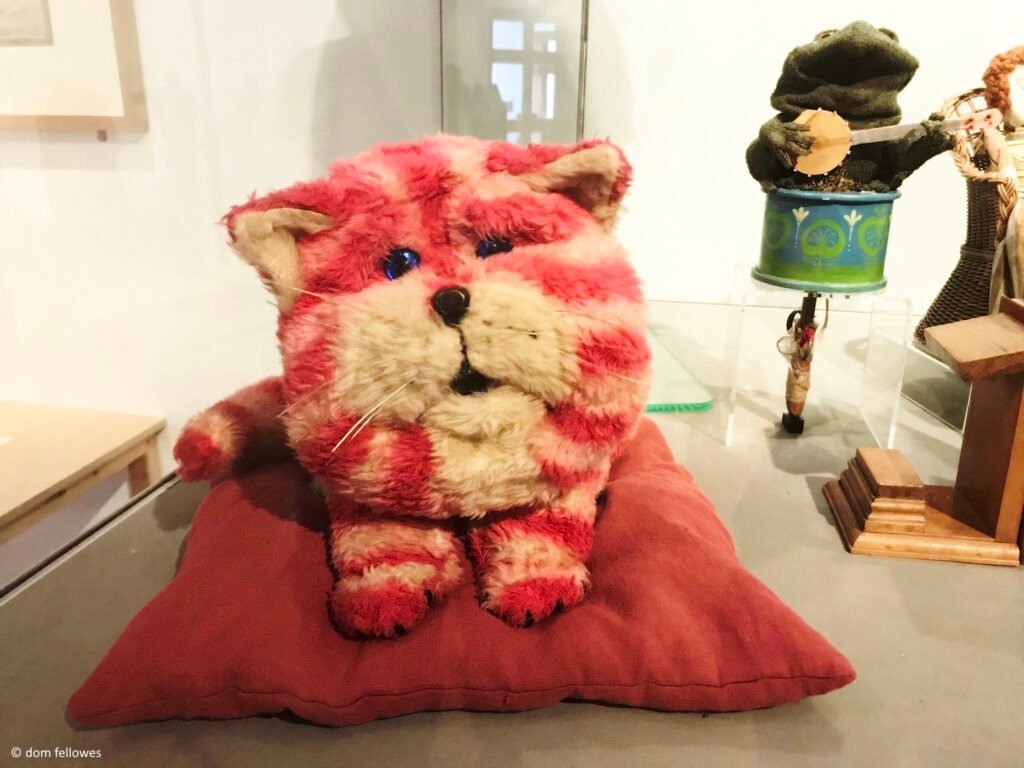
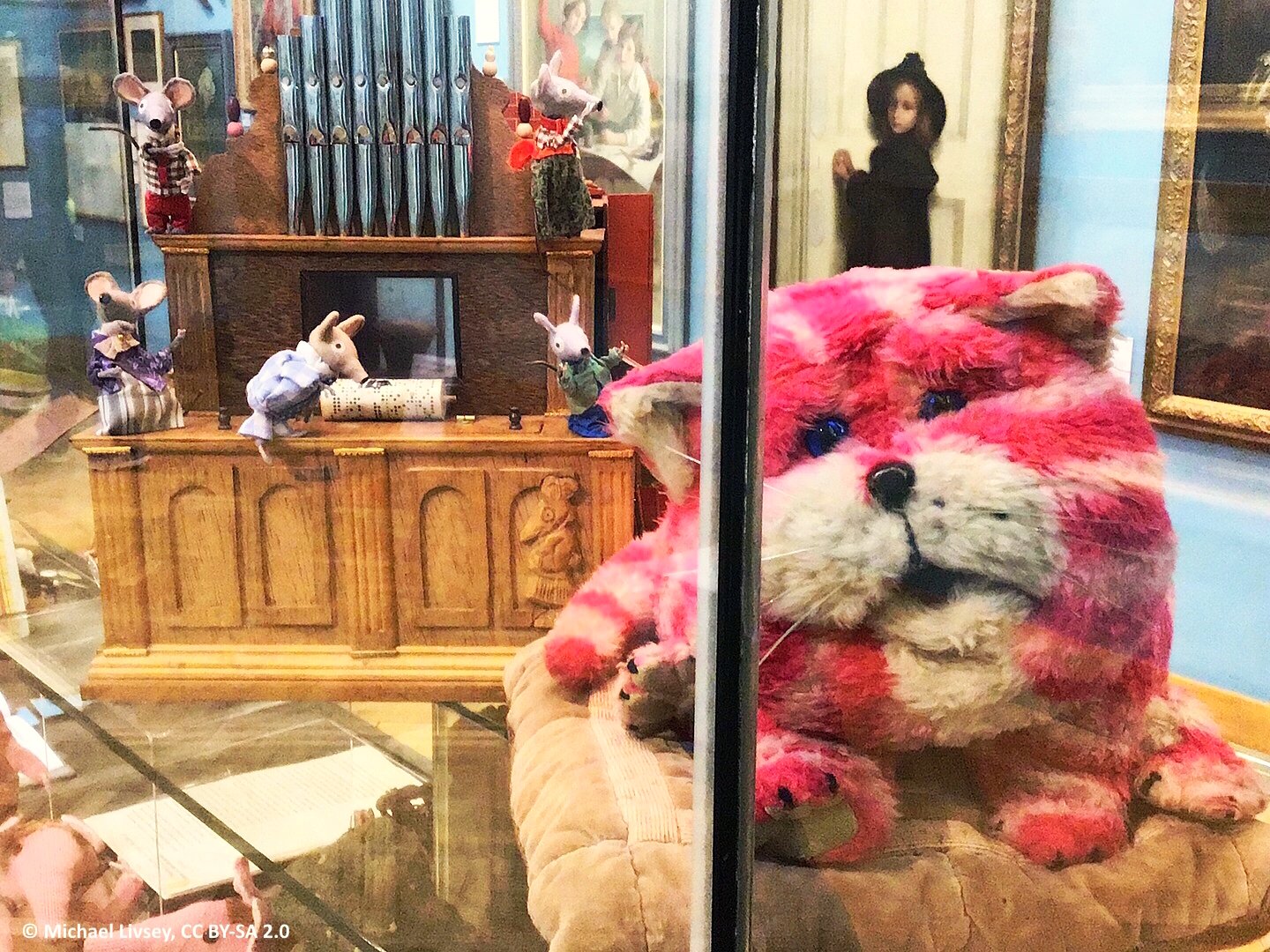
Originally broadcast in 1974 and beloved ever since, Bagpuss was created by Bafta-winning artists and puppeteers, Peter Firmin and Oliver Postgate. Bagpuss was filmed in Firmin’s barn in Blean, near Canterbury. That’s east of the River Medway, making Bagpuss officially a Cat of Kent! You can visit Bagpuss and friends at The Beaney House of Art & Knowledge in Canterbury.
Just 13 episodes of Bagpuss were made, all of them using stop-frame animation. Alongside Bagpuss, Firmin and Postgate created The Clangers, Noggin the Nog, Ivor the Engine, and more. Testament to the international popularity of Bagpuss and these other creations is the fact that a collection of Firmin’s artwork sold for over £400,000 at auction in August 2026.
Bagpuss is distinguished by his bright pink stripes, but was originally meant to be a marmalade-coloured cat. He got his trademark raspberry pink colour thanks to a fabric-dyeing disaster at a shop in Folkestone.
On the subject of marmalade cats, let’s talk about Jock…
Jock the Cat (and his many successors)
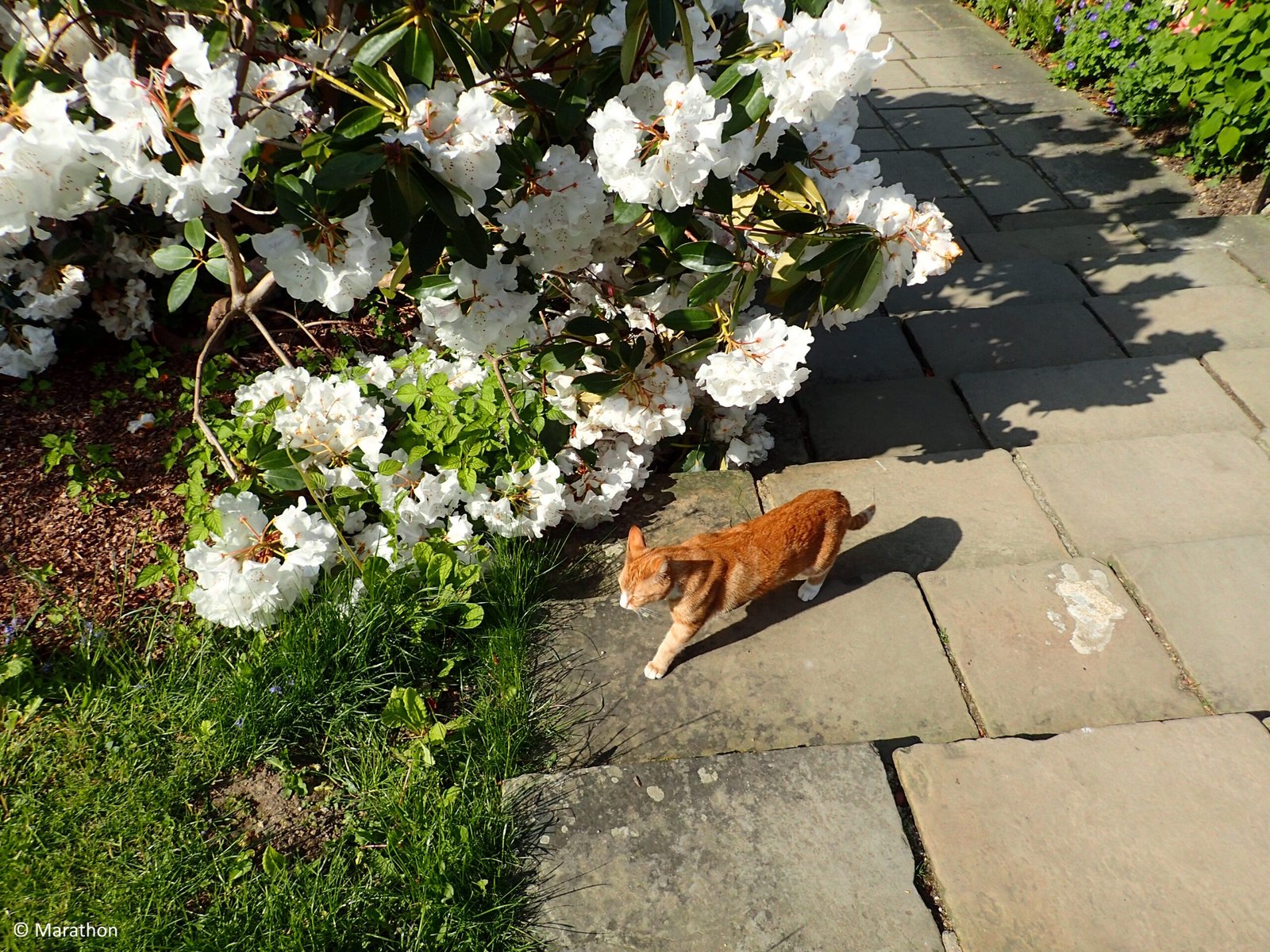
Winston Churchill’s country house in Kent, Chartwell, has been home to generations of marmalade cats, all called Jock.
The original Jock was given to Churchill by his good friend, Sir John ‘Jock’ Colville and named after him. I’m not sure whether being the Prime Minister’s cat makes Jock a civil servant like Larry the Number 10 Cat, or former ‘feline relations consultant’ Palmerston, but he certainly became a most cherished pet. Jock was also something of a scene-stealer, popping up in Churchill’s grandson’s wedding photos.
Chartwell was given to the National Trust in 1966, and Churchill’s family requested that there always be ‘a marmalade cat named Jock, with a white bib and four white socks, in comfortable residence.’ Chartwell is now on its seventh Jock, who is a rags-to-riches story. Jock VII was a six-month-old rescue kitten who arrived at Chartwell in May 2020 following the retirement of his predecessor, Jock VI.
Canterbury Cathedral’s not-so-holy trinity

Cathedral cats are becoming de rigeur across the UK. Southwark Cathedral has Hodge, Norwich has Budge, Exeter had Tom (now sadly passed). Canterbury Cathedral has had not just one, but three resident cats – Leo, Tiger and Lilly, who became internet-famous during the Covid-19 pandemic for gatecrashing the online sermons of the Very Reverend Dr Robert Willis. Taking a distinctly devil-may-care attitude, Tiger leapt onto the table mid-service, nicked some milk from the tea set and sauntered off. The same cat has form for pinching pancakes (also caught on camera). Lilly added some holy purring into another service, while Leo managed a live disappearing act under the Reverend’s robes.
Leo, Tiger and Lilly are not the only famous feline residents of this city though…
Gallivanting Griffin
Griffin the cat became a local legend in Canterbury, where he would roam the streets, charming residents and tourists alike. The University of Kent’s campus was one of his usual haunts, and according to Kent Online, he was also frequently sighted in a local Sainsbury’s and the Miller’s Arms pub. Griffin’s adventures inspired the creation of a Facebook page, Gallivanting Griffin, to ‘track the antics of Canterbury’s cheekiest cat.’ After sadly being hit by a car, Griffin has been immortalised in a mural by Kent graffiti artist, Catman, near The Penny Theatre.
Not far from Canterbury, live some of Griffin’s considerably bigger cousins…
Lions and tigers and lynx, oh my!
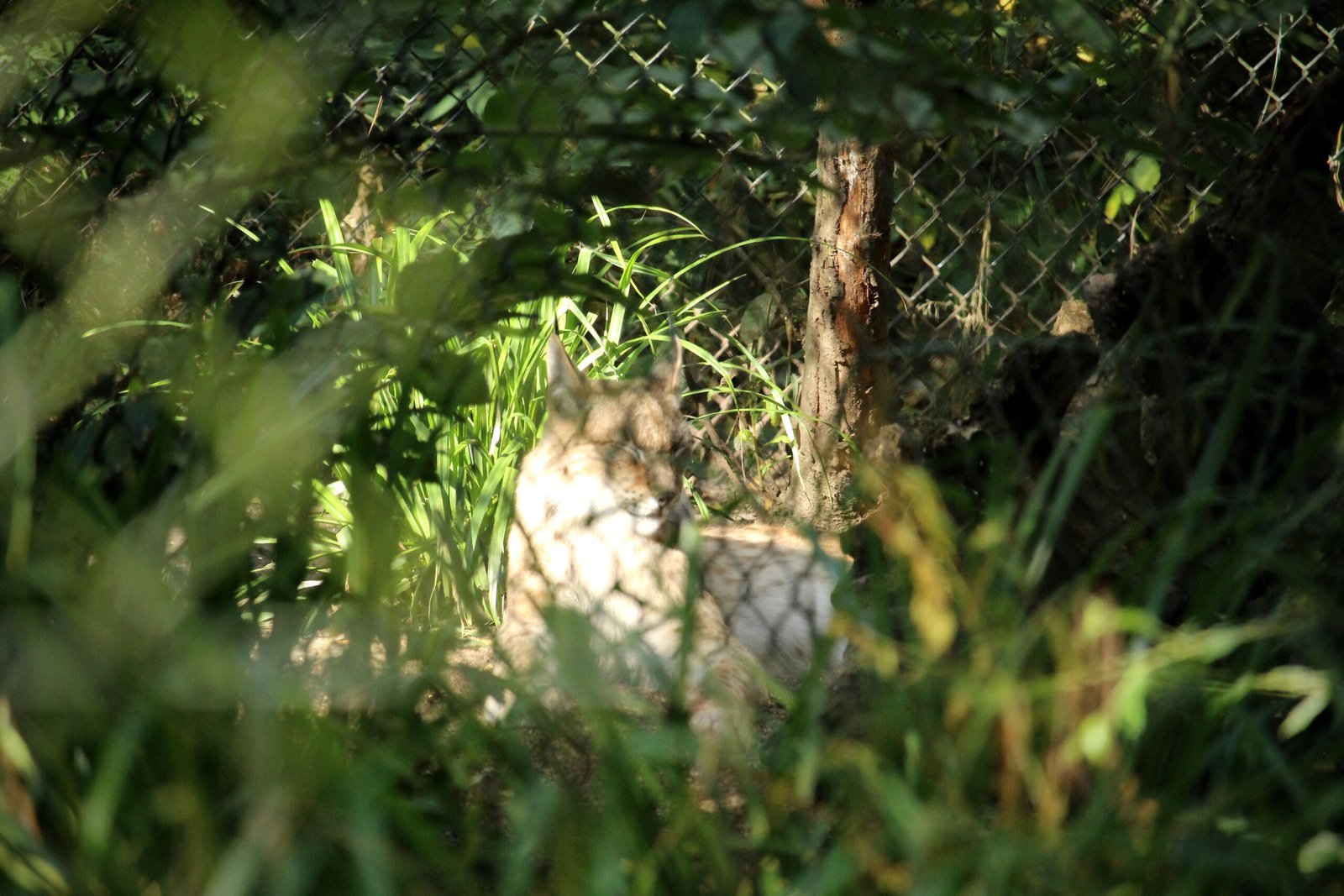
Nestled among 400 acres of Kentish woodland at Wildwood, near Canterbury, are European wildcats and the fiendishly tricky-to-spot Eurasian lynx. Further up the road at Smarden is the Big Cat Sanctuary, home to lions, tigers, leopards, puma, jaguars, cheetahs and more. Five of the lions, Yuna, Rori, Amani, Lira and Vanda, were rescued from Ukraine after the Russian invasion. The Big Cat Sanctuary is also home to Frank, the only Asian golden cat in the UK, and Maya the jaguar, who featured on BBC series Big Cats About The House. You can also visit big cats in Kent at Port Lympne and Howletts.
Handsome Sam
Whitstable has no shortage of stupendous pubs and bars, but cat lovers will be particularly drawn to The Handsome Sam micropub on Canterbury Road. It’s named after a real-life Handsome Sam, the former pet of the micropub’s owner. A cracking little place that’s well worth visiting if you’re in the area.
The Margate Festival of Cats
Do you think one day of celebrating cats just isn’t enough? Margate’s got you covered. It has a whole Festival of Cats, which celebrates ‘the psychology, sociology and whimsy’ of cats through exhibitions, events and workshops. The 2026 event was back in May, but you can still get in on the action by perusing the online exhibition space. The full festival takes place every two years, so mark your calendars for feline festivities in 2028.
And finally…
Ah, cats. What a conundrum. On the one hand, they’re generally regarded as some of the most self-absorbed, aloof creatures on the planet. Anyone who has lived with a cat has, at one point or another, despaired over shredded furniture, cleaned vomit off the rug, and had to rescue said animal from the strangest places. If you have a cat, you’re naught but their human servant, expected to cater to their every whim, fulfil their incessant demand for Dreamies, and put up with their me-me-me attitude without complaint. We are the Jeeves to their feline Wooster.
On the other hand, these furry devils charm us with their cheeky antics and abundant elegance. They can be the most loyal, loving and affectionate pets; the original Jock was beside Churchill on his deathbed. Their purrs produce endorphins in humans (though that’s apparently deliberate emotional manipulation) which is why petting a cat is so soothing. Their finer qualities have inspired the creation of Bapguss and other fictional felines who have become beloved the world over.
More and more of us want a piece of the cat action. There’s 220 million pet cats around the world. Cat cafes, which started in Taipei in 1998, have boomed in popularity. Japan alone has 300 cat cafes, and several have opened in Kent.
Terry Pratchett, a huge fan of cats, wrote a whole book about them, The Unadulterated Cat. He describes many varieties of cat, including the ‘Real cat’, which has much in common with us humans. Pratchett says:
“Real cats are not simply self-possessed. Nor are they simply neurotic. They are both, at the same time, just like real people.”
Perhaps that’s why cats can entrance and frustrate us in equal measure; we subconsciously relate to something of ourselves in them. Perhaps that why millions of people have decided that, despite their feline foibles, ultimately, as Death puts it, CATS ARE NICE.
Thanks for reading! Have I missed your favourite Kentish cat or cat fact? Tell me in the comments!
If you enjoyed this post, you can subscribe to be notified of new ones using the subscribe button at the bottom of the page. You can also follow Medway, She Wrote on Instagram.


Leave a Reply