If I asked you to name something you associate with Canterbury, you’d probably say, ‘Archbishop of’, ‘cathedral’, ‘Thomas Beckett,’ or ‘pilgrims’. Or ‘cricket’, if you’re that way inclined.
If you asked me to name something I associate with Canterbury, I’d say ‘theatre’.
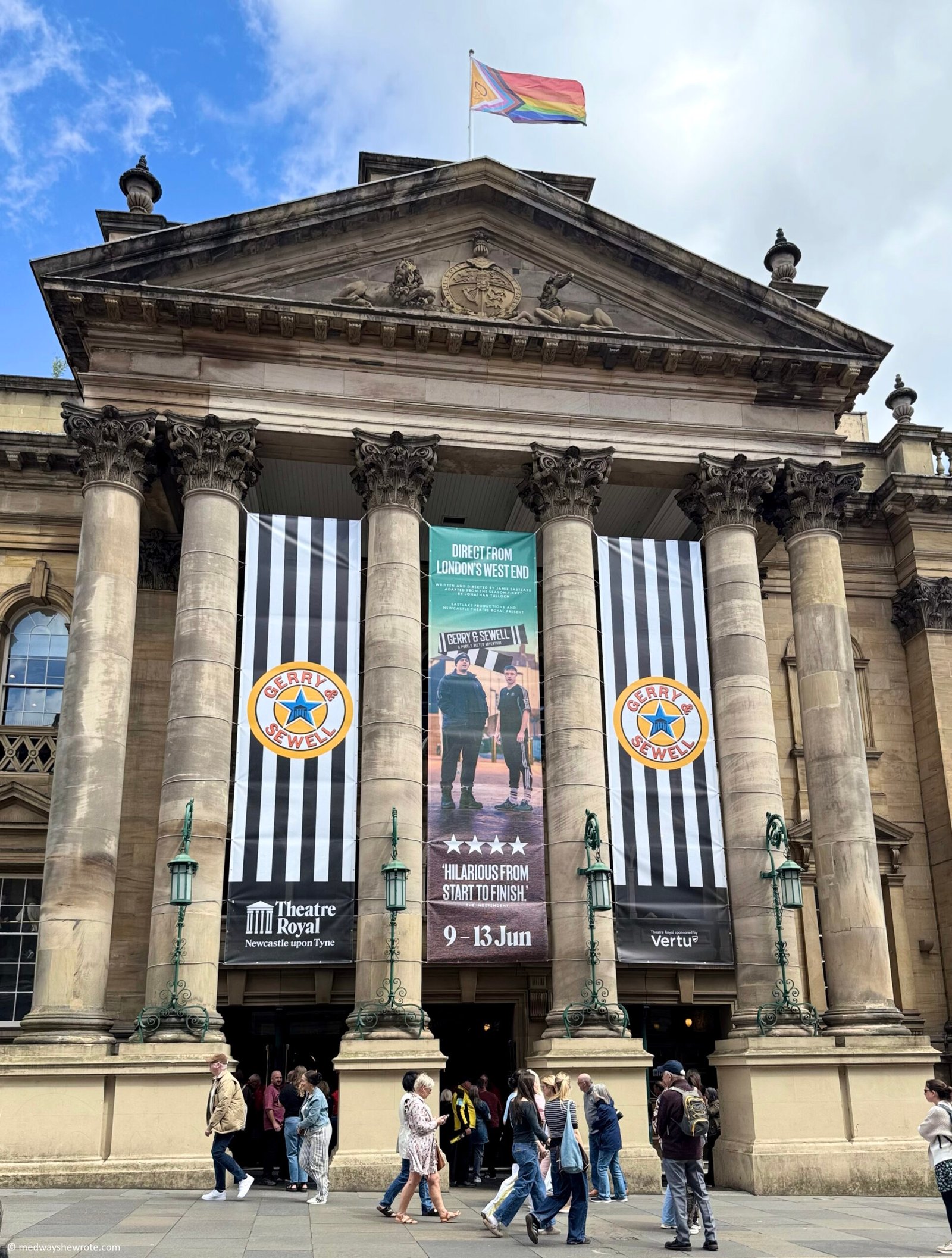
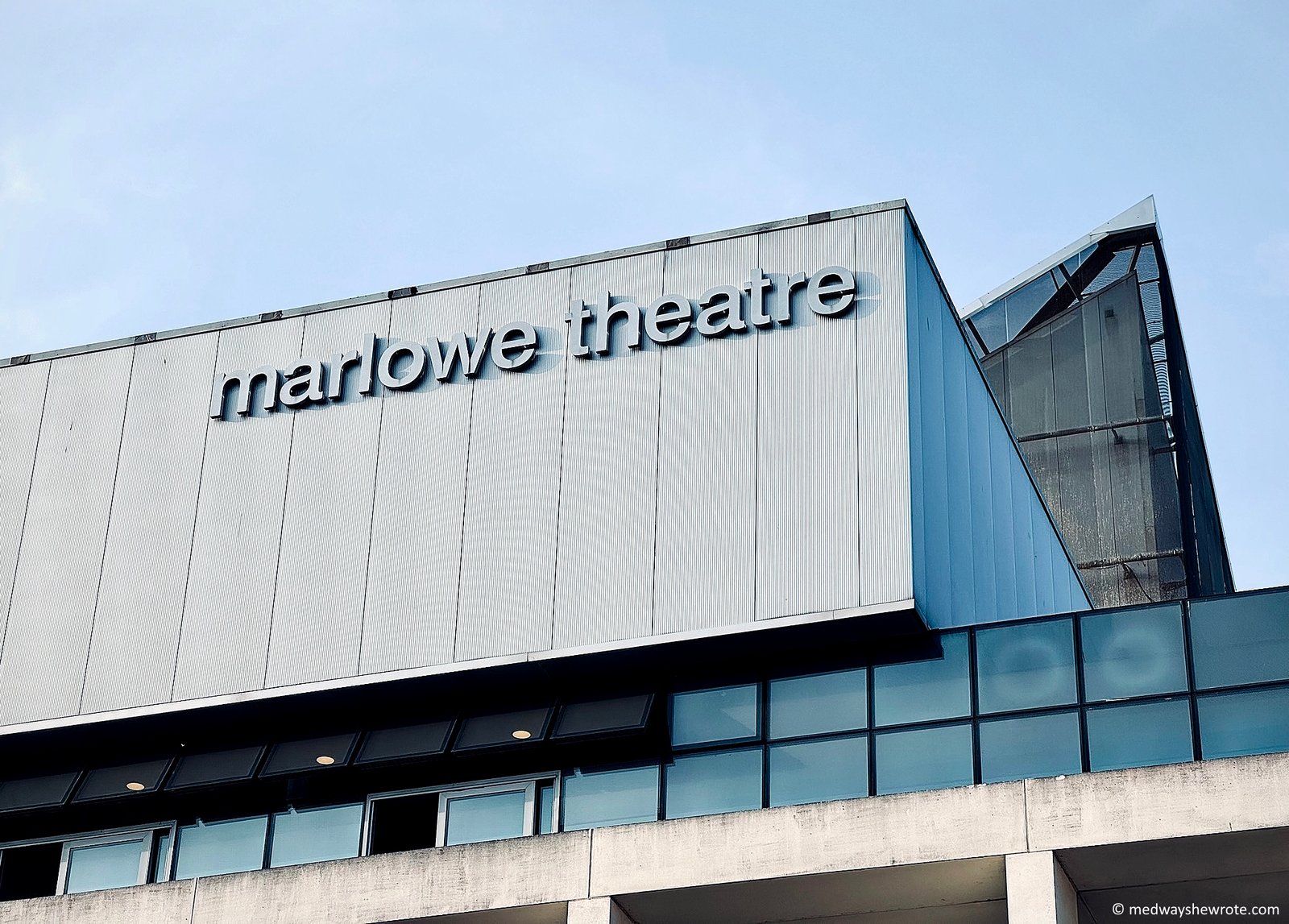
Why? Because Canterbury’s connection to theatre goes way back to the 1500s and includes links to two of the country’s earliest and most important playwrights, Christopher Marlowe and Aphra Behn. Nowadays, it’s home to Kent’s biggest theatre, The Marlowe. It also hosts the annual Canterbury Shakespeare Festival in summer, and the autumn Canterbury Festival – a feast of music, theatre, comedy and other arts productions.
Today on Medway, She Wrote: Why you should be keeping an eye on what’s on in Canterbury, where to eat pre- and post-theatre, and a few ideas for other things to do in this beautiful cathedral city.
The Luton Murals: Monumental tributes to Medway’s history
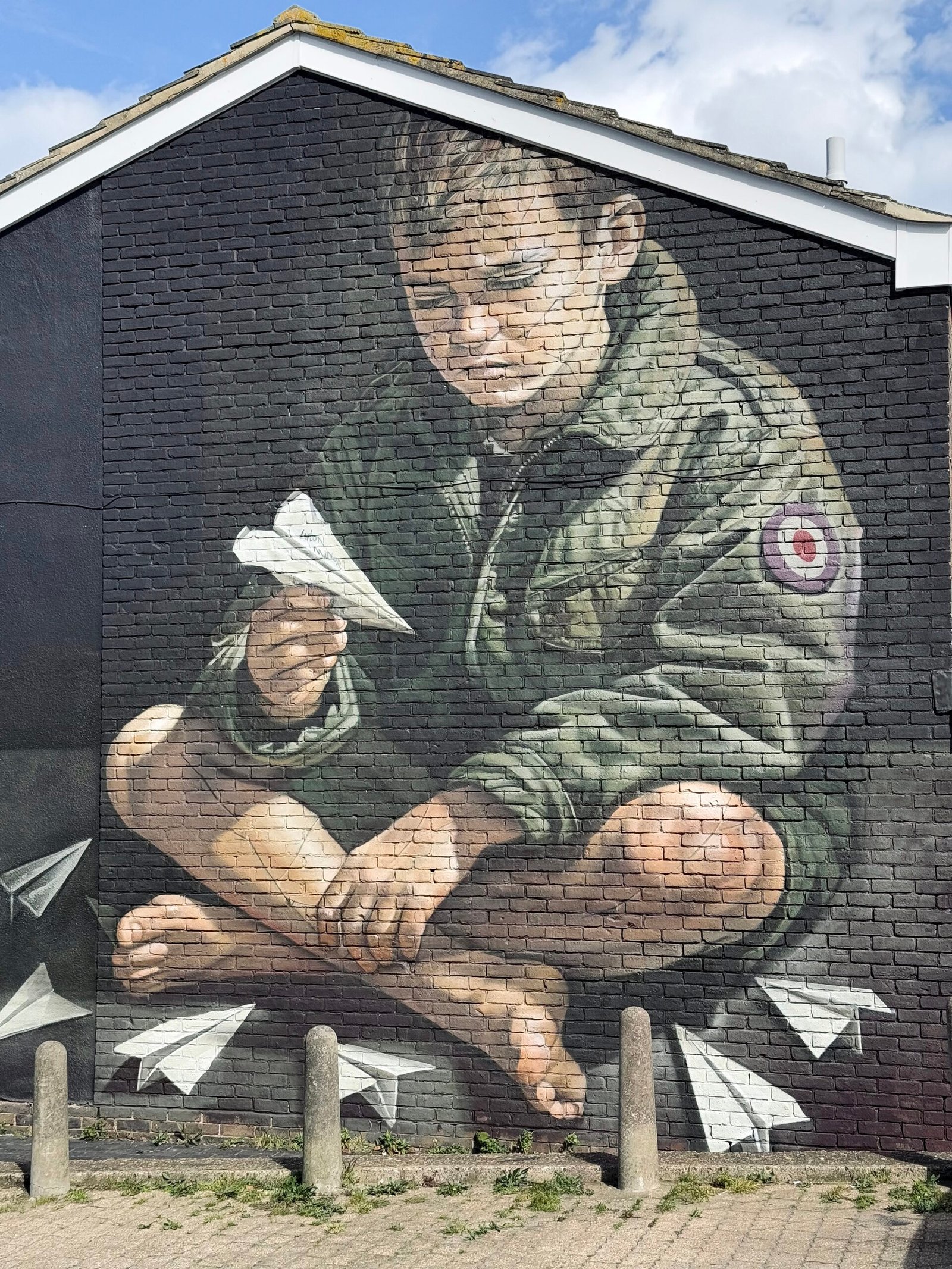
I’m standing in Joiner’s Court, near the top of Shipwright’s Avenue in Luton. It’s a bright, sunny Easter Sunday. The hills of Medway rise and fall steeply below me. In the distance, I can see the Chatham Naval Memorial to my left, leafy Darland Banks away on the right. In front of me, taking up the whole side of a house, is a mural of a young lad holding a paper aeroplane.
The boy is dressed in a khaki jacket and sitting cross-legged on the floor, surrounded by paper planes. His disappointment as he looks at the plane in his hand is palpable. This plane is clearly not a toy; it’s a painful reminder of something.
Liam Bononi’s mural of William Mason in Joiner’s Court, Luton
The lad’s name is William Mason. As a young boy, William dreamed of flying his own aeroplane. After getting a pilot’s licence and a job at Short Brothers in Rochester, he started designing and building his plane, which was named the Luton Minor. It stood in the back garden of his family’s home in Magpie Hall Road, Luton.
But William’s Luton Minor would never take to the skies. The Second World War broke out on the day of its test flight, and all civilian aircraft were grounded. Post-war restrictions meant William never fulfilled his dream of flying his own plane.
The mural of William Mason is one of several that have been painted on buildings around Luton, thanks to volunteer organisation Arches Local and the town’s residents. Enormous thanks to Arches Local, who kindly talked to me about the background to this frankly amazing project for this post.
Today on Medway, She Wrote: Luton, home of monumental painted tributes to Medway’s past, and a community that isn’t afraid to take bold risks to tell its stories.
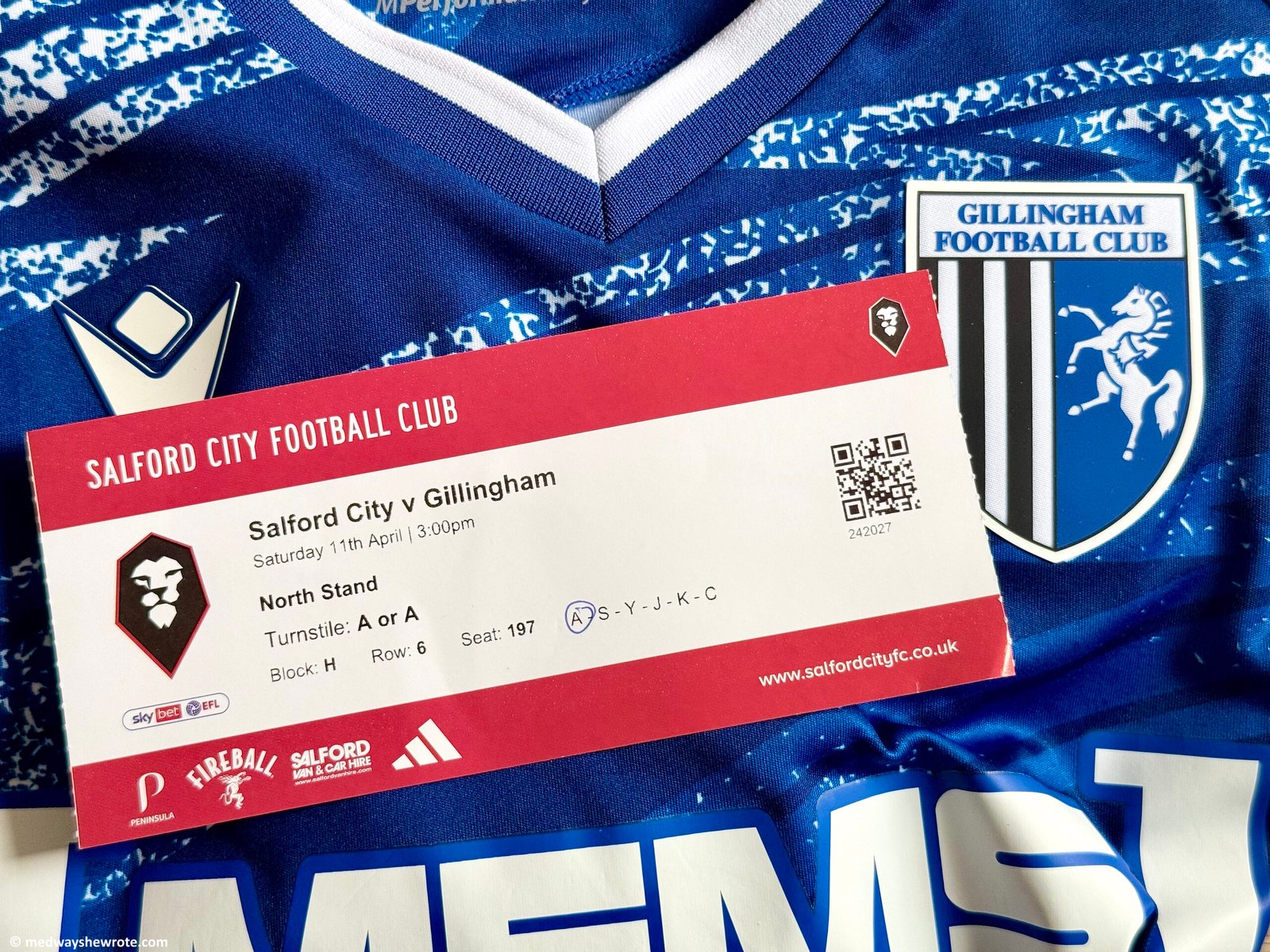
Going to the match in a not-so-dirty old town: Salford City v Gillingham
I found my love by the gasworks croft Dreamed a dream by the old canal Kissed my girl by the factory wall Dirty old town Dirty old town
Lyrics from Dirty Old Town by Ewan MacColl, club anthem of Salford City FC
Dirty Old Town. Everyone thinks it’s an old Irish folk song because of covers by The Dubliners and The Pogues, but it was actually written by Ewan MacColl about his home town of Salford. MacColl wrote the track in 1949 for his play, Landscape with Chimneys, and Salford’s smoggy, industrial landscape of factories and gasworks inspired the title. Salford isn’t a dirty old town anymore though, and some parts are positively glitzy (hello, MediaCity).
The Man of Kent, being a true Shouting Man, decided that there could be no better way to celebrate his birthday than watching his beloved football team, Gillingham FC. So off we went to follow the Gills over land (but not sea) to the Peninsula Stadium, home of the Ammies – Salford City FC.
Today on Medway, She Wrote: Watching the Gills play Salford City, soaking up football art at The Lowry, and a visit to the National Football Museum. Read on to find out which one of us scored top bins at the Museum, and which football legend we spotted in Altrincham’s Market House.
“It is to be the grandest building in the whole of these parts.”
James Jershom Jezreel
Have you ever seen the TV series Grand Designs?
It’s a show on Channel 4, hosted by Kevin McCloud, about people building homes that are unusual, groundbreaking and often grand in scale. Sometimes the designs are beautiful structures that enhance the landscape around them, blending quietly into their surroundings. Sometimes the buildings are bizarre or just plain ugly, leaving you wondering, ‘What were they thinking?’ But every design is unique, even if not to your particular taste. Having Kevin McCloud describe your design as having ‘integrity’ is the highest possible accolade on the show.
The show has garnered a few tropes over the years. Vast structures that spiral way beyond budget. Builds that go over deadline by months, if not years. Owners whacking terrifying amounts of money on credit cards to fund the project. Kevin McCloud commenting wryly on the ambitious nature of the design or timetable. I say all of this with affection; it’s a great show.
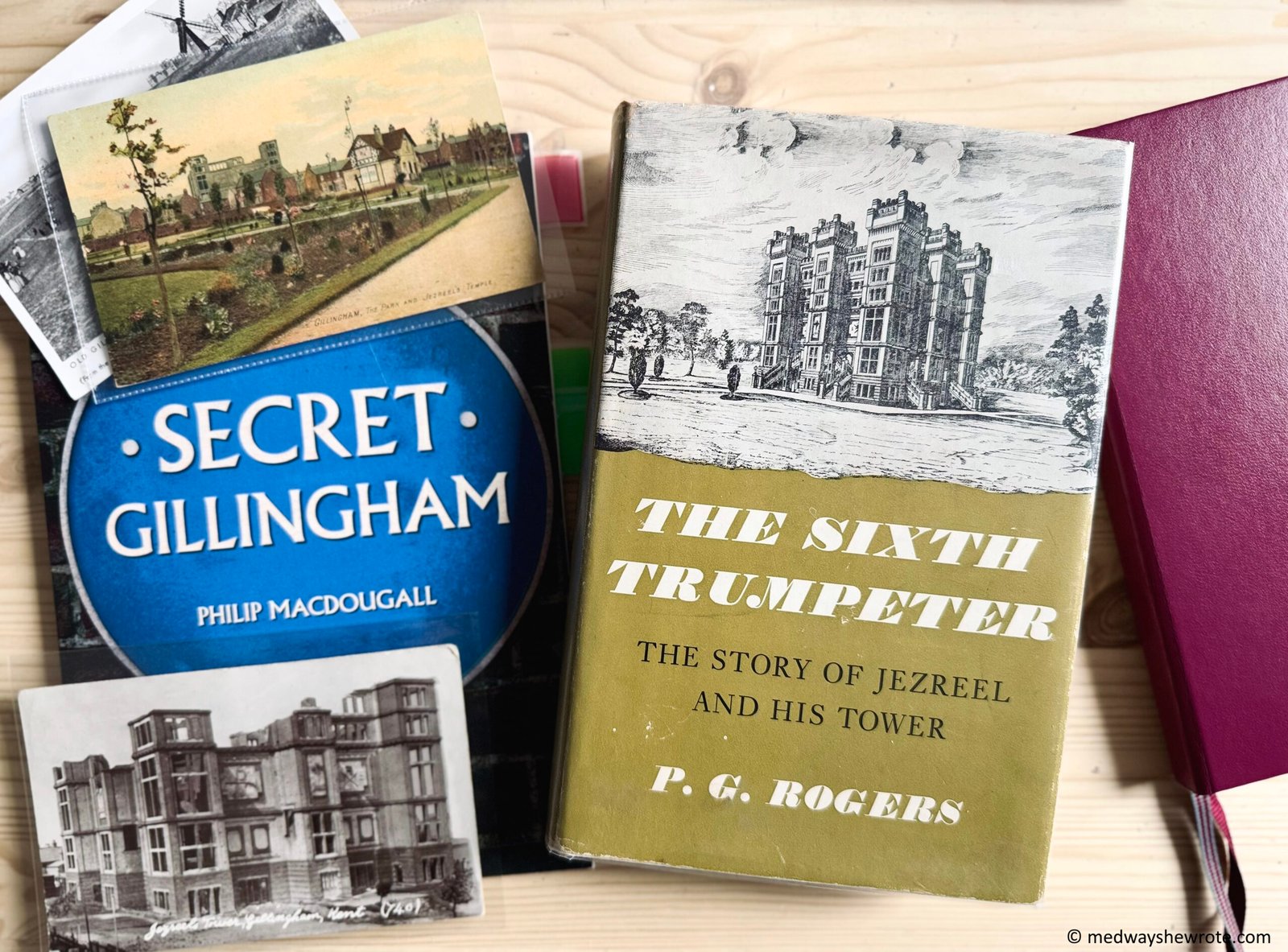
There have been several Grand Designs in Kent. The Garden of England has attracted many intrepid self-builders looking for a few spare acres on which to construct their dream house. But once upon a time, long before Channel 4 started documenting such things, Gillingham was home to a very grand design indeed. A structure that was intended to be “the grandest building in the whole of these parts.”
That building was Jezreel’s Tower. It stood at the top of Chatham Hill, dominating the Medway skyline. Jezreel’s Tower wasn’t just famous locally. It was famous nationally. As well-known and recognisable as the Angel of the North, or Stonehenge, or Blackpool Tower. It was so famous, it was one of the British landmarks used in an advertising campaign for Shell Oil. It featured on postcards, and has been immortalised in song by local bands Tundra and The Khybers.
In March 1961, 65 years ago, the grandest building in the whole of these parts was torn down. It had put up decades of resistance, mightily withstanding many attempts to have it demolished, but was eventually battered into the ground thanks to an act of colossal municipal short-sightedness.
Today on Medway, She Wrote: Jezreel’s Tower – Gillingham’s missing landmark; the charismatic religious leader who created this grand design; and how I might never have found out about any of this, were it not for Percie’s postcard.
For, now De Ruyter’s topsails Off naked Chatham show, We dare not meet him with our fleet – And this the Dutchmen know!
Rudyard Kipling, ‘The Dutch in the Medway’
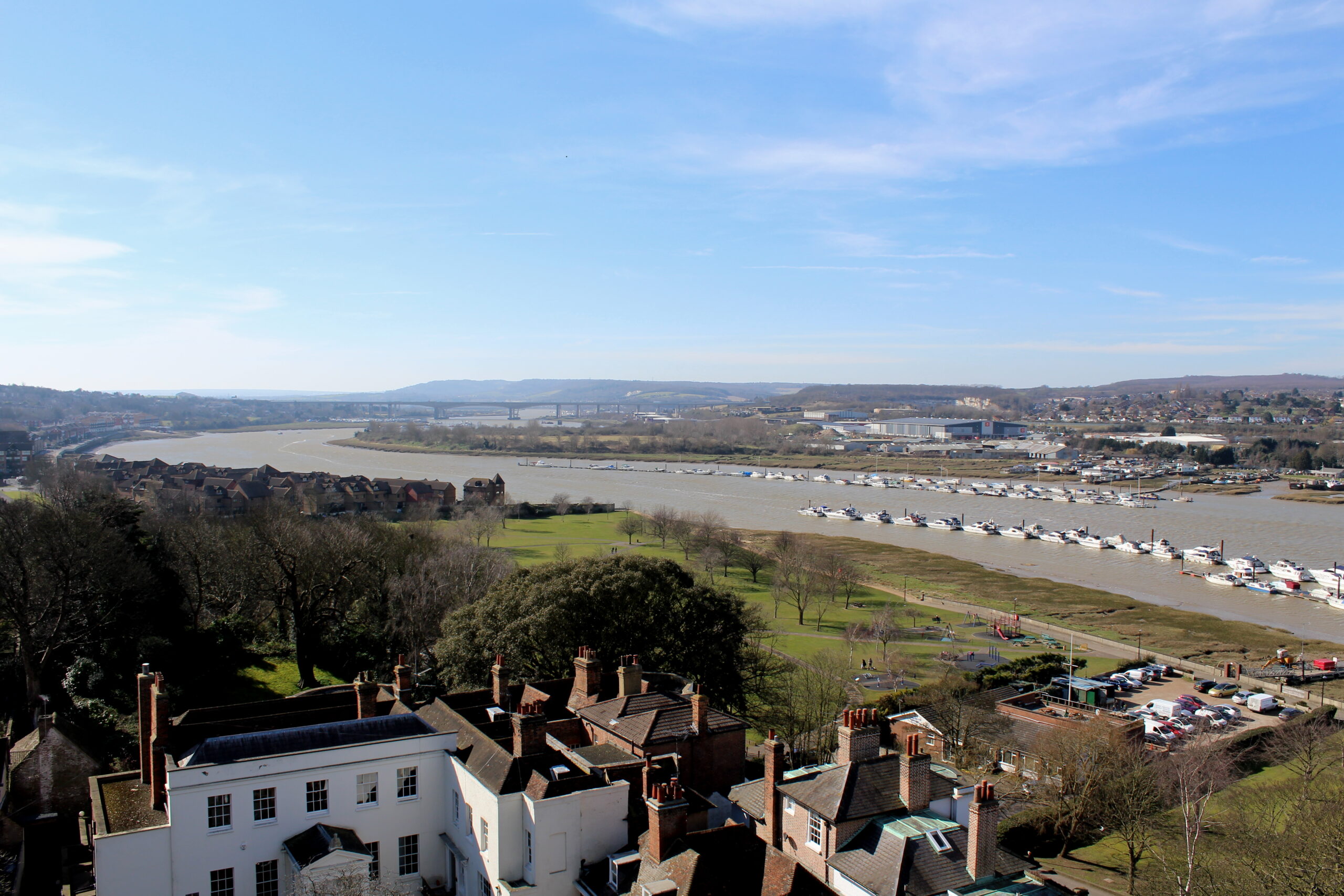
Happy World Poetry Day! What better time to do a spot of research into poems about Medway? I couldn’t think of any poems about Medway – or Kent for that matter – off the top of my head, but I was pleased to discover that its history has inspired many famous writers! Today, I’ve picked out a poem by Rudyard Kipling. This one sparked my interest because it’s about the Dutch raid on the River Medway in June 1667, which I’ve written about before.
Private Gardiner’s execution on the Great Lines, with revolting details (sorry, Mr Dickens!)
Me: “Do you think there were food stalls selling burgers and hotdogs, like on Bonfire Night?”
The Man of Kent: “More like peanuts and pies, beer and gin. Can’t imagine people were watching the execution sober.”
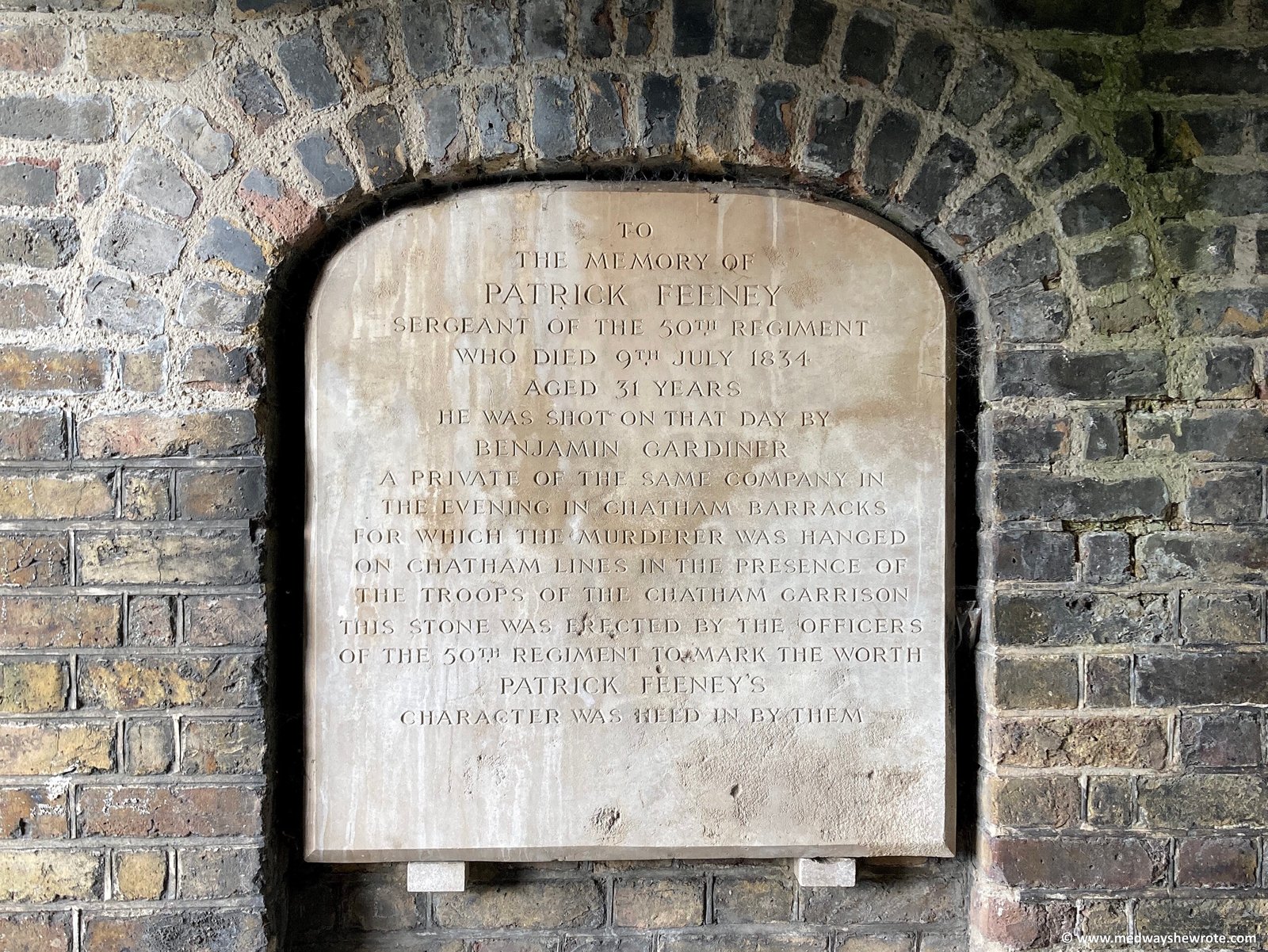
New Year’s Day 2026. The Man of Kent and I were walking on the Great Lines, and I was telling him the story of how Benjamin Gardiner had been executed here for murdering Sergeant Patrick Feeney, in 1834.
I was pondering what the scene must have looked like, almost two hundred years ago, when around 14,000 people packed onto the Lines to see one man put to death. I started thinking about the annual fireworks display that, until recently, happened most years on the Great Lines. As anyone who has attended that display knows, you can cram hordes of people onto those hills and fields. On Bonfire Night, there would also be food trucks catering to the spectators.
That’s when it occurred to me. With so people around to watch the execution, there were bound to be vendors who wouldn’t miss the opportunity to turn a handsome profit. Hence my question to The Man of Kent. I wasn’t being flippant; just voicing a morbid thought.
As it turns out, The Man of Kent wasn’t far off. Executions had entertainment value in those days, and local food and drink sellers would indeed ply their wares to the crowds. In fact, one former pie seller would play a prominent and sinister role in this particular affair.
Today on Medway, She Wrote: the murder of Sergeant Patrick Feeney at Chatham Barracks, the execution of Private Benjamin Gardiner on the Great Lines, and the portfolio career of Britain’s busiest hangman, William Calcraft.
Cat Fight, Coopers Chase, Cockie and more: a year of reading in Kent
“Book collecting is an obsession, an occupation, a disease, an addiction, a fascination, an absurdity, a fate. It is not a hobby. Those who do it must do it.”
Jeanette Winterson
Book collecting is “a fate.”
Collecting books is much easier to justify when you put it like that, isn’t it? I couldn’t help it; I was fated to buy that new book, even though I have a to-be-read pile the size of the Pentagon Centre.
Collecting books is my obsession, disease, addiction and fascination, as well as my fate. I wish I could make it my occupation, but I haven’t managed that yet. Regular readers will know I have next to no willpower when it comes to reading material, and I hoard books like Smaug from The Hobbit hoards treasure. That’s why I can’t move in the spare room of my house. Truth be told, since I wrote that post, the landing cupboard is now a casualty. But hey, that’s fate for you.
Now 17 may not sound like a lot. I know people who read over 50 books last year, others who read 100. 100! That’s Olympian levels of reading as far as I’m concerned. Seventeen isn’t a personal best for me, but I read as many books as I could in the time available, and most importantly, I thoroughly enjoyed them.
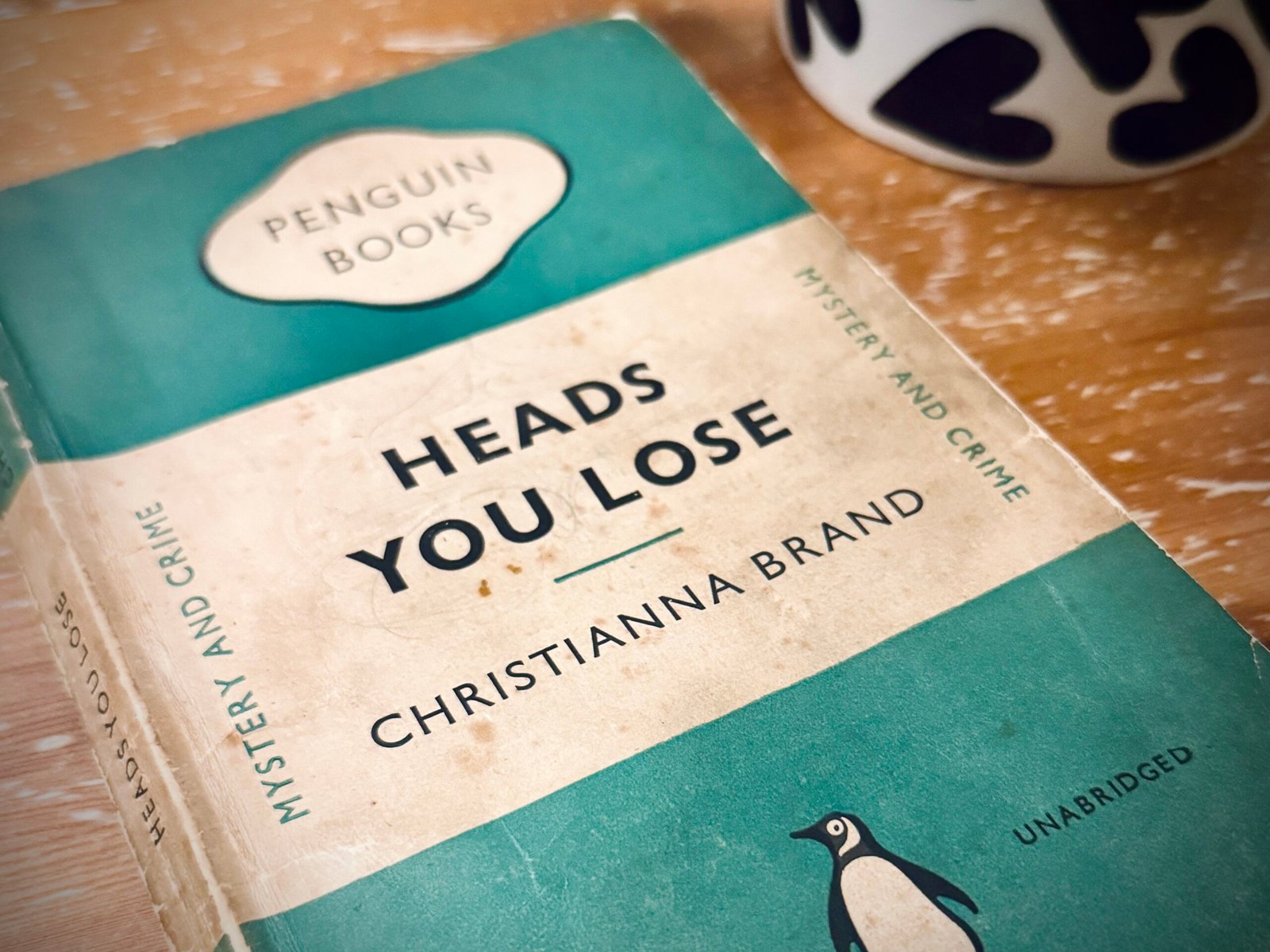
Today on Medway, She Wrote – a round-up of what I read in 2025, including five books set in Kent!
Antwerp is a city that makes a remarkable first impression if you travel there by train.
“Wow!” I gasped, like the gawking tourist that I am, as I emerged from the train and up the escalators into the main hall of Antwerp Central. More of a palace than a station, it’s understandably regarded as one of Europe’s most beautiful rail terminals. This immediate bout of sightseeing was the start of two lovely days in Belgium’s second city.
I’ve heard Antwerp described as ‘the Manchester of Belgium’, so naturally I was expecting to find rich history, vibrant culture, buzzing nightlife, and a top-flight football team.
Antwerp has all of those things.
It also had something else in common with Manchester.
Rain. And plenty of it.
Regular readers will be relieved to know that The Man of Kent had brought his trusty pack-a-mac, so the weather conditions were not a problem.
Today on Medway, She Wrote: what we did on an Autumn weekend in Antwerp, why Saturday night in the Grote Markt felt like a home-from-home, hunting for cocktails in dark courtyards, and one very narrow door.
A tour of Whitstable’s wonderful, whimsical street art
Ask people in Kent to name some things they associate with Whitstable, and they’ll probably say, seaside, oysters and Peter Cushing (he used to live there).
They might also say Whitstable Bay beers, and the Maunsell forts.
Ask me, and I would say all of those things. I’d also say, street art.
Whitstable’s coast has inspired hundreds of artists throughout history, notably JMW Turner. His famous watercolour, ‘Oyster Beds at Whitstable’ was one of several that he painted for a book, Picturesque Views on the Southern Coast of England, by W.B. Cooke. Turner was a frequent visitor to nearby Margate, and the Kent seaside was the subject of many of his paintings and sketches.
More recently, art in Whitstable has moved off canvas and onto buildings, as the town’s colourful streets have acquired a new collection of residents; murals all over the town that commemorate town folk, provide witty social commentary, and are eye-catching in the best way. Wandering around Whitstable is like being in an open air gallery, from the rainbow of shopfronts and pubs, to the street paintings and houses. Not to mention the glorious sea views.
I could blog for days about all the reasons I love Whitstable. Today’s post, however, is simply about the whimsical, wonderful street art that abounds in this quirky seaside town.
All aboard for the Maunsell Forts! A spectacular sailing trip on the X-Pilot
The Maunsell Forts lie about 14 miles off the Kent coast, their spectral forms appearing to float on the waves. Once a chain of vital anti-aircraft defences and intended to be temporary, they have remained standing for over 80 years. Their derelict shells are an eerie reminder of wartime, and inspiration for filmmakers, musicians, writers and sportspeople alike.
Today on Medway, She Wrote: A captivating trip to the Maunsell Forts aboard the X-Pilot, the Maunsell Forts’ connections to pirate radio and Doctor Who, and another encounter with our old nemesis, Admiral Michiel de Ruyter.