
The Maunsell Forts lie about 14 miles off the Kent coast, their spectral forms appearing to float on the waves. Once a chain of vital anti-aircraft defences and intended to be temporary, they have remained standing for over 80 years. Their derelict shells are an eerie reminder of wartime, and inspiration for filmmakers, musicians, writers and sportspeople alike.
Today on Medway, She Wrote: A captivating trip to the Maunsell Forts aboard the X-Pilot, the Maunsell Forts’ connections to pirate radio and Doctor Who, and another encounter with our old nemesis, Admiral Michiel de Ruyter.
Finding out about the forts
In Autumn last year, The Man of Kent and I were on the train to London. I was mulling over Christmas present ideas; he was carrying out in-depth online analysis ahead of that weekend’s Gills game. After some meditation on the subject of what we should buy The Man of Kent’s Dad, I hit upon the idea of a scenic boat trip. The Man of Kent’s Dad has a keen interest in rivers and waterways, having previously worked for the Port of London Authority in Gravesend. I googled something like, “boat tours in Kent” and various results came up offering trips to something called the Maunsell Forts.
I had never heard of the Maunsell Forts before, but they looked fascinating. Further research revealed that they were important defences built in the Thames Estuary during the Second World War. Several companies offer sailing trips out to the forts but one particularly interested us; The X-Pilot. Even better, gift vouchers were available for X-Pilot trips. Present: sorted.
Sensibly, The Man of Kent’s Dad decided to wait until warmer weather arrived before booking his trip. So in July, I, The Man of Kent, his Dad, and his Mum, armed with sunscreen, waterproof jackets, packed lunch and – in The Man of Kent’s Dad’s case – a folder full of river and estuary maps – boarded the X-Pilot and sailed to the Maunsell Forts.
The vessel: The X-Pilot

The X-Pilot is a former pilot vessel, built in 1967. Like The Man of Kent’s Dad, she once worked at Gravesend. She’s small, speedy and colourful; pilot vessels are typically painted in bright shades like red, orange and yellow so that they can be easily spotted and identified, even when visibility is poor. Like all pilot vessels, the X-Pilot is built to withstand difficult weather and dangerous waters. Just as well, as the wind speeds on our trip were significantly higher than forecast and things got a bit choppy. (I’m starting to think The Man of Kent and I might be carrying some sort of curse in this regard given our Farne Islands experience).

This fine vessel has carried many celebrities out to the forts, including Dan Snow, Paul O’Grady and Jools Holland. It’s homely, comfortable, and has on-board tea and coffee-making facilities. The latter is vital, because The Man of Kent’s Mum runs on tea in the same way as The Man of Kent runs on coffee; both require constant topping-up.
The crew: Captain Alan and First Officer Martin

The X-Pilot is crewed by Captain Alan and First Officer Martin. Now, here are two gentlemen who really know their stuff! Enthusiastic, friendly, welcoming, and full of stories about the history of the area and the forts. Having been involved in the care and preservation of the Maunsell Forts, they are true experts in the field and know the estuary and its waters like the back of their hand. Their passion for the forts is infectious. We had a right old natter and a good laugh. I could happily have chatted with them for a week!
Breaking the chain across the Medway

The X-Pilot departs from Queenborough Harbour on the Isle of Sheppey. Queenborough is a pretty village with plenty of pubs and tea shops, and handy free parking on the harbourfront.
Once aboard, First Officer Martin saw to it that we were supplied with beverages immediately upon departure. We sat in comfy chairs on the X-Pilot deck, drinking tea as we passed container ships, small crafts and a RNLI lifeboat on a training exercise, on our way to the first point of interest, the Grain Tower Battery.
This part of the coast is the meeting point of the Swale tidal channel, the River Medway and the River Thames. From here, you can sail right up the Medway to Rochester and beyond. This made the area an obvious target for invading forces throughout history, most notably, the Dutch navy during the Battle of Medway in the Second Anglo-Dutch War.
The Battle of Medway was a deeply embarrassing affair during which the attacking Dutch fleet, led by Admiral Michiel de Ruyter, managed to sail up the Medway pretty much unimpeded, burning and capturing several ships, including the English flagship, the Royal Charles.
Thanks to First Officer Martin, I learned that part of the English sea defences at that time was a huge iron chain stretched across the Medway, intended to protect Upnor Castle and Chatham Dockyard by scuttling invading vessels. The chain was supported by guardships, several battery platforms and artillery support, all of which is described in detail in naval correspondence from the time, and by Samuel Pepys in his diaries. However, the strength and tactical nous of the Dutch fleet, and the unpreparedness of the English forces, meant that de Ruyter was able to break through the chain and sail up the river, destroying and capturing various ships before heading back to the Netherlands on 14 June.
In World War Two, a similar defensive tactic was used – though with considerably more success! A boom was constructed between Shoeburyness in Essex and Sheerness in Kent to protect against enemy submarines, mines, and enemy surface vessels. The boom was formed of wooden piles driven into the seabed and reinforced with concrete, and guarded by the Royal Navy. Anti-aircraft guns positioned on the Maunsell Forts provided vital support. During the 1950s, replacement booms were erected west of the previous ones; the only known anti-submarine boom from the Cold War. The boom on the Kent side has since been demolished, but the Essex side is still standing near Shoeburyness.
The SS Richard Montgomery

Our next stop was the sunken wreck of the SS Richard Montgomery. Nothing can be seen of the ship now except the sinister masts pointing out of the waves, an intriguing yet chilling reminder of the 1,400 tons of explosive that lie beneath…eek.
The SS Richard Montgomery is an American Liberty Ship built during World War Two. She was wrecked on the Nore Sandbank in August 1944 while transporting an enormous cargo of ammunition to France. Although a salvage operation was carried out that year, it was not possible to recover all of her cargo, which still lies with the wreck about 49ft below the water, and 2.4km off Sheerness. The SS Richard Montgomery has the dubious honour of being the first wreck to be designated as dangerous under the Protection of Wrecks Act 1973.
The blast radius, were the explosive to go off, is massive. It is estimated that an explosion would produce a column of water and debris 300 metres wide and 3,000 metres high. Every window in Sheerness would be broken, and several areas flooded. Because of this, there is a 500-metre exclusion zone around the wreck which is monitored 24/7 by CCTV and radar.

Other estimates have put the likely impact of an explosion at a much smaller scale, but no one knows for certain what would happen if the ship blew up. Given the potential risk to the public, there have been several debates over the years about what to do with the wreck. As Lord Addington neatly pointed out in a House of Lords debate about the SS Richard Montgomery:
“Nobody is quite sure what effect [an explosion] would have, because it would depend on what else it caught, but it would still be an enormous explosion—so the risk is enormous. Let us agree on that. Whether you are blown up a bit or a lot will not make much difference to you if you are blown up, to be perfectly honest.”
Well, quite.
Cost and practicality make further salvage, or raising the SS Richard Montgomery, extremely difficult. The delicacy of the wreck means such an operation would be dangerous indeed. The current position seems to be to let sleeping wrecks lie. Thankfully, the Maritime and Coastguard Agency believes the risk of a spontaneous explosion is remote!
The Maunsell Forts

Next up, the main event: The Maunsell Forts.
The Maunsell Forts are a collection of naval and army sea forts, designed by Guy Maunsell, that formed a network of anti-aircraft defences during World War Two.
Built secretly in Gravesend and towed out to the Thames Estuary, these vast, imposing structures were supposed to be temporary, but have now remained standing for over 80 years. Hundreds of armed forces personnel were stationed in each fort, isolated for weeks at a time. Though supplied with food, clean water and all necessary amenities, they were encouraged to take up things like crochet to ward off so called ‘Fort fever’. According to local historian and chair of the Maunsell Forts Appreciation Group, Margaret Flo McEwan (talking to BBC’s Open Country), the Maunsell Forts shot down 22 enemy aircraft and 30 doodlebugs during wartime.
After the Second World War, the Maunsell Forts went on to have second careers as home to pirate radio stations, and third careers as locations for film and tv, launchpads for bonkers sporting ventures, and – in one case – becoming an independent nation. Read on to find out more.
The Knock John Fort

The Knock John lies about 12 miles off the Kent coast. It is one of four Maunsell naval forts built in the Thames Estuary during World War Two.
Each Maunsell naval fort consisted of two towers bearing a reinforced concrete platform, which carried Bofor and Lewis guns manned by marines and sailors. Both of the enormous cylindrical towers are hollow, and were divided into several floors for storage and accommodation for the servicemen stationed there. Of the original four forts, only two survive: Knock John in the Thames Estuary, and Fort Roughs off the Suffolk coast.
The Knock John was built in 1942, decommissioned in 1945 and abandoned in 1956. Captain Alan took us on several circuits around the Knock John so we could soak in every detail of this fascinating, weird structure, from the weathered, multi-coloured, camouflage paint on the pillars, to the birds perching on its lofty, rusty, gun ports.
After the Knock John was abandoned, it became a base for offshore pirate radio stations, including Radio Essex. Radio Essex was a competitor station of Radio City, which was already broadcasting from the nearby Shivering Sands fort. After a brief turf war over the Knock John, Roy Bates’ Radio Essex – later Britain’s Better Music Station (BBMS)- broadcasted from there from 1965 to 1966.
After BBMS stopped broadcasting from the Knock John on Christmas Day 1966, Bates moved operations to a different Maunsell fort, Fort Roughs, which he renamed Sealand and declared to be an independent sovereign state. Now occupied by Roy Bates’ family, Sealand has its own flag, currency and football team. Before any Pointless fans get excited, Sealand is not a sovereign state that is a member of the United Nations in its own right, and it’s not recognised as a state by any other country. But it did award the title of Baron of Sealand to pop star, Ed Sheeran.
Shivering Sands

The Shivering Sands Fort looms out of the water, its cuboid gun batteries atop spindly, straight legs. Ghostly yet futuristic, the Shivering Shands towers are an arresting sight viewed from afar, even more so up close. They bear an uncanny resemblance to the AT-AT Walkers from Star Wars, but have a ponderous heft and agedness that made me think of rusting maritime Ents. I mentioned the Star Wars likeness to First Officer Martin, who said that’s often what people say when they see the towers, followed swiftly by references to War of the Worlds.
Shivering Sands was the last of the three Thames Estuary Maunsell forts to be constructed, built in 1943. Of its seven original towers, only six remain standing as one was hit by a vessel in 1963. Like its sister forts, Shivering Sands was used by pirate radio stations after being decommissioned, becoming home to Reg Calvert’s Radio City, and, prior to that, Screaming Lord Sutch’s Radio Sutch.
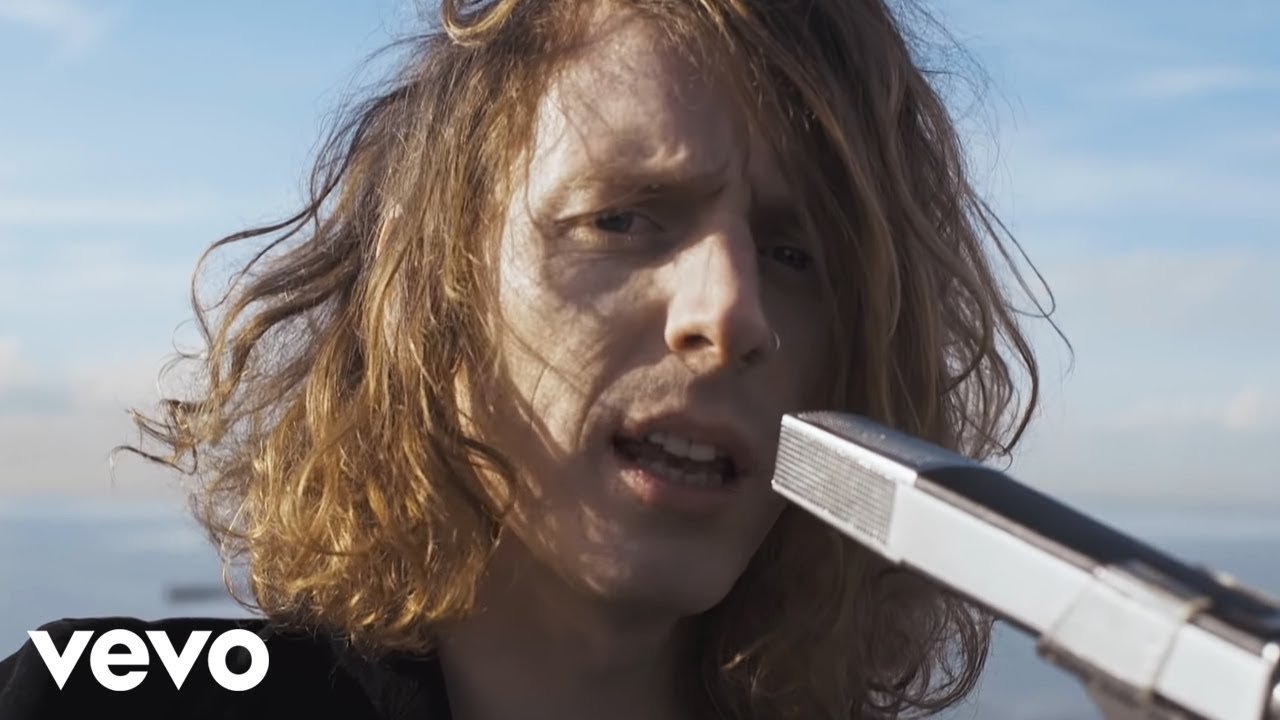
More recently, Shivering Sands has featured in several music videos. Mystery Jets used the fort in the video for Bubblegum (see if you can spot the X-Pilot when you watch it!). Shivering Sands also has cameos in Invaders Must Die by the Prodigy and A Sort of Homecoming by U2.
In 2005, local artist Stephen Turner spent six weeks living in one of the Shivering Sands towers in an “artistic exploration of isolation.” Might sound a bit mad to some, but I can see the appeal of a quiet little sea hermitage. Imagine all the book-reading time I’d have…
Captain Alan sailed us around the towers at both Shivering Sands and Red Sands several times, steering the X-Pilot so close that you could almost reach out and touch them. I couldn’t take my eyes off what I was seeing. The forts are like nothing you have seen before. Hauntingly quiet, they keep a solemn vigil over the waves, commanding, watchful, waiting.
But these forts are at risk. The catwalk bridges that stretched between the towers have disintegrated, and the forts themselves are, of course, completely exposed to the elements. Moves are underway to try to conserve and preserve the forts, such as Project Redsand, but don’t appear to have gained much traction. It would be a disaster if these iconic structures were to collapse and disappear completely. I truly hope that someone, somewhere, will find a way to ensure that these awe-inspiring, weird and wonderful towers are preserved for generations to come.
Red Sands Fort

Five miles from Shivering Sands, and six miles off the coast of Whitstable, is the Red Sands Fort. It’s almost exactly the same in design, eeriness and disrepair as Shivering Sands, except that all seven of Red Sand’s towers are still standing.
Like Shivering Sands, Red Sands has been a broadcasting base for pirate radio (in this case, Radio 360), and has enjoyed a resurgence as a location for TV and film. It was used in the 1968 Doctor Who serial, Fury from the Deep, which starred Patrick Troughton as the Doctor (footage of which is sadly now lost). Red Sands also featured in the 1975 musical movie, Slade in Flame, and made a brief appearance in The Hunger Games: Catching Fire. Red Sands is also central to the plot of the novel, Whitstable Pearl by Julie Wassmer.
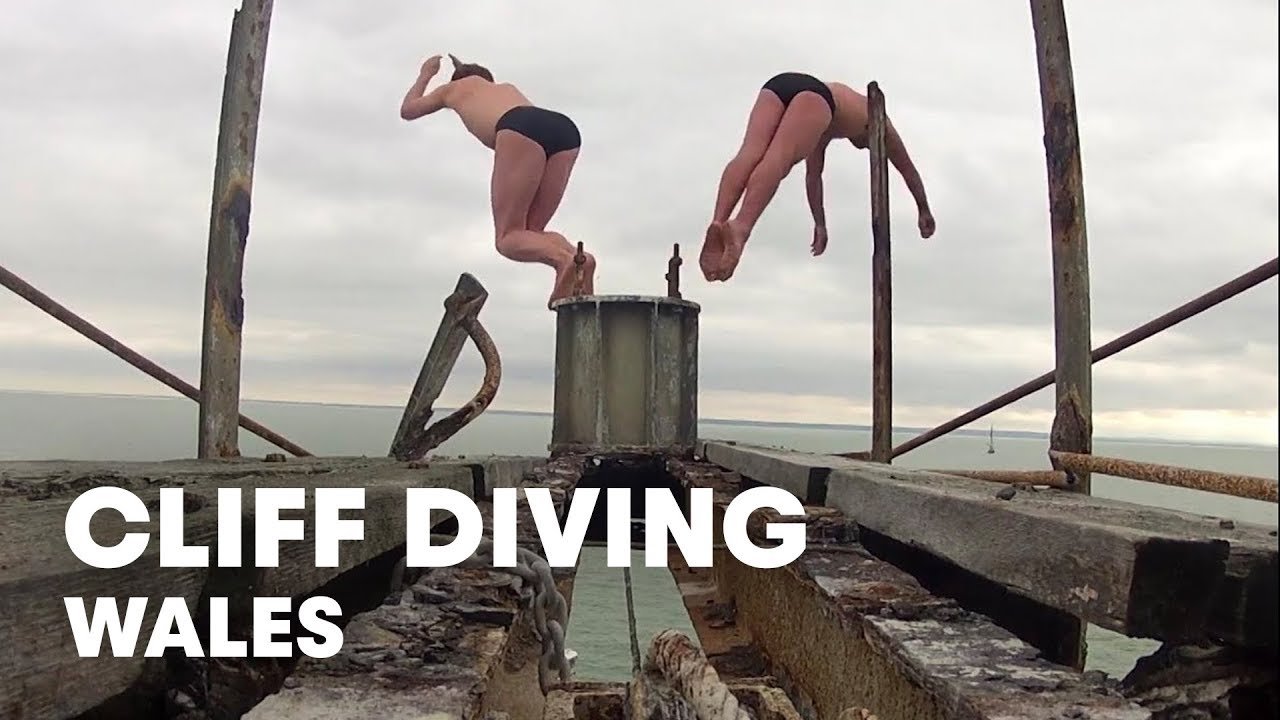
Red Sands has been the starting point for some bonkers sporting endeavours too. In September 2012, Gary Hunt and Blake Aldridge dived off Red Sands in preparation for the Red Bull Cliff Diving World Series (again, spot the X-Pilot in the video!) In August this year, Rebekah Kefford, from Birchington in Kent, became the first woman to swim from Red Sands back to shore, raising money for charity Aspire. Dan Brown (no, not the writer – this one’s an osteopath from Whitstable) became the first man to swim back from Red Sands in September 2024. Amazing bravery and endurance!
After marvelling at Red Sands, it was time for us to head back to Queenborough, delighted and astonished by everything we had seen and learned, cobwebs well and truly blown away by the weather. There was just time for one more cup of tea, and a thorough perusal of the curated collection of Maunsell Fort information in the X-Pilot’s cabin.
The man behind the forts: Guy Maunsell

The Maunsell Forts were designed by Guy Maunsell, distinguished civil engineer and bridge-builder extraordinaire.
Guy Maunsell was born in Srinagar, Kashmir, and moved to England with his family as a young lad. He served in the Royal Engineers during World War One, but was recalled to England after one year on the Western Front to work on the secret development of concrete tug boats, floating docks and barges designed to defend the Strait of Dover.
After the First World War, Maunsell moved to Hildenborough in Kent, where he bred Jersey cows when he wasn’t busy working on major engineering projects. Interestingly, in 1919, Maunsell reported on the viability of constructing an underwater rail tunnel under the English Channel; that project eventually became the Channel Tunnel!
In World War Two, the Government commissioned Maunsell to develop a proposal for defending ships in the Thames Estuary from aerial attacks. He designed the Maunsell Forts, and during that time, was one of many engineers that worked on the design of Mulberry Harbours, which were used in the Normandy landings in 1944.

After the Second World War, Maunsell founded his own firm and used his expertise in concrete structures to design and build bridges all over the world, including the original Storstrøm Bridge in Denmark, the first Narrows Bridge in Perth, Australia and the Hammersmith Flyover in London. He also continued to breed Jersey cows at home in Hildenborough.
Hildenborough History Society has a wonderful article by Tim Asquith about Maunsell’s life. That article mentions that Maunsell would commute from Hildenborough to London every day during the Second World War, and was so consumed by his work that he would often fall asleep on the train home and miss his stop. His wife would then have to collect him by car and drive him home. (I sympathise; I have had to pick up The Man of Kent from far-flung locations after he has fallen asleep on the train home on several occasions (though that was usually after a hard night’s work in the pub, rather than a long slog at the office)).
And finally
If you get the opportunity to visit the Maunsell Forts, take it. This was a grand day out and I heartily recommend sailing with Captain Alan and First Officer Martin aboard the X-Pilot. I’m hoping to join one of their Medway river tours in the future, too.

Further reading
- Open Country – Shivering Sands (BBC, 1 June 2024)
- The Battle of the Medway 1667 (Bodleian Map Room Blog)
- Battle of Medway: The English defeat that’s largely forgotten (BBC News, 7 June 2017)
- The bombs that lurk off the Kent coast (BBC, 28 October 2015)
- The off-shore fort ‘state’ of Sealand marks 50 years (BBC News, 2 September 2017)
- Guy Anson Maunsell (Tim Asquith, Hildenborough History Society)
- The Life and Times of Guy Maunsell (The Crete Fleet, 9 September 2024)
- Maunsell, The Firm and Its Founder by Nigel Watson and Frank Turner (2005)
Comments
4 responses to “All aboard for the Maunsell Forts! A spectacular sailing trip on the X-Pilot”
Another lively and interesting article, thank you Lori.
Many thanks, Paul! I’m glad you enjoyed it.
Thank’s Lori, that was very interesting and very well written.
Thank you very much, Steve! I’m glad you enjoyed reading it.