Medway, She Wrote

  • The Luton Murals: Monumental tributes to Medway’s history

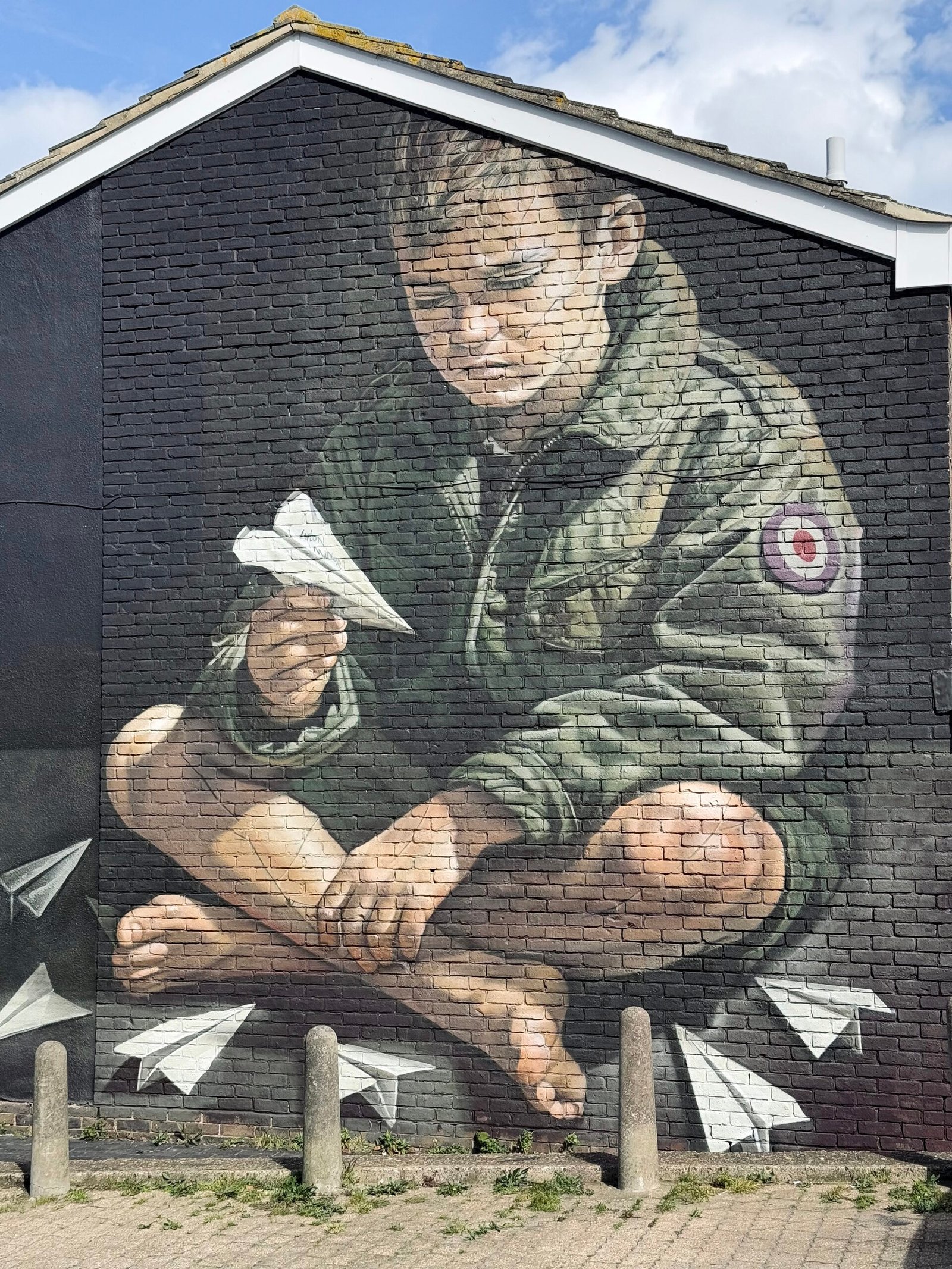
    I’m standing in Joiner’s Court, near the top of Shipwright’s Avenue in Luton. It’s a bright, sunny Easter Sunday. The hills of Medway rise and fall steeply below me.  In the distance, I can see the Chatham Naval Memorial to my left, leafy Darland Banks away on the right. In front of me, taking up the whole side of a house, is a mural of a young lad holding a paper aeroplane.

    The boy is dressed in a khaki jacket and sitting cross-legged on the floor, surrounded by paper planes. His disappointment as he looks at the plane in his hand is palpable. This plane is clearly not a toy; it’s a painful reminder of something.

    Mural of William Mason in Joiner's Court, Luton.
    Liam Bononi’s mural of William Mason in Joiner’s Court, Luton

    The lad’s name is William Mason. As a young boy, William dreamed of flying his own aeroplane. After getting a pilot’s licence and a job at Short Brothers in Rochester, he started designing and building his plane, which was named the Luton Minor. It stood in the back garden of his family’s home in Magpie Hall Road, Luton.

    But William’s Luton Minor would never take to the skies. The Second World War broke out on the day of its test flight, and all civilian aircraft were grounded. Post-war restrictions meant William never fulfilled his dream of flying his own plane.

    The mural of William Mason is one of several that have been painted on buildings around Luton, thanks to volunteer organisation Arches Local and the town’s residents. Enormous thanks to Arches Local, who kindly talked to me about the background to this frankly amazing project for this post.

    Today on Medway, She Wrote: Luton, home of monumental painted tributes to Medway’s past, and a community that isn’t afraid to take bold risks to tell its stories.

    Luton, Medway

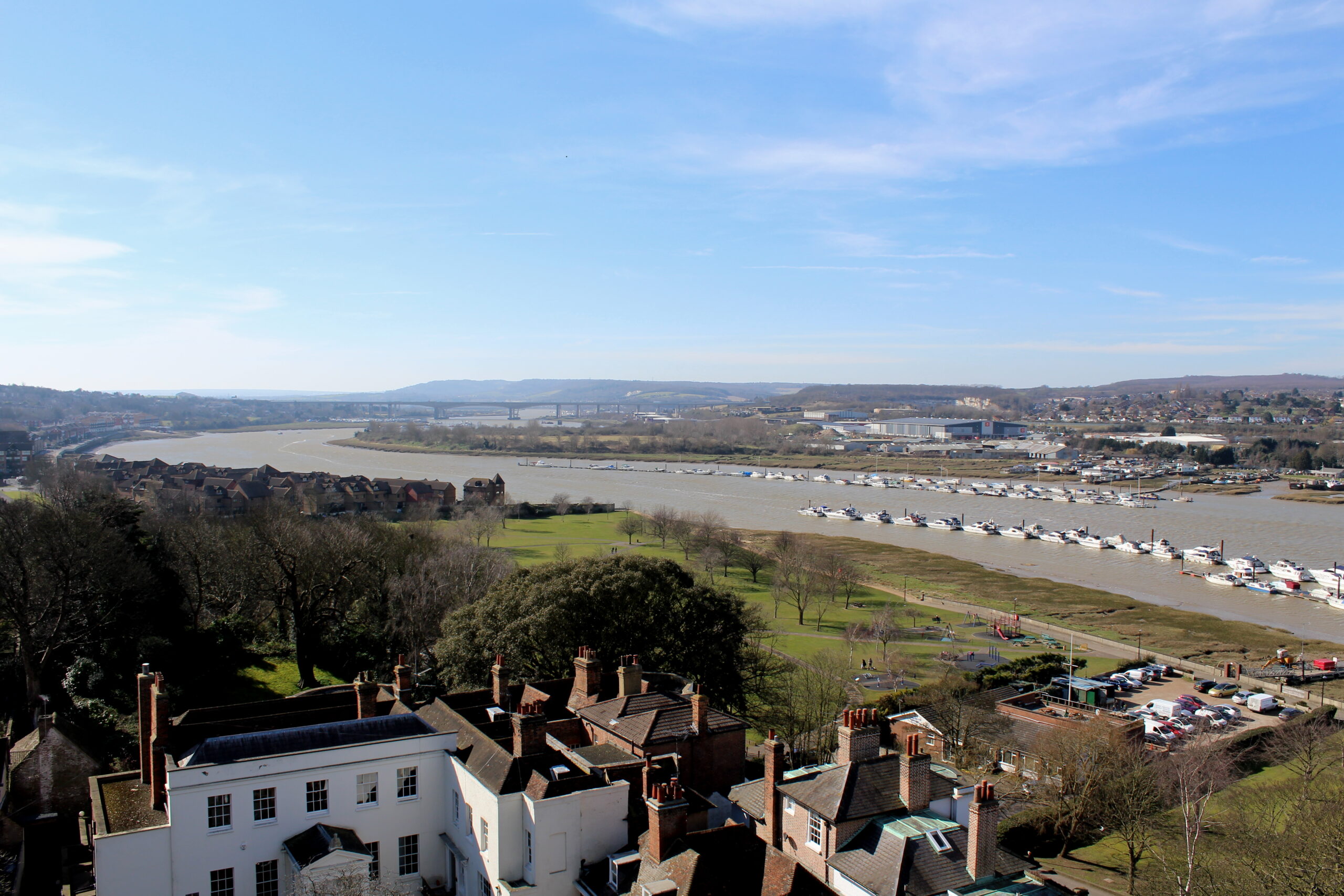
    A view of Luton on a sunny day from the Great Lines Heritage Park. Luke Smile's tribute mural to George Bond is visible in the distance.
    Luton viewed from the Great Lines in Gillingham. See if you can spot a mural!

    When you say Luton, most people think of the town in Bedfordshire with the football team and the airport that’s nowhere near London despite its name. But there’s another Luton, and it’s in Medway.

    Once just a small country village, our Luton expanded over the years to accommodate the growing workforce at nearby Chatham dockyard. At its height, Luton was a bustling part of Medway, with several pubs and churches, and a tram depot. One of its pubs, the Hen and Chickens, served local workers for over 250 years, having opened as an alehouse in 1746.

    The closure of Chatham dockyard in 1984 had a major impact on Luton. It decimated local employment rates, which had inevitable knock-on effects, including buildings falling into disrepair, businesses closing, and other economic and social problems. The Hen and Chickens didn’t survive either; a developer recently got planning permission to turn it into ten flats.

    Luton is now the most deprived area in Medway. That’s a sobering fact, even more so when you consider that Medway as a whole is one of the most deprived parts of England. A recent report makes for grim reading, showing that there’s a 10- to 12-year difference in life expectancy between Luton and Medway’s least-deprived area, Rainham South West.

    All of this has contributed to Luton getting a reputation for being a bit rough and rundown. It’s fair to say some folk have preconceived ideas about Luton, most of them not complimentary. The Man of Kent was therefore somewhat surprised when I announced my intention to spend Easter Sunday in Luton as a tourist.

    But perception and reality are two different things, and perceptions of Luton belie its history. Its former residents include people who have made great discoveries, and changed the world around them for the better. People like Asquith Xavier, who fought against a ‘whites-only’ recruitment policy to become the first non-white train guard at Euston Station. People like Sydney Turner, who discovered the 400,000-year-old Chatham Elephant, and Laura Richardson, one of the first women to ride a bicycle in Kent. People like William Mason. These lost stories are now being rejuvenated and commemorated by a grass-roots project that’s turning Luton’s houses and high-rises into an open-air art gallery; Arches Local.

    Changing places and perceptions

    Alain's Welter's Pet Shop mural on the side wall of a house. The mural shows a Humboldt monkey rowing a boat shaped like an inflatable banana, surrounded by tropical birds and palm tree leaves.
    Alain Welter’s Pet Shop mural on Henry Street, Luton

    Arches Local is a group of volunteers with a love of Luton and a ton of ambition. It was born out of the Big Local programme, a joint project by the National Lottery Community Fund and Local Trust. Big Local identified 150 deprived areas across the UK that had been overlooked for funding in the past, with the aim of financing community projects that would create long-lasting change. It was a ground-breaking initiative that gave local communities not just a substantial amount of money (each project received at least £1 million) but also the freedom to choose how to spend it.

    Aiming to strengthen links between people and places, Arches Local started in 2012 with projects focused on neighbourhood engagement, social investment and greening local spaces. Nowadays, it’s engaged in everything from local policy decisions to planting trees on streets. The fact that most of the original volunteers are still involved almost fifteen years later is a testament to the group’s dedication and passion for the area. It’s a bunch of people with serious commitment and bold ideas. Bold ideas like painting Luton’s history on the sides of its houses…

    Do something that can’t be ignored

    Ricardo Van Zwol's mural of Erica Stuart on the side of a four-story block of flats. The mural is in shades of white and pink and shows Erica Stuart in profile.
    Erica Stuart by Ricardo Van Zwol

    Luton is densely populated. Plenty of its residents have lived there for years, but it’s also a place where people come and go.

    Wanting to invest in memories that would otherwise be lost, and determined to do this in a way that couldn’t be ignored, Arches Local came up with a daring plan. Huge, public murals that would preserve the stories for residents old and new, and challenge perceptions of Luton at the same time.

    Luke Smile's mural tribute to George Bond. The words 'The Name's Bond' are painted in block capitals in orange, red and purple with white outlines, on a dark blue background on a low wall.
    Luke Smile’s mural celebrating the life and work of George Bond

    I’d say mission accomplished; it’s impossible to ignore the Luton murals. Why? Well, this isn’t your average street art, for a start. The Luton murals are striking contemporary artworks that wouldn’t be out of place in a gallery like the Tate Modern. This is deliberate on the part of Arches Local, who are determined to do everything to the highest possible calibre. Their driving principle is, if it’s good enough for somewhere else, it’s good enough for Luton.

    The other reason it’s impossible to ignore the murals is their vast scale. Much as they could fit right into the Tate Modern in terms of style, you’d never fit them into the actual rooms there. Ricardo van Zwol’s mural of Luton resident and campaigner Erica Stuart takes up a whole side of a four-storey block of flats in Sawyers Court, as does Jack Lack Art’s nearby tribute to gardener extraordinaire Henry Charles Lawrence. You can even see Luke Smile’s interpretation of George Bond’s life and career from the top of the Great Lines in Gillingham!

    Who, what and where

    Close of the mural of Asquith Xavier. Xavier is shown in his train guard uniform with a train crossing a bridge and a Euston station sign in the background.
    Asquith Xavier mural by Voyder

    Each mural tells a story of Luton or wider Chatham, and the position of the mural is as important as the story itself. There’s been no shortage of people wanting to volunteer their homes as a canvas, but the locations chosen aren’t arbitrary. The building on which a mural is painted always has a connection to the story depicted. For example, William Mason is facing the address where he lived, and Asquith Xavier is looking in the direction of his old house a few streets away.

    The artists involved come from all over the UK and Europe, attracted no doubt by the ethos behind the project, but also the creative freedom they are given. They choose a subject for their mural off a list of potential stories, which has been carefully curated from local residents, archives and other sources. But once a subject has been chosen, what the final mural looks like is entirely up to the individual artist, who gets full creative licence. No one gets a veto on the finished look, including the person whose house is the backdrop for the mural.

    Having no idea what the final version will look like sounds pretty scary to me, but luckily for the rest of us, the people of Luton are braver souls.

    Risk and reward

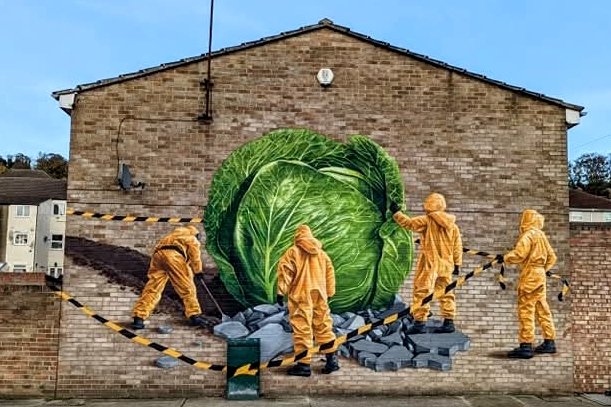
    The Cabbage mural on Henry Street. A giant green cabbage is being inspected by four people in yellow hazmat suits.
    The first ever Luton mural: Cabbage, on Henry Street, Luton

    The first mural to go up was the Cabbage, painted by WOSKerski in November 2023 on a house in Henry Street. It represents Luton’s agricultural history; the preponderance of cabbage-growing in the area led to Luton becoming known as ‘Cabbage Island.’ Some Luton residents refer to themselves as ‘Cabbage Islanders’ even today.

    The family who live in the house had no idea that the mural would be a giant cabbage being inspected by people in yellow hazmat suits. Local residents had no clue what was happening either, other than the road next to the house was closed. Once it became clear something was being painted, Arches Local mischievously kept the story a surprise until the mural was finished, though many neighbours tried to work it out during the six days it took to paint.

    The Cabbage mural was an audacious experiment. The idea of painting an enormous cabbage on the side of someone’s house might sound intriguing or comical, but it was majorly risky. No one knew what the local reaction would be. Arches Local had even set aside funds for painting over it if necessary.

    Mister Tris's Man Orchid mural. It shows two children finding the Man Orchid in the wild on the left, and a hand holding a botanical drawing of the Man Orchid on the right.
    Man Orchid mural by Mister Tris

    As it turned out, people loved not only the art and stories, but also the curiosity and discovery inherent in watching the murals take shape and finding out the history. Consequently, there’s deliberately no signs giving details about the murals like you would see in a gallery. The story behind each mural is entirely up to you. You can deep dive into the history with Google, Street Art Cities or the Arches Local website, or make up your own explanation of what they’re about. As Arches Local put it, “The stories belong to the people who live there.”

    Whether the murals would stand the test of time was another experiment. The fact that all of them remain untouched and undamaged says it all. Every single one looks fresh as a daisy, not a scuff mark, scratch or graffiti tag in sight. Luton has taken these murals into its heart, which is just as well considering the people who live in the painted buildings constantly have strangers knocking on their door asking questions about them!

    Since the success of Cabbage, a new mural has appeared every few months and Arches Local has been inundated with artists wanting to paint in Luton. The Big Local funding provided financial freedom to create the murals, and not being in a conservation area meant more freedom in terms of appearance, location and style. The murals have been covered in the national and local press, and photos of them regularly pop up on social media. Nowhere else in Medway has a public art installation on this scale.

    That’s not just down to Arches Local, but also the family who live in the Henry Street house that’s home to the Cabbage; the mural pioneers. Without them, none of the other murals would have happened.

    The art of the possible

    The word 'Imagine' is painted in capitals against blue and purple flowers on a dark blue background.
    Anne Pratt mural by Sophie Mess

    Luton might be deprived in some ways, but it’s not lacking in history or community spirit. It’s also leapfrogging other Medway neighbourhoods when it comes to resident involvement in local planning policy and cultural projects.  

    That’s not to say there isn’t still a long way to go; much more is needed to reduce the stark inequalities between Luton and the rest of Medway, if not the rest of the country.  The recently-announced Pride in Place funding of £60 million over 10 years for Luton (as well as Twydall/Gillingham and Rede Common in Strood) should hopefully see further tangible change that makes a real difference to local residents. Medway Council is aiming for Medway to become a Marmot Place, working with the UCL Institute of Health Equity to halve the gap in life expectancy between the best and worst-off areas. Arches Local will also be continuing its own programme of work to improve the area and change people’s perceptions.

    Nevertheless, the Luton murals show what’s possible with financial investment, community empowerment, and a willingness to take risks. The fact that there’s now a whole trail of murals proves the old adage of those who dare, win.

    Chatting to Arches Local, they put the success of the murals down to trust, friendship and community. New murals keep appearing because of residents’ admiration and enthusiasm. There’s no external consultants and no fancy architects involved. It’s all being driven by the people who live there.

    And finally

    Laura Richardson mural by Hixxy. It shows Richardson on a bike, her huge yellow skirt billowing behind her. Shoes and her hat have blown away behind her. The background is bright blue.
    Laura Richardson mural by Hixxy

    Imagine someone telling you they’d like to paint a mural on the side of your house. You won’t know what it’s going to be until it’s finished, but it will be something to do with the history of Medway. You don’t get a say in the design, and when it’s done, people will come and photograph your house and knock on your front door to ask you about it. It’ll be in the paper and probably all over Instagram.

    What would you say?

    Before Easter I’d have told you that, while I would like to think I’d be brave and say yes, I’m too much of a control-freak scaredy-cat. I’d need to know exactly what it was going to look like, what the story was going to be, size, colours, the lot. And even if I said yes, I’d be stood outside on the pavement flapping the whole time it was being painted, clutching a cup of tea and panicking that I wouldn’t like the end result.

    But now, if the person asking me was from Arches Local? I would say, absolutely, yes, go for it. Slather my house in the history of Medway in all its colourful glory, any story you like. I’ll make the tea while it’s being painted, and bring ice creams if it’s hot. I’ll happily stand and watch it take shape from the pavement, and I’ll chat the ears off anyone who wants to ask about it. Because who wouldn’t want to be part of this amazing project? I’d be dead proud to have one on my wall.

    As we were walking around Luton that Easter Sunday, The Man of Kent said these murals made him feel hopeful about the future of Medway. I’m not just hopeful; I’m excited.

    Luton deserves to be proud of these painted monuments to Medway’s history. Long may they last.

  • Going to the match in a not-so-dirty old town: Salford City v Gillingham

    I found my love by the gasworks croft
    Dreamed a dream by the old canal
    Kissed my girl by the factory wall

    Dirty old town
    Dirty old town

    Lyrics from Dirty Old Town by Ewan MacColl, club anthem of Salford City FC

    Dirty Old Town. Everyone thinks it’s an old Irish folk song because of covers by The Dubliners and The Pogues, but it was actually written by Ewan MacColl about his home town of Salford. MacColl wrote the track in 1949 for his play, Landscape with Chimneys, and Salford’s smoggy, industrial landscape of factories and gasworks inspired the title. Salford isn’t a dirty old town anymore though, and some parts are positively glitzy (hello, MediaCity).

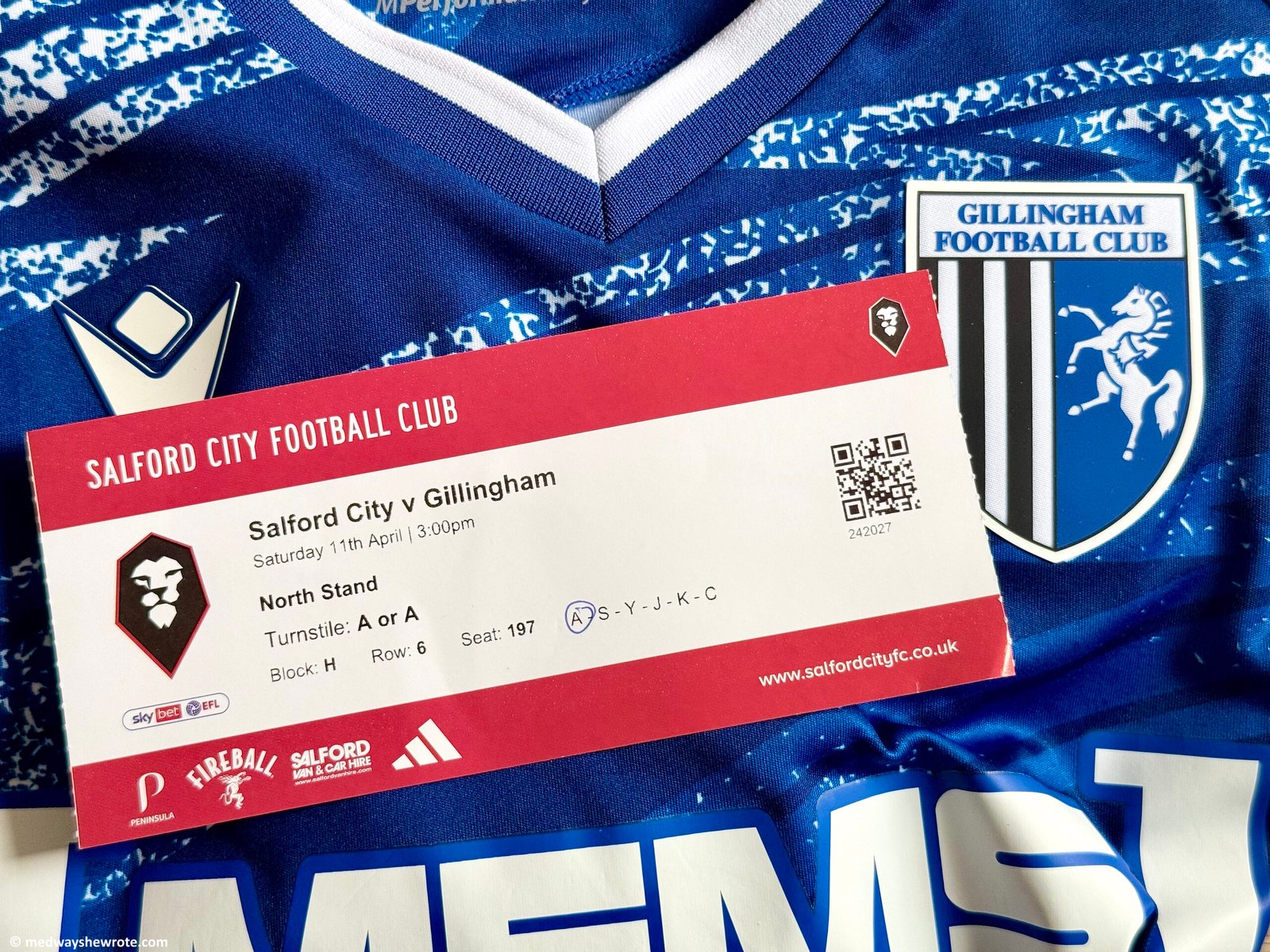
    The Man of Kent, being a true Shouting Man, decided that there could be no better way to celebrate his birthday than watching his beloved football team, Gillingham FC. So off we went to follow the Gills over land (but not sea) to the Peninsula Stadium, home of the Ammies – Salford City FC.

    Today on Medway, She Wrote: Watching the Gills play Salford City, soaking up football art at The Lowry, and a visit to the National Football Museum. Read on to find out which one of us scored top bins at the Museum, and which football legend we spotted in Altrincham’s Market House.

    Continue reading
  • Jezreel’s Tower: Medway’s Missing Landmark

    “It is to be the grandest building in the whole of these parts.”

    James Jershom Jezreel

    Have you ever seen the TV series Grand Designs?

    It’s a show on Channel 4, hosted by Kevin McCloud, about people building homes that are unusual, groundbreaking and often grand in scale. Sometimes the designs are beautiful structures that enhance the landscape around them, blending quietly into their surroundings. Sometimes the buildings are bizarre or just plain ugly, leaving you wondering, ‘What were they thinking?’ But every design is unique, even if not to your particular taste. Having Kevin McCloud describe your design as having ‘integrity’ is the highest possible accolade on the show.

    The show has garnered a few tropes over the years. Vast structures that spiral way beyond budget. Builds that go over deadline by months, if not years. Owners whacking terrifying amounts of money on credit cards to fund the project. Kevin McCloud commenting wryly on the ambitious nature of the design or timetable. I say all of this with affection; it’s a great show.

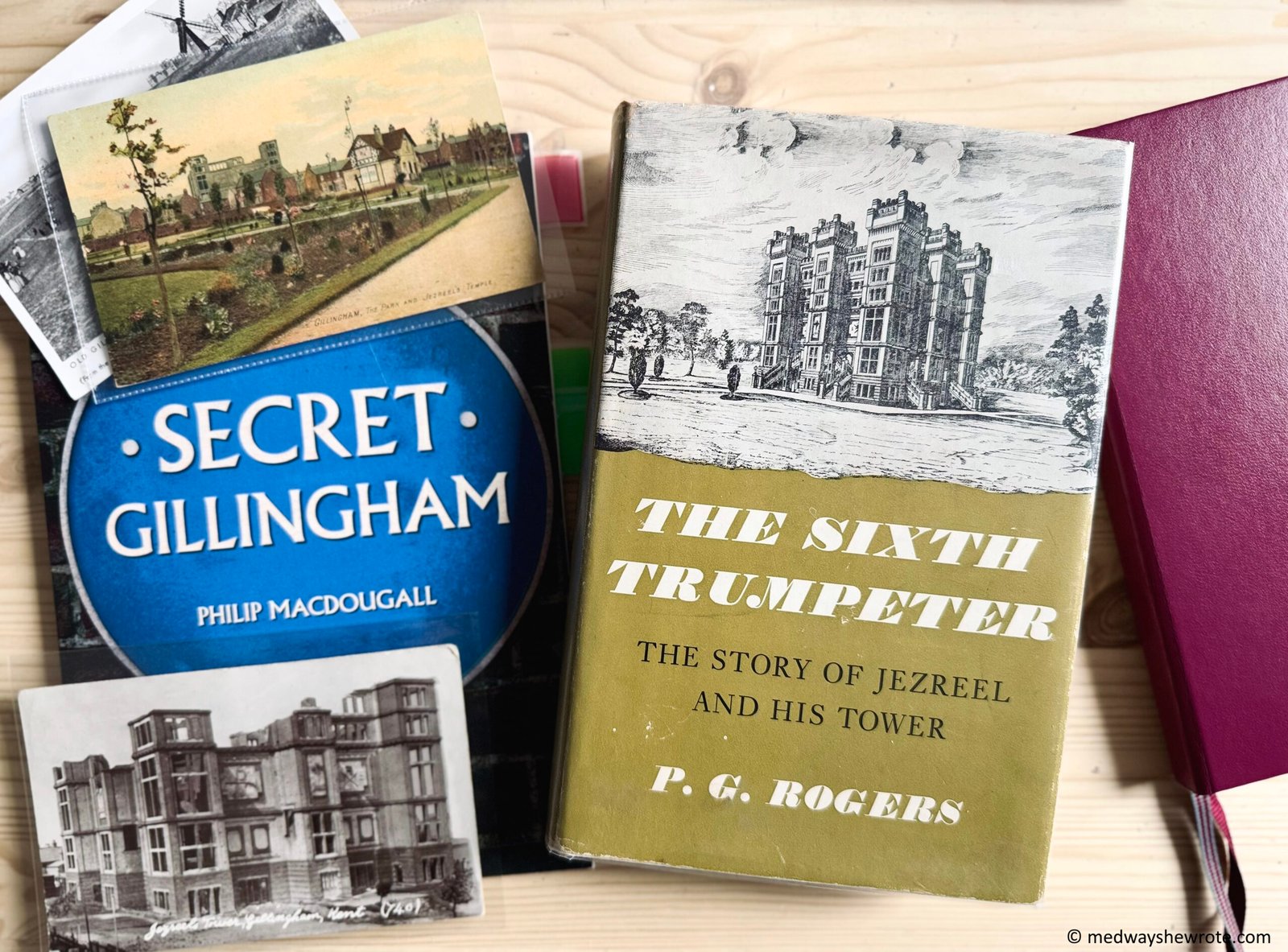
    There have been several Grand Designs in Kent. The Garden of England has attracted many intrepid self-builders looking for a few spare acres on which to construct their dream house. But once upon a time, long before Channel 4 started documenting such things, Gillingham was home to a very grand design indeed. A structure that was intended to be “the grandest building in the whole of these parts.”

    That building was Jezreel’s Tower. It stood at the top of Chatham Hill, dominating the Medway skyline. Jezreel’s Tower wasn’t just famous locally. It was famous nationally. As well-known and recognisable as the Angel of the North, or Stonehenge, or Blackpool Tower. It was so famous, it was one of the British landmarks used in an advertising campaign for Shell Oil. It featured on postcards, and has been immortalised in song by local bands Tundra and The Khybers.

    In March 1961, 65 years ago, the grandest building in the whole of these parts was torn down. It had put up decades of resistance, mightily withstanding many attempts to have it demolished, but was eventually battered into the ground thanks to an act of colossal municipal short-sightedness.

    Today on Medway, She Wrote: Jezreel’s Tower – Gillingham’s missing landmark; the charismatic religious leader who created this grand design; and how I might never have found out about any of this, were it not for Percie’s postcard.

    Continue reading
  • Mr Kipling’s poem about Medway

    For, now De Ruyter’s topsails
       Off naked Chatham show,
    We dare not meet him with our fleet –
       And this the Dutchmen know!

    Rudyard Kipling, ‘The Dutch in the Medway’

    Happy World Poetry Day! What better time to do a spot of research into poems about Medway? I couldn’t think of any poems about Medway – or Kent for that matter – off the top of my head, but I was pleased to discover that its history has inspired many famous writers! Today, I’ve picked out a poem by Rudyard Kipling. This one sparked my interest because it’s about the Dutch raid on the River Medway in June 1667, which I’ve written about before.

  • Private Gardiner’s execution on the Great Lines, with revolting details (sorry, Mr Dickens!)

    Me: “Do you think there were food stalls selling burgers and hotdogs, like on Bonfire Night?”

    The Man of Kent: “More like peanuts and pies, beer and gin. Can’t imagine people were watching the execution sober.”

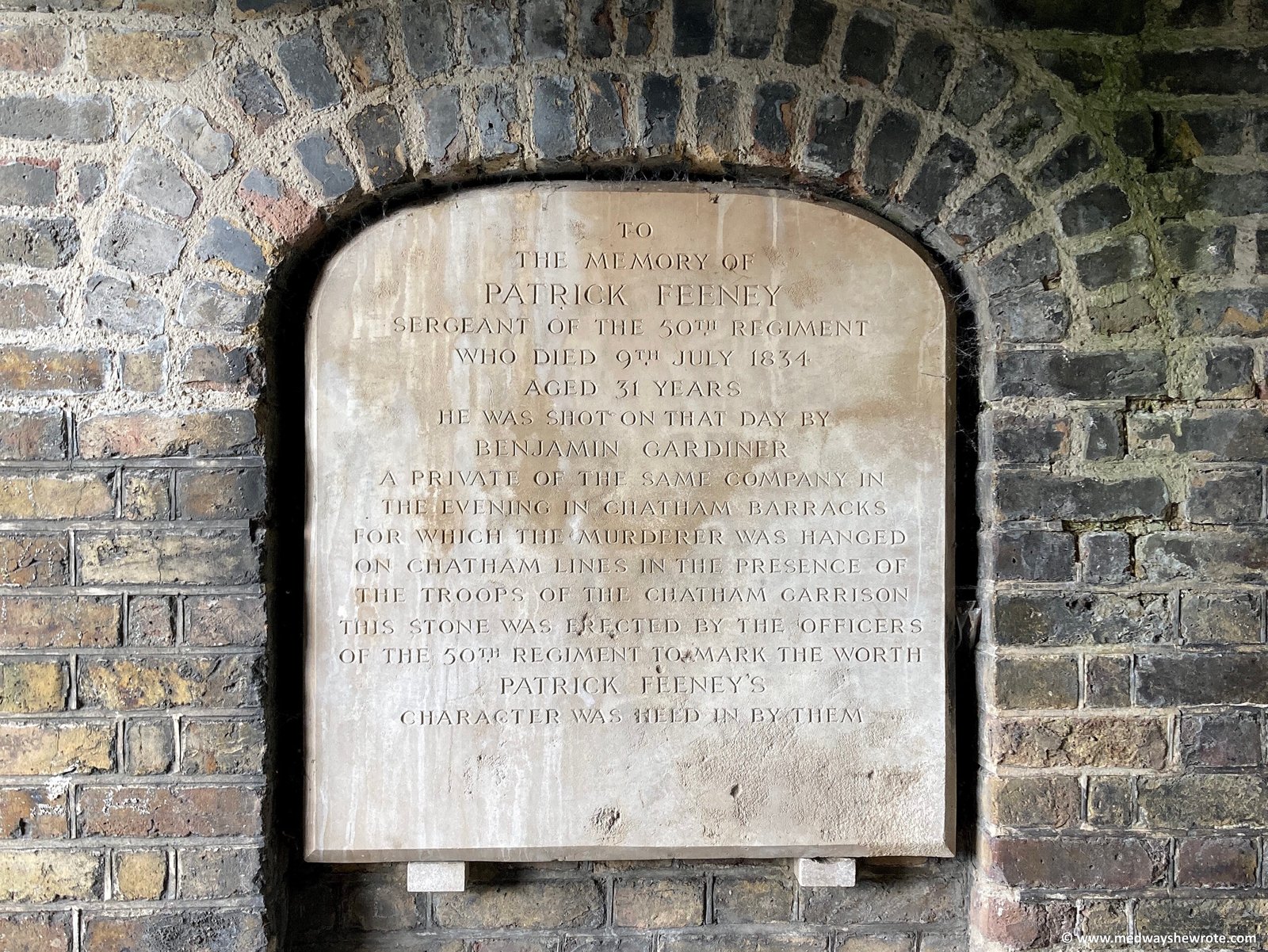
    New Year’s Day 2026. The Man of Kent and I were walking on the Great Lines, and I was telling him the story of how Benjamin Gardiner had been executed here for murdering Sergeant Patrick Feeney, in 1834.

    I was pondering what the scene must have looked like, almost two hundred years ago, when around 14,000 people packed onto the Lines to see one man put to death. I started thinking about the annual fireworks display that, until recently, happened most years on the Great Lines. As anyone who has attended that display knows, you can cram hordes of people onto those hills and fields. On Bonfire Night, there would also be food trucks catering to the spectators.

    That’s when it occurred to me. With so people around to watch the execution, there were bound to be vendors who wouldn’t miss the opportunity to turn a handsome profit. Hence my question to The Man of Kent. I wasn’t being flippant; just voicing a morbid thought.

    As it turns out, The Man of Kent wasn’t far off. Executions had entertainment value in those days, and local food and drink sellers would indeed ply their wares to the crowds. In fact, one former pie seller would play a prominent and sinister role in this particular affair.

    Today on Medway, She Wrote: the murder of Sergeant Patrick Feeney at Chatham Barracks, the execution of Private Benjamin Gardiner on the Great Lines, and the portfolio career of Britain’s busiest hangman, William Calcraft.

    Continue reading
  • Cat Fight, Coopers Chase, Cockie and more: a year of reading in Kent

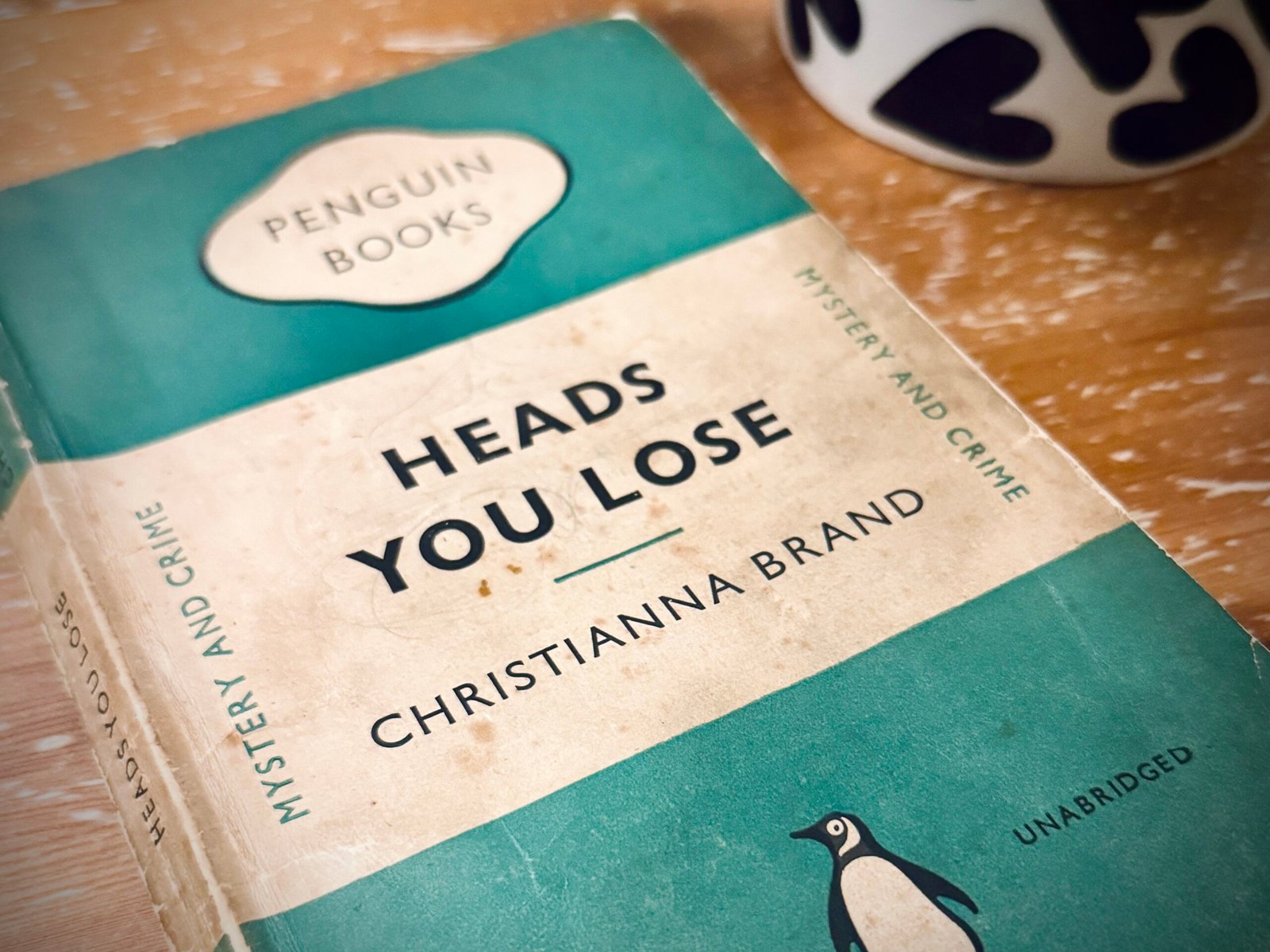
    A old, Penguin paperback copy of 'Heads You Lose' by Christianna Brand on a coffee table. The bottom of a mug with a pattern of black hearts on a white background is visible in the background.

    “Book collecting is an obsession, an occupation, a disease, an addiction, a fascination, an absurdity, a fate. It is not a hobby. Those who do it must do it.”

    Jeanette Winterson

    Book collecting is “a fate.”

    Collecting books is much easier to justify when you put it like that, isn’t it? I couldn’t help it; I was fated to buy that new book, even though I have a to-be-read pile the size of the Pentagon Centre.  

    Collecting books is my obsession, disease, addiction and fascination, as well as my fate. I wish I could make it my occupation, but I haven’t managed that yet. Regular readers will know I have next to no willpower when it comes to reading material, and I hoard books like Smaug from The Hobbit hoards treasure. That’s why I can’t move in the spare room of my house. Truth be told, since I wrote that post, the landing cupboard is now a casualty. But hey, that’s fate for you.

    Last year, I resolved to read more books. Well, I read 17 books; ten more than I did in 2024.

    Now 17 may not sound like a lot. I know people who read over 50 books last year, others who read 100. 100! That’s Olympian levels of reading as far as I’m concerned. Seventeen isn’t a personal best for me, but I read as many books as I could in the time available, and most importantly, I thoroughly enjoyed them.

    Today on Medway, She Wrote – a round-up of what I read in 2025, including five books set in Kent!

    Continue reading
  • An Autumn weekend in Antwerp

    The ornate baroque clock at Antwerp Central station.

    First impressions count, as the saying goes.

    Antwerp is a city that makes a remarkable first impression if you travel there by train.

    “Wow!” I gasped, like the gawking tourist that I am, as I emerged from the train and up the escalators into the main hall of Antwerp Central. More of a palace than a station, it’s understandably regarded as one of Europe’s most beautiful rail terminals. This immediate bout of sightseeing was the start of two lovely days in Belgium’s second city.

    I’ve heard Antwerp described as ‘the Manchester of Belgium’, so naturally I was expecting to find rich history, vibrant culture, buzzing nightlife, and a top-flight football team.

    Antwerp has all of those things.

    It also had something else in common with Manchester.

    Rain. And plenty of it.

    Regular readers will be relieved to know that The Man of Kent had brought his trusty pack-a-mac, so the weather conditions were not a problem.

    Today on Medway, She Wrote: what we did on an Autumn weekend in Antwerp, why Saturday night in the Grote Markt felt like a home-from-home, hunting for cocktails in dark courtyards, and one very narrow door.

    Continue reading
  • A tour of Whitstable’s wonderful, whimsical street art

    Ask people in Kent to name some things they associate with Whitstable, and they’ll probably say, seaside, oysters and Peter Cushing (he used to live there).

    They might also say Whitstable Bay beers, and the Maunsell forts.

    Ask me, and I would say all of those things. I’d also say, street art.

    Whitstable’s coast has inspired hundreds of artists throughout history, notably JMW Turner. His famous watercolour, ‘Oyster Beds at Whitstable’ was one of several that he painted for a book, Picturesque Views on the Southern Coast of England, by W.B. Cooke. Turner was a frequent visitor to nearby Margate, and the Kent seaside was the subject of many of his paintings and sketches.

    More recently, art in Whitstable has moved off canvas and onto buildings, as the town’s colourful streets have acquired a new collection of residents; murals all over the town that commemorate town folk, provide witty social commentary, and are eye-catching in the best way. Wandering around Whitstable is like being in an open air gallery, from the rainbow of shopfronts and pubs, to the street paintings and houses. Not to mention the glorious sea views.

    I could blog for days about all the reasons I love Whitstable. Today’s post, however, is simply about the whimsical, wonderful street art that abounds in this quirky seaside town.

    Continue reading
  • All aboard for the Maunsell Forts! A spectacular sailing trip on the X-Pilot

    The Maunsell Forts lie about 14 miles off the Kent coast, their spectral forms appearing to float on the waves. Once a chain of vital anti-aircraft defences and intended to be temporary, they have remained standing for over 80 years. Their derelict shells are an eerie reminder of wartime, and inspiration for filmmakers, musicians, writers and sportspeople alike.

    Today on Medway, She Wrote: A captivating trip to the Maunsell Forts aboard the X-Pilot, the Maunsell Forts’ connections to pirate radio and Doctor Who, and another encounter with our old nemesis, Admiral Michiel de Ruyter.

    Continue reading
  • J.B. Fletcher comes to Medway! A review of the cult smash hit, Solve-Along-A-Murder-She-Wrote

    “There are three things you can never get enough of in life, Lieutenant. Chocolate, friends and the theatre.”

    Jessica Fletcher, Danse Diabolique

    When I grow up, I want to be a combination of Jessica Fletcher and Mary Berry.

    You may have seen the TV show, Murder, She Wrote, in which case, Jessica Fletcher needs no introduction.

    If you haven’t, let me explain. Murder, She Wrote is a detective series starring Angela Lansbury as Jessica Fletcher, a retired teacher and author who writes mystery novels under the pen name, J.B. Fletcher. She lives in Cabot Cove, a small town in Maine with a murder rate to rival Midsomer. As well as being a bestselling writer, Jessica has a talent for solving crime. Wherever J.B. Fletcher goes, murder is never far away, and she cracks the case every time.

    Jessica Fletcher is a queen of amateur sleuthing. Mary Berry is queen of cakes. They are both consummate professionals at the top of their respective fields, brilliant women with an abundance of talent, class and style. I rather like the idea of living in a lovely house on the coast, writing books and travelling all the over the world like Jessica, occasionally stopping to bake a scrumptious, perfectly executed cake just like Mary Berry.

    But more on why I enjoy baking another time.

    Today on Medway, She Wrote: How I came to love Jessica Fletcher, why Beauty and the Beast has more than one connection to Cabot Cove, and my review of Tim Benzie’s smash-hit show, Solve-Along-A-Murder-She-Wrote.

    (And if you’ve seen Solve-Along-A-Murder-She-Wrote, you’ll know that last paragraph is what’s known as a pre-cap!)

    Continue reading