“He had a mistress who was born in Rochester.”
Wait. What?
Charles Dickens had a mistress?
A mistress who was born in Rochester – a Medway town?
I am stunned. Gobsmacked. Literally stopped in my tracks. Not so much because Charles Dickens had an affair, but because, despite living in Medway and being a Dickens fan, I had no idea about this story.
The Man of Kent’s Mum lobbed this news-to-me fact into conversation as we were perusing the Charles Dickens Museum in London recently. She is hugely knowledgeable about historical figures, and has form for producing showstopping Medway-related nuggets when I least expect them. Like that time she informed me in the car on the way to Bluewater that Florence Nightingale used to work in a hospital in Chatham.
Having dropped this particular bombshell, The Man of Kent’s Mum headed off into the Extra/Ordinary Women exhibition that we had come to see, with me scurrying along behind, desperate for details. There were details aplenty at the exhibition, and I’ve unearthed more since.
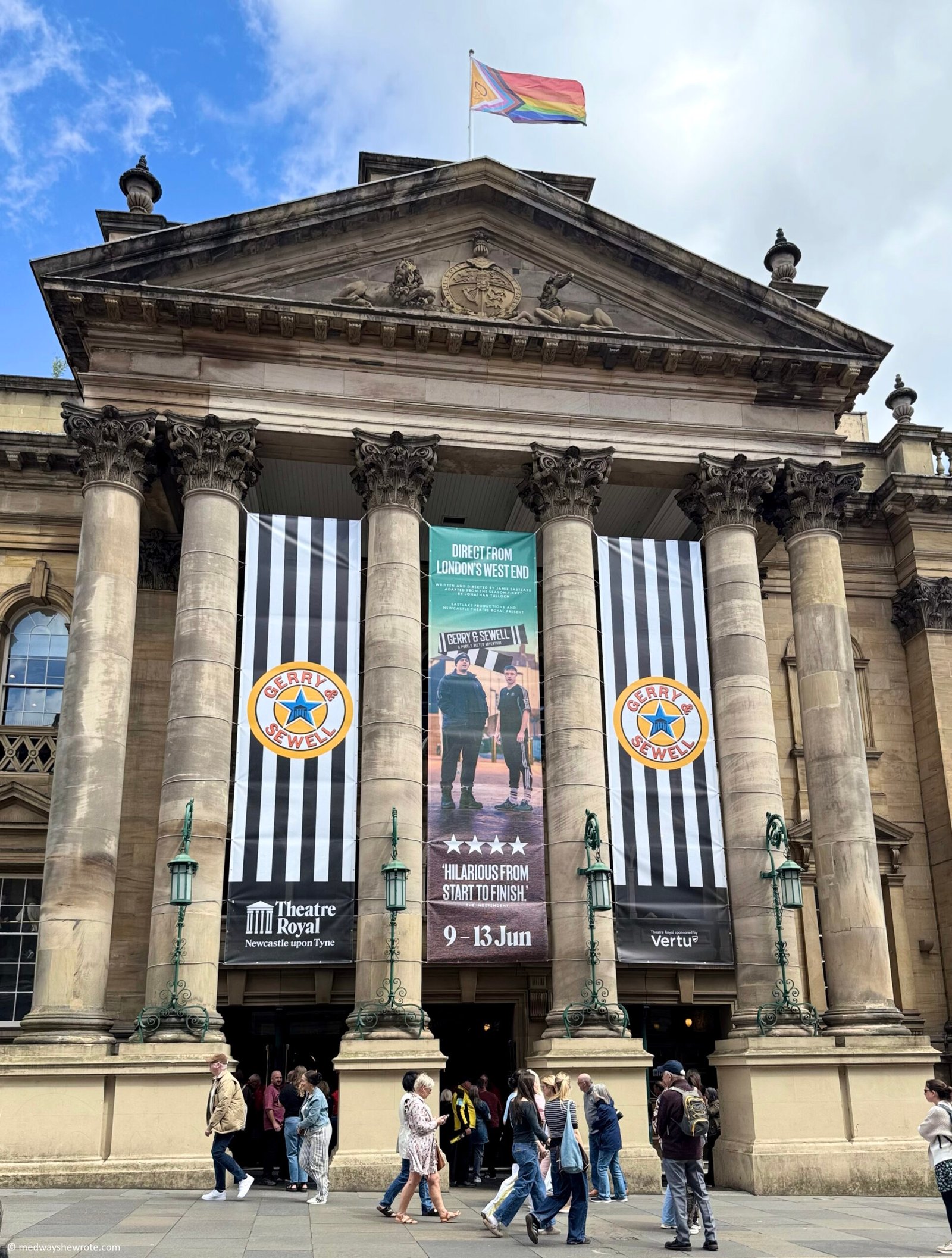
Charles Dickens did indeed have a mistress. Her name was Nelly Ternan, and she was born in the Medway town of Rochester. Even more intriguing; her dad, William Ternan, was one of the first managers of the Theatre Royal in Newcastle! The connections between Medway and my home region of the North East never cease to amaze me.
After Dickens’ death, Nelly moved to Margate, married a schoolteacher and completely reinvented herself. Practically no one was any the wiser about her relationship with Dickens until a journalist broke the story in the 1930s. (Though clearly, some of us had managed to stay completely in the dark almost one hundred years later!)
The story of Nelly’s relationship with Charles Dickens is one of heartbreak, subterfuge, a bracelet and a bonfire. It’s the story of a loyal wife being thrown under the bus to protect the reputation of a literary superstar. It’s about cover-ups, destroying evidence, and twisting the truth. It’s a story that’s scandalous and shocking, but at its heart, deeply sad. It’s certainly extraordinary.
Today on Medway, She Wrote: The sad and scandalous story of Charles Dickens’ affair with Nelly Ternan; the cruel and public dumping of his wife, Catherine; how Dickens’ public image was jealously guarded by his sister-in-law, Georgina Hogarth; and why you should visit the Extra/Ordinary Women exhibition at the Charles Dickens Museum. Enjoy!
48 Doughty Street
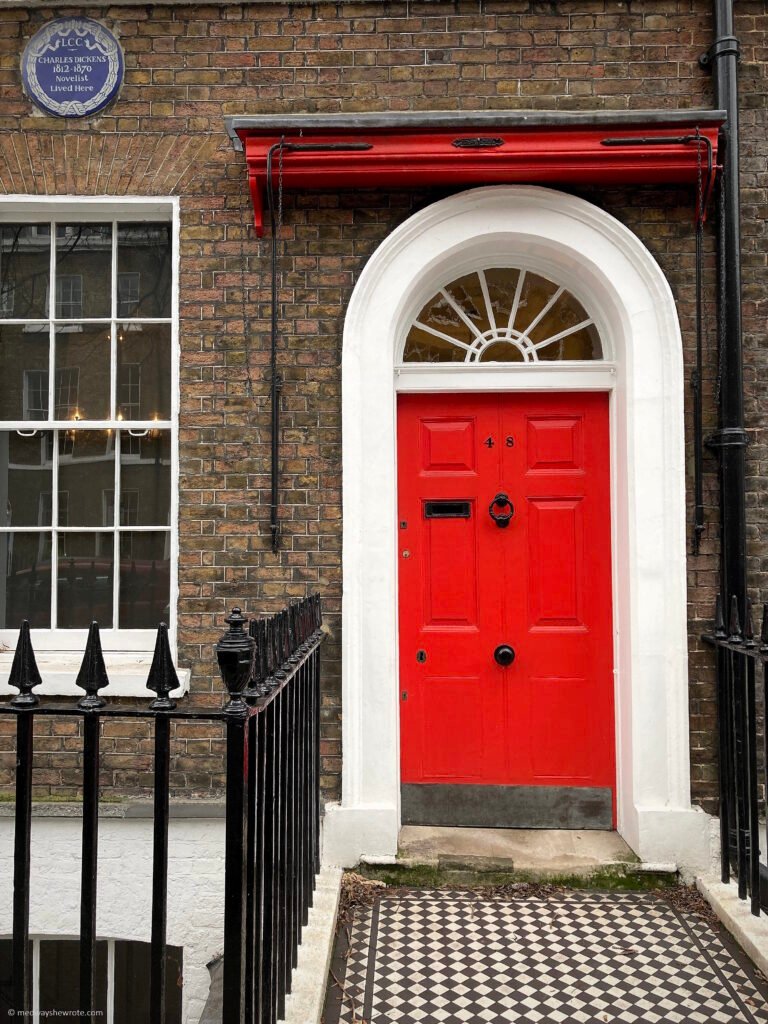
48 Doughty Street was one of several London houses that Charles Dickens rented. He only ever owned one home – Gad’s Hill Place in Higham, Kent. Today, 48 Doughty Street is the Charles Dickens Museum. It curates over 100,000 Dickens-related items; the largest and most comprehensive collection in the world.
48 Doughty Street has hosted celebrities of Victorian London, and witnessed Charles Dickens writing Oliver Twist and Nicholas Nickleby, but it still feels like a beloved family home. As you walk into the entrance hall, you can imagine Dickens hanging up his hat, emptying his pockets onto the side table, and jogging up to his study to start scribbling down a new article for Household Words. In the living room, the armchairs look like they’ve enjoyed plenty of cosy chats, and you can almost hear music being played on the piano. The bright and colourful dining room seems to expect the family to sit down for dinner at any second. There’s no museum stuffiness here; it really does feel like you’ve just popped in for a visit, and Dickens himself will appear at any moment.
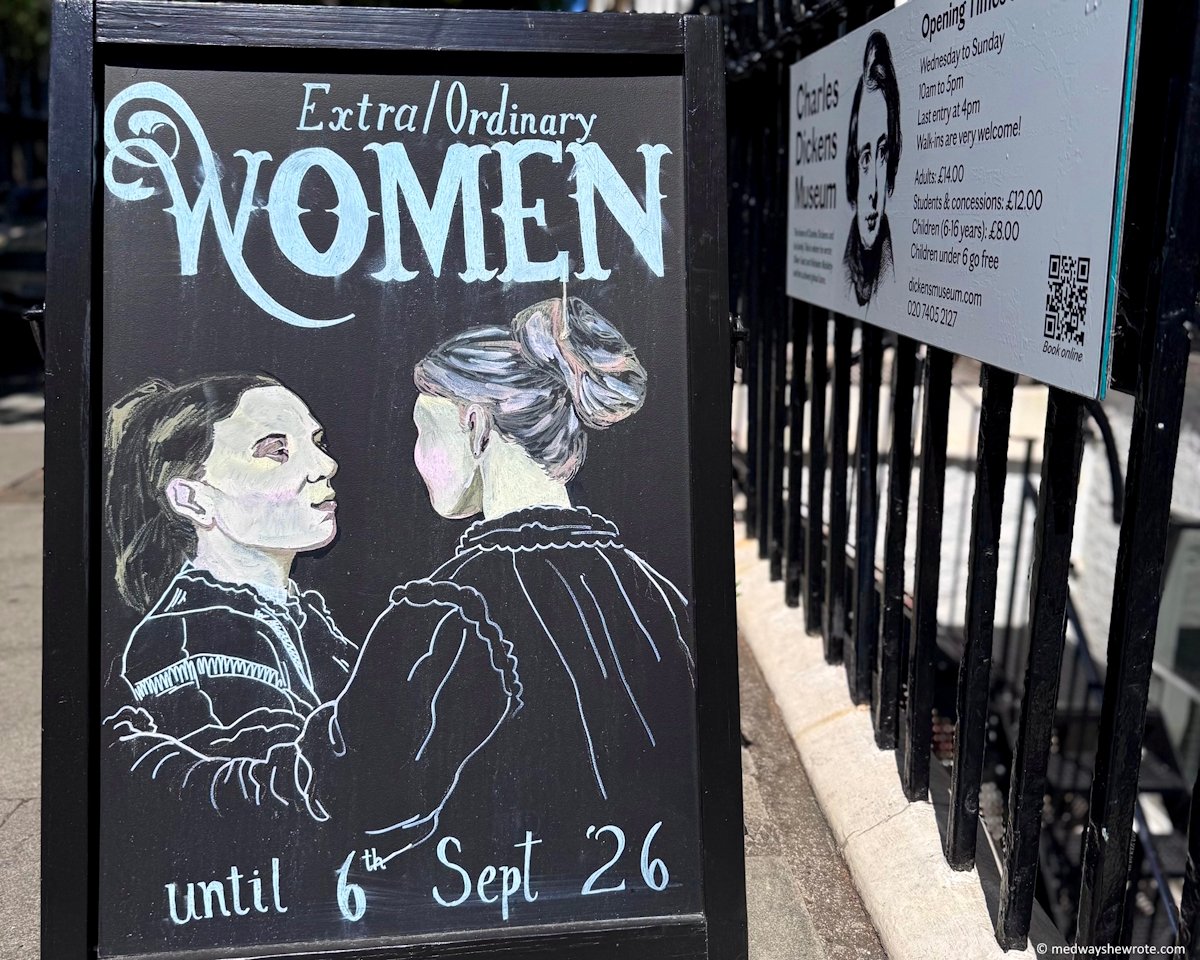
I was at Doughty Street a few weeks ago with The Man of Kent, his mum, his dad and his aunt; all Dickens fans on a day out in the metrop. We had come to see the museum’s current flagship exhibition, Extra/Ordinary Women, which celebrates the women who shaped Dickens’ life and inspired the female characters in his books.
Extra/Ordinary Women
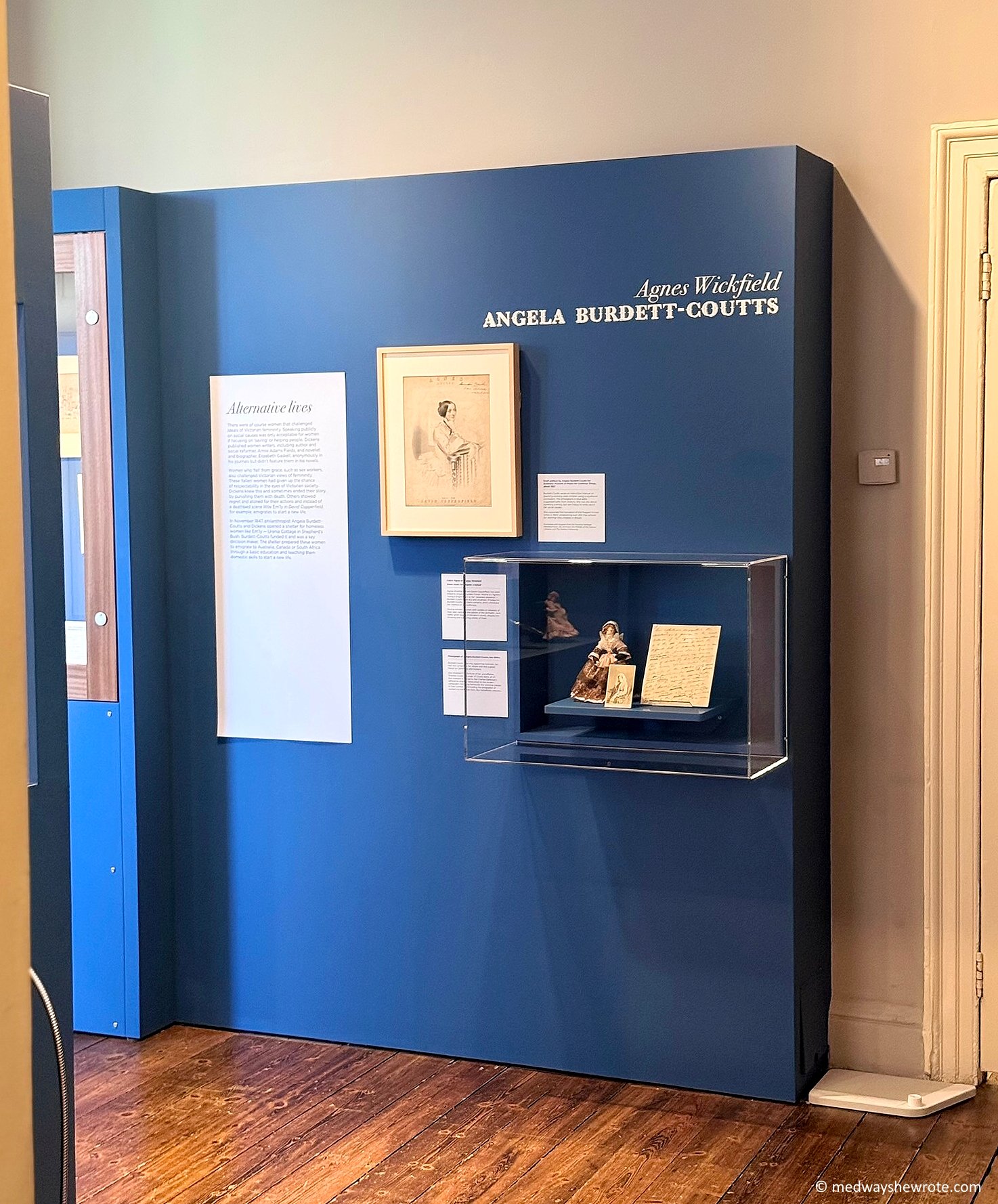
They say behind every great man is a great woman. But behind this particular great man were many great women, as Extra/Ordinary Women shows beautifully. It’s a fascinating exhibition that neatly illustrates the complexities of Dickens’ relationships with the women in his family, and those he worked alongside.
On the one hand, Charles Dickens championed the work of women writers, such as Elizabeth Gaskell, Harriet Martineau and others. He also worked industriously to help women who had fallen on hard times alongside philanthropist Angela Burdett-Coutts, with whom he founded Urania Cottage. But while Charles Dickens was supportive of women in many ways, he wasn’t always a good husband or a great dad. His daughter Katey recalled Dickens saying he wished, “that he had been “a better father — a better man”…he was not a good man…but he was wonderful!”
There were several women whose stories have stayed with me since that day in London. Given the Medway connection, I was particularly intrigued by Nelly Ternan and how her relationship with Dickens was successfully kept under wraps for so long. Key to both aspects are two other extraordinary women whose stories are told at Doughty Street; his wife, Catherine, and his sister-in-law, Georgina Hogarth.
Catherine Dickens: A great woman greatly hard done by
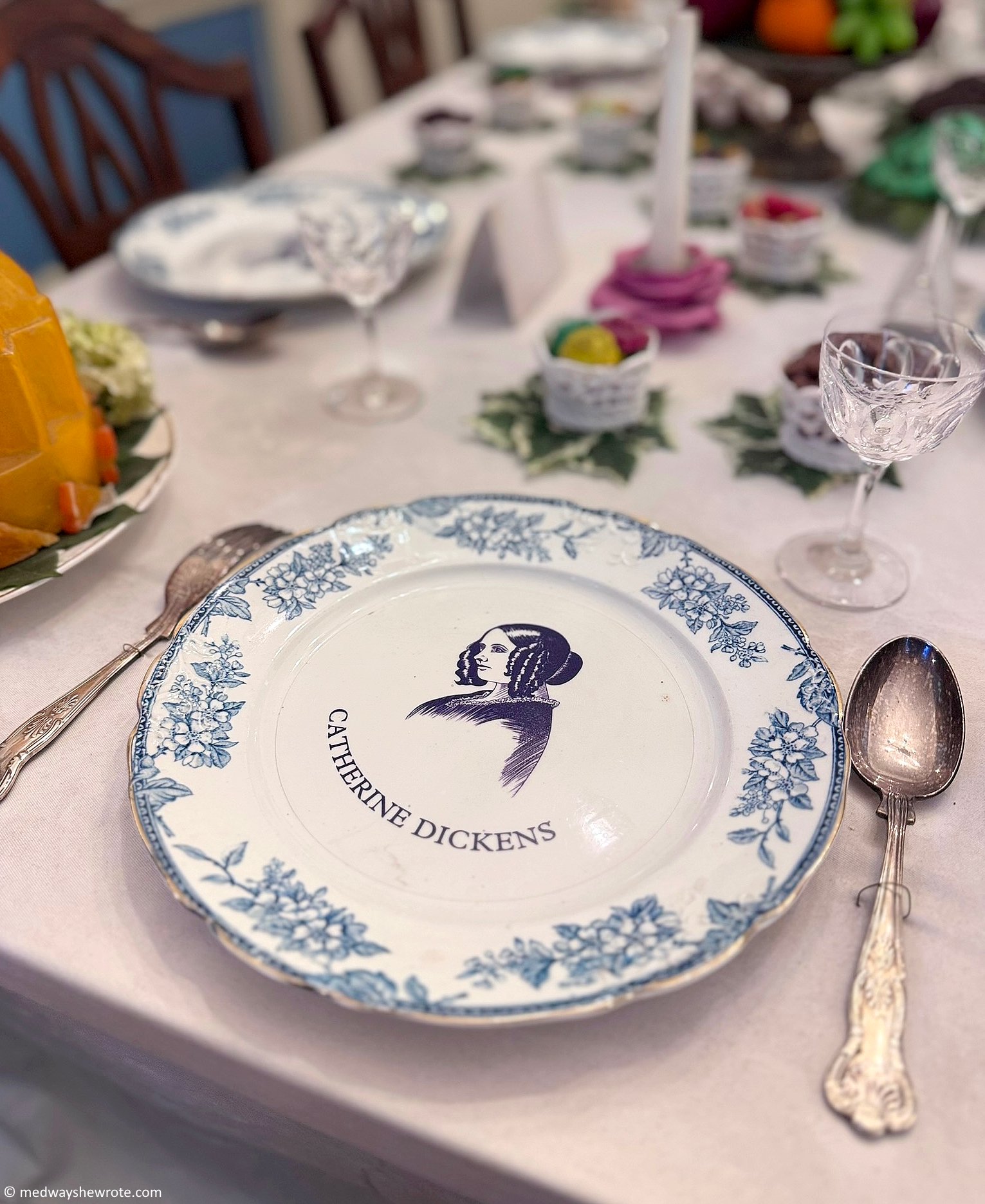
What’s it like, being married to an international literary superstar? Pretty glamorous, at first. After marrying Charles Dickens in 1836, his wife, Catherine (nee Hogarth), travelled with him around the world, including to the United States and the top of Mount Vesuvius. She acted alongside him in plays, hosted the great and good of Victorian society at their home, and published a book of her own, What Shall we Have for Dinner?, which ran to several editions. On Dickens’ six-month tour of America, Catherine was his “greatest source of recovery” from the crowds that dogged his every move, greeting fans and keeping them at bay. At home in London, she would make social calls on Dickens’ behalf; her calling card case is on display at Doughty Street, alongside her gold and turquoise engagement ring.
Sadly, it wasn’t to last. The couple were together for over twenty years, during which time they had ten (ten!) children and Catherine had at least two miscarriages. The death of their baby daughter, Dora, in 1851 put a huge strain on the marriage. Catherine became what we would recognise nowadays as depressed, and Dickens was no doubt deeply affected by grief himself. The pressures of Dickens’ international mega-fame added further stress. The pair steadily grew apart, and the atmosphere at home became increasingly unhappy and despondent – not just for Dickens and Catherine, but for their children and servants too. In a letter on display at Doughty Street, Charles Dickens wrote that:
“An attached woman – more a friend of both of us than a servant – who lived with us 16 years, and is now married, and who was, and still is, in Mrs Dickens’s confidence and in mine, has had the closest familiar experience of this unhappiness.”
(The woman being referred to here is Anne Brown, one of the family’s servants.)
Matters came to an ugly head after 45-year-old Charles met 18-year-old actress, Nelly Ternan, in 1857. Madly in love, Dickens ordered Nelly an expensive bracelet, which was accidentally mis-delivered and found by Catherine. (Is it just me, or are you also now thinking of that scene in Love Actually where Emma Thompson finds out Alan Rickman bought the necklace for someone else?) Charles and Catherine’s marriage was already on the rocks, but this is what finally led to a public separation.
After visiting Extra/Ordinary Women, you can’t help feeling desperately sad for both Catherine and Dickens. They were both under tremendous pressure, both apparently miserable. In those days, it would have been impossible to divorce without causing a horrendous scandal, especially for someone of Dickens’ stature and reputation. Their marriage, which started off so happily, was now full of resentment, bitterness and despair. It must have felt like a ghastly trap.
That’s still no excuse for what Mr Dickens did next.
Scandal and slander
© National Portrait Gallery, London (NPG P301(19))
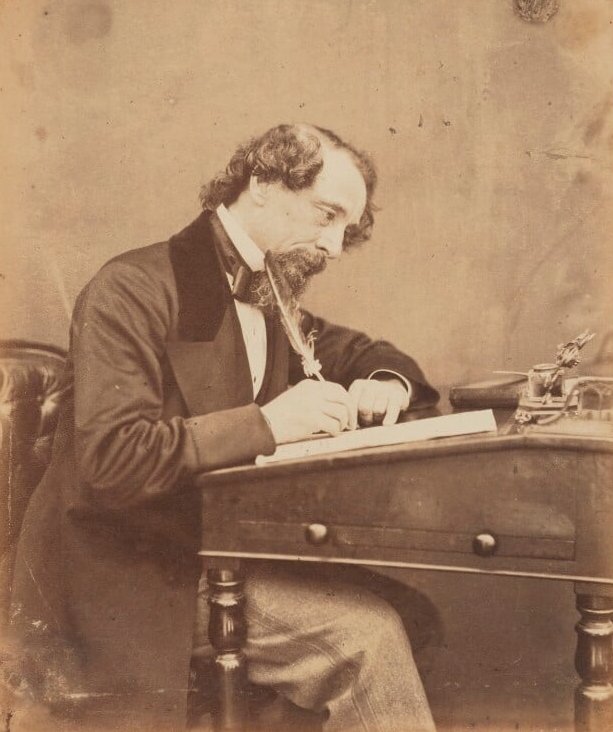
Rumours swirled about the cause of the split between Catherine and Dickens. There were scurrilous tales that Dickens was having an affair with his sister-in-law, Georgina Hogarth, who had been living with the Dickenses since she was 15. At the same time, gossip abounded that a mysterious young actress was involved. For a noted public figure like Dickens, an affair becoming known would be a major and disastrous scandal. The gossip needed to be quashed, and quickly.
In an attempt to shut down the rumours, Dickens went on the defensive. He issued a ‘personal statement’ attacking the “abominably false” whispers, and described the separation as “amicably composed” and of a “sacredly private nature.”
This stretching of the truth was one thing, but it was followed by publication of the so-called ‘Violated Letter’ in which Dickens accused Catherine of being a bad mother and mentally ill. He is also reputed to have complained to friends about Catherine committing the heinous crimes of getting older, losing her looks and being a terrible housekeeper. Dickens cast aside everything Catherine had done to support his life and career, while depicting Georgina Hogarth as a domestic goddess. The ‘Violated Letter’ made it abundantly clear that Georgina was not to blame for the break up, and had in fact, done her best to keep the marriage together. Dickens wrote, “She has remonstrated, reasoned, suffered and toiled, again and again to prevent a separation between Mrs Dickens and me.”
Catherine on the other hand, impressively maintained a stoic silence (at least in public). She moved out with their eldest son to a house in Camden Town. Dickens, meanwhile, decamped to Gad’s Hill Place with the other nine children. One can only imagine how Catherine must have felt, having lost her husband, home and children, then being so publicly and humiliatingly dumped.
The couple’s friends, including literary luminaries such as William Thackeray and Elizabeth Barrett Browning, picked sides. Barrett Browning was having none of Dickens’ behaviour, writing to a friend in October 1858 about the Violated Letter:
“What a dreadful letter that last was! And what a crime, for a man to use his genius as a cudgel against his near kin .. even against the woman he promised to protect tenderly with life & heart—taking advantage of his hold with the public to turn public opinion against her–!“
Well quite.
Catherine’s sister, Georgina Hogarth, who was living with the Dickenses and had been an eyewitness to the breakdown of their marriage, had to pick a side too. But which one?
Sisters before misters, right?
Not this time…
Georgina Hogarth: His ‘best and truest friend.’
© Victoria and Albert Museum, London
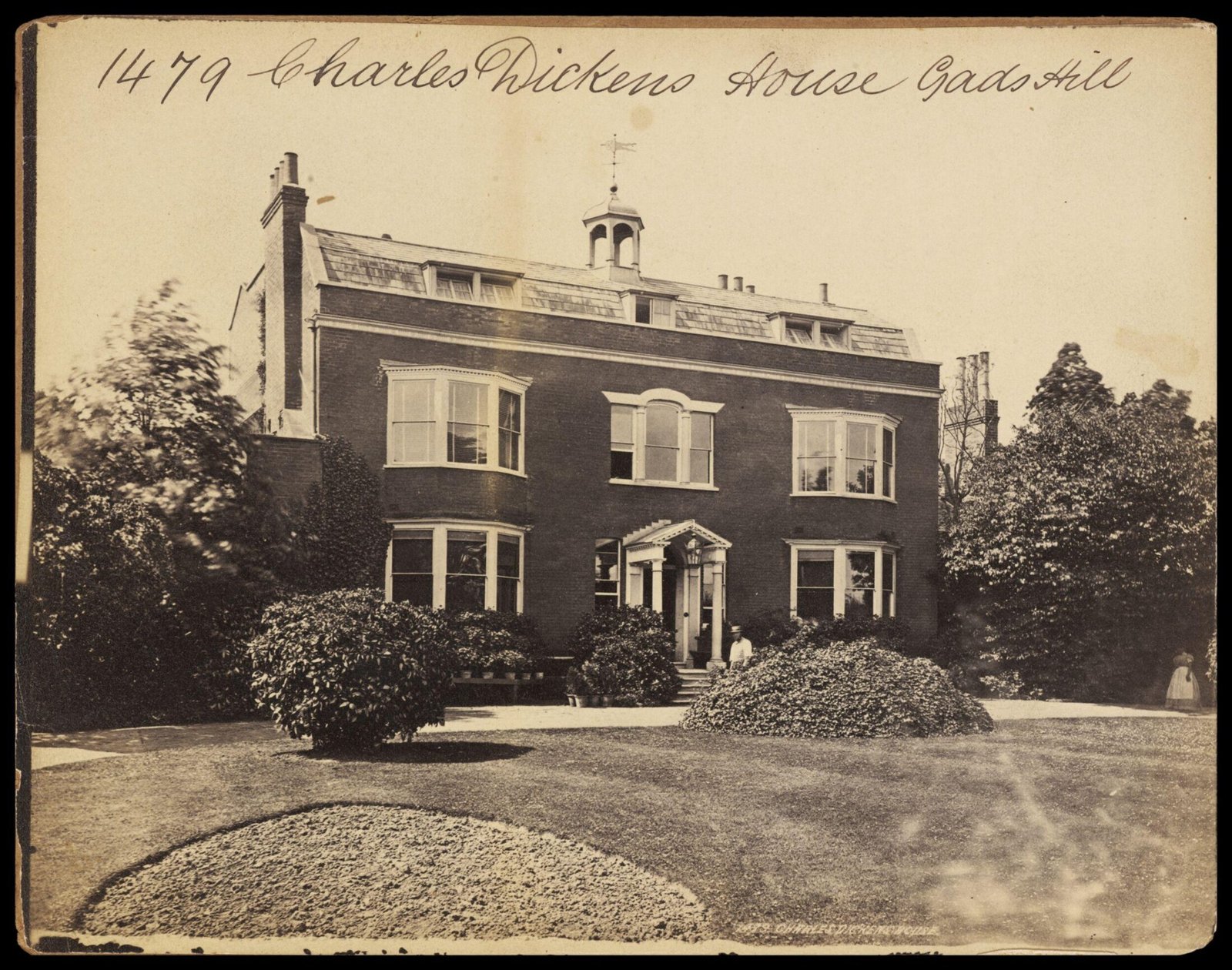
Following the Dickens’ separation, Georgina Hogarth, Catherine’s sister, moved in with Charles Dickens at Gad Hill’s House in Kent!
Now, before we get all judgy and ‘How could she!’ we must remember that, as a single woman in Victorian London, Georgina had few options available to her.
She could move in with Catherine, but that would mean having to sponge off her sister’s now limited income. It would also mean abandoning her beloved nine (nine!) nephews and nieces, as Dickens had insisted on keeping all of the children apart from the eldest son, Charley. Georgina had no prospect of getting her own independent home, and she couldn’t go back to her parents. At least if she stayed with Dickens, she could continue to help raise the children.
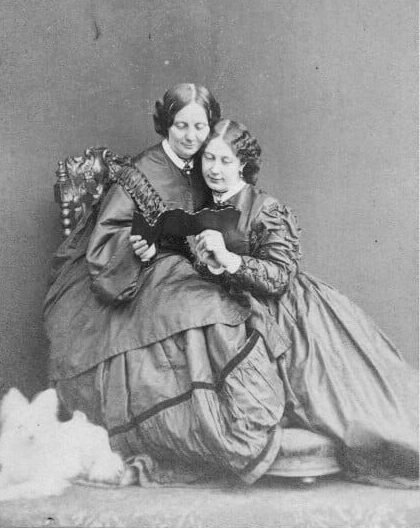
But choosing to live with Dickens came at significant cost. Georgina fell out with her parents and Catherine. She now had no prospects of marrying herself; as a single woman living with her brother-in-law, she was effectively damaged goods. In the 1861 census, Georgina is listed as living at Gad’s Hill Place as ‘housekeeper’, effectively relegating her to the same level as the servants. Ouch. Though as Christine Skelton explains, this was possibly a tactical move by Dickens to show the world that Georgina wasn’t his lover. Despite all this, Georgina and Dickens got along famously. He described her in his will as his “best and truest friend.”
After Dickens’ death, Georgina wielded tremendous power. Dickens named her as one of his literary executors, effectively handing her editorial control of his public image. The Extra/Ordinary Women exhibition explores this aspect of Georgina’s life in detail, including how she produced and edited three volumes of Dickens’ letters alongside his daughter, Mamie. It’s fair to say Georgina and Mamie deployed a considerable amount of creative licence in this task. Letters related to personal or family matters were left out, and others substantially edited to protect Dickens’ reputation, or simply create a better flow. The exhibition has examples of letters where parts have been, quite literally, cut and pasted from one letter into another. I don’t know about you, but I’d love to see the parts that ended up on the ‘cutting room’ floor.
Those parts would certainly have included any references to a certain Nelly Ternan…
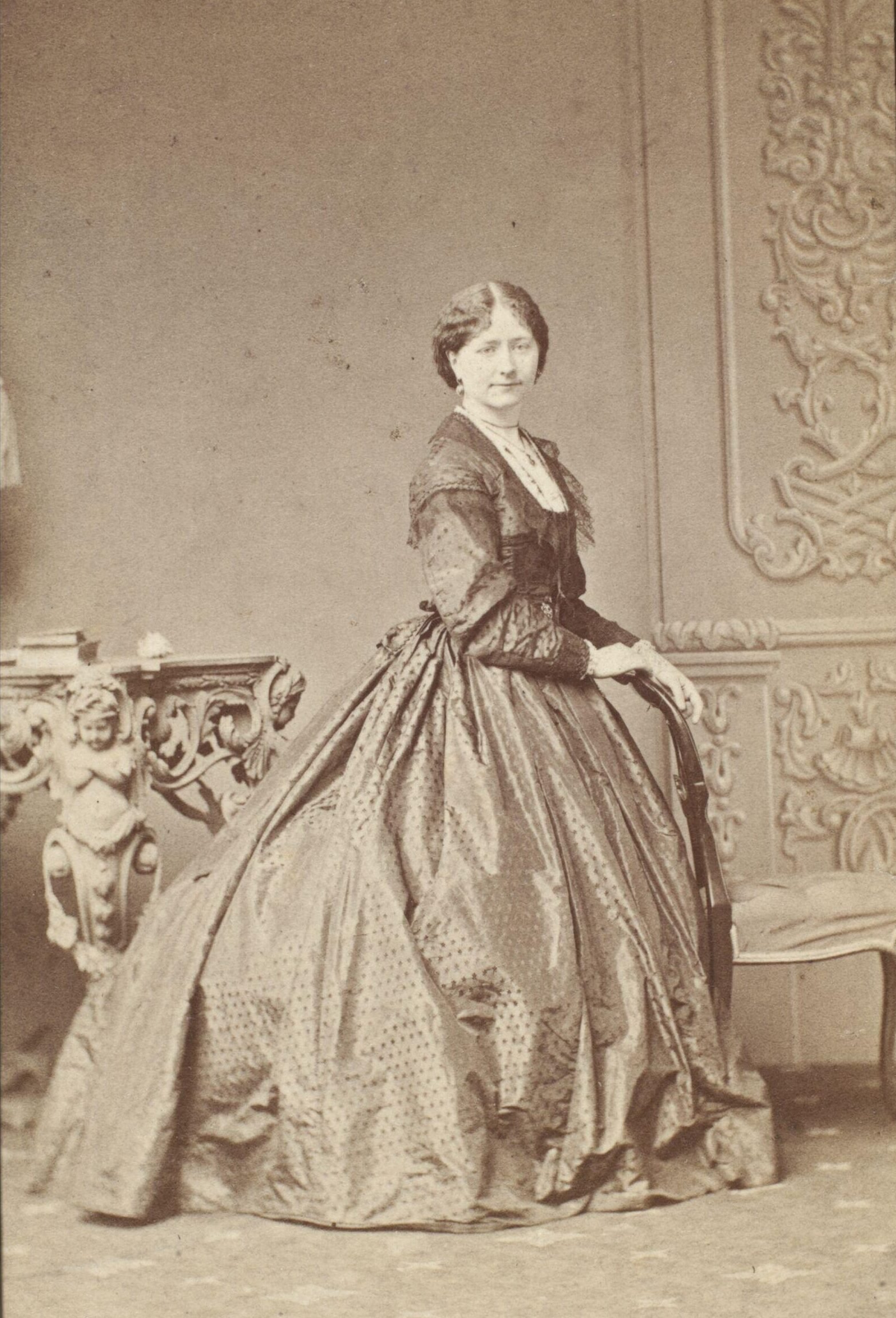
Nelly Ternan: The invisible woman
© Victoria and Albert Museum, London
Ellen Ternan, known as Nelly, was born in Rochester in 1839 to a family of actors. She started treading the boards aged just three, in Sheffield. Dickens first saw Nelly on stage in London in 1857. She was subsequently cast in a performance of The Frozen Deep, a play he wrote with his good friend and fellow author, Wilkie Collins. Thus started a 13-year relationship, during which Dickens fell in love with Nelly, bought her the fateful bracelet mentioned above, and even put her up in a house in Peckham. Nelly was with Dickens during the Staplehurst train crash, and Dickens apparently even snuck off on trips with her to France. Dickens’ biographer, John Forster, later ensured Nelly could discreetly attend Dickens funeral in Westminster Abbey, while Catherine did not.
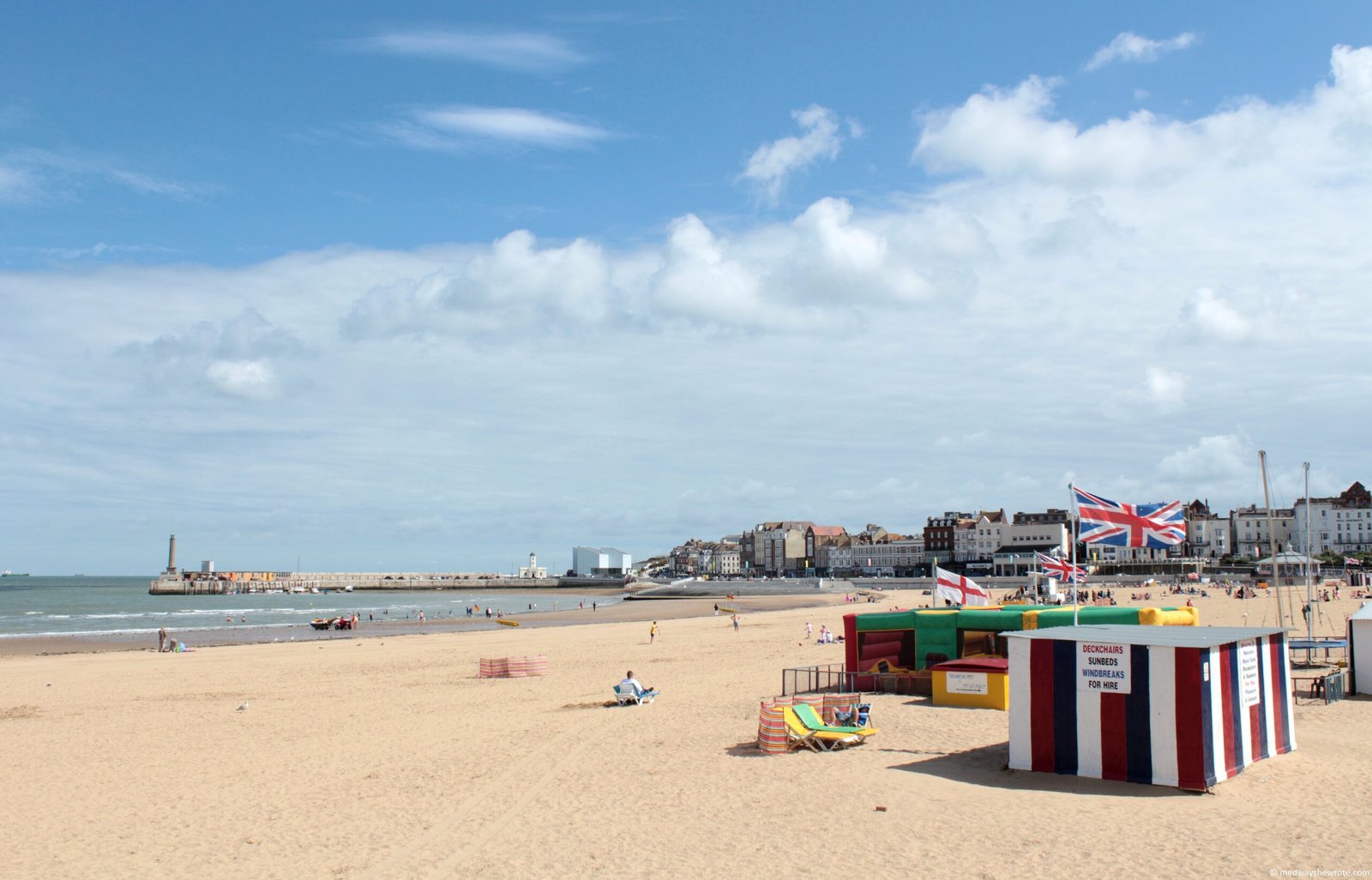
As mentioned earlier, the entire affair was kept mega hush-hush. So hush-hush in fact, that (as The Man of Kent’s Mum explained over a post-exhibition lunch), after Dickens’ death, Nelly got married, moved to Margate and completely reinvented herself. She even gave readings from Dickens’ works on the Margate seafront, with no one any the wiser about their relationship! Even Nelly’s own son had no idea about her affair with Dickens until decades later. The only person Nelly confessed it to was a local clergyman. The story didn’t become widely known publicly until Thomas Wright broke the story in the Daily Express in 1934.
How was the story kept so successfully on the downlow? Well, no doubt there were the sort of cloak-and-dagger shenanigans you would expect an affair to involve. Even if Nelly and Dickens’ relationship was based on true love, they couldn’t publicly declare it and live together unless and until Dickens was no longer married (and even then, it wouldn’t be easy). It was a relationship lived in the shadows, fraught with risk of discovery.
We’ve already seen some of the steps that Dickens and Georgina Hogarth took to make sure that nothing incriminating was made public, both during Dickens’ life and after his death. Others also had an interest in maintaining Dickens’ public image and ensuring the details didn’t get out, including Dickens’ biographer, John Forster.
Dickens himself burned letters and diaries too. In September 1860 at Gad’s Hill Place, he had a great bonfire of “the accumulated letters and papers of twenty years”, including letters from fellow authors Wilkie Collins, George Eliot, and William Makepeace Thackeray.
Separately, in another move that would leave historians and fans aghast, Dickens’ son Henry, and Ellen Ternan’s son Geoffrey, destroyed the pair’s correspondence. I don’t know about you, but I’m thinking there must have been some pretty juicy stuff in those letters for these men to decide that total destruction was the best way of dealing with them.
This obliteration of correspondence means that there’s still gaps in the story of Dickens and Nelly’s relationship. What we do know is thanks to extensive detective work by historians, journalists, biographers such as Claire Tomalin, and others. All sorts of theories about the gaps abound (some of them verging on the outlandish), but unless some previously undiscovered letters, diaries or other evidence emerges, those gaps can only be filled by further careful research, or gossipy speculation.
And finally
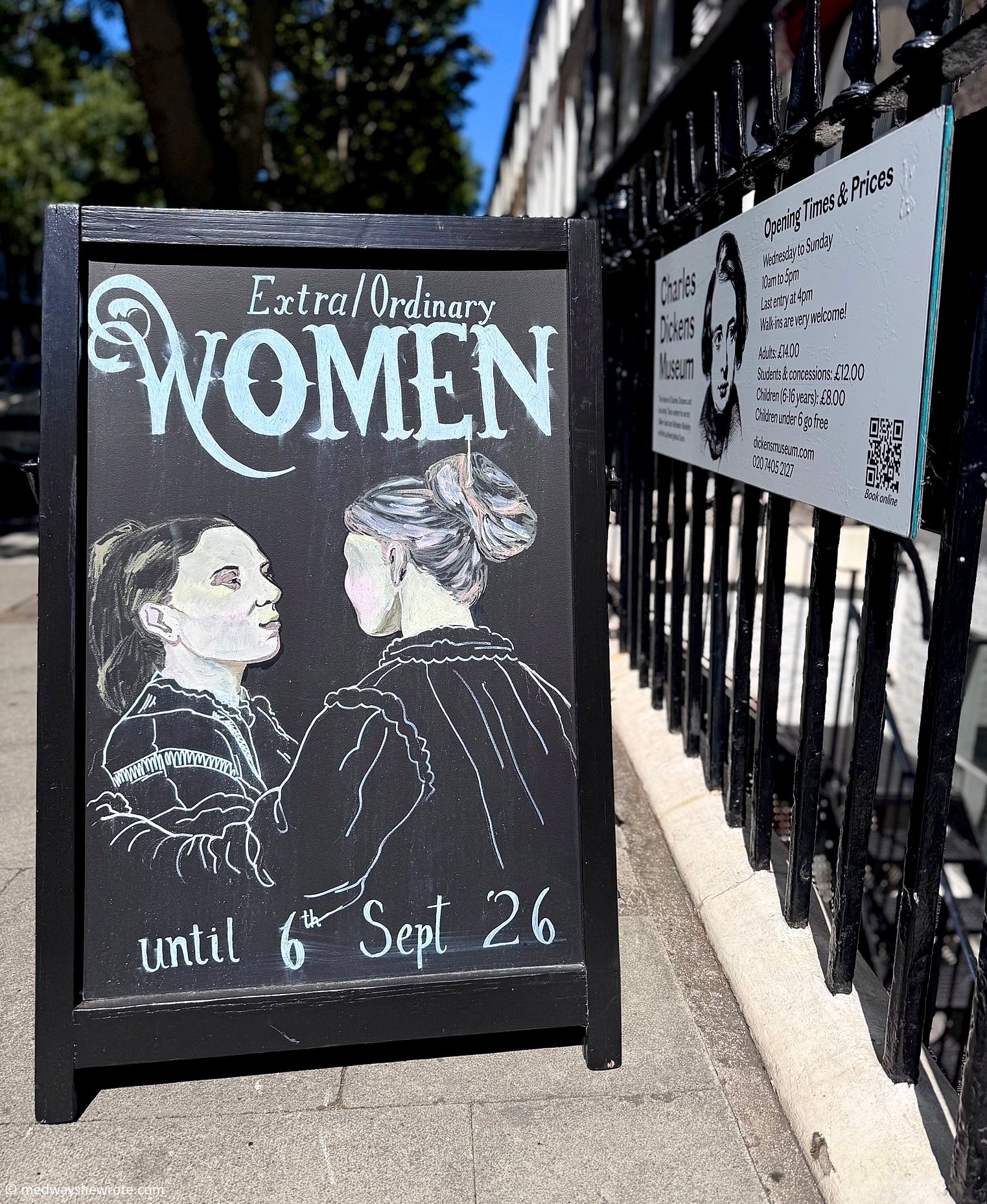
The Extra/Ordinary Women exhibition skilfully showcases the women who supported, influenced and worked with Charles Dickens. It covers many more than I’ve mentioned in this piece, among them Angela Burdett-Coutts, Georgiana Morson and Elizabeth Gaskell. Go and immerse yourself for an hour or two, and come away marvelling at all the brilliant women who shaped the life and work of Charles Dickens.
As far as I’m concerned, the mark of a great exhibition is that you leave feeling informed, entertained and inspired. Extra/Ordinary Women achieved all three. I left Doughty Street inspired to find out more about Catherine, Georgina and Nelly. Their lives had more twists and turns than one of old Boz’s novels! I also left determined to visit Gad’s Hill Place in Kent, where Dickens and family – including Georgina – lived for so many years.
I also left Extra/Ordinary Women with heaps of questions. What else got chopped out of the letters that Georgina Hogarth edited? Did Catherine tear a strip off Dickens in private about what he said in the Violated Letter, even though she maintained public silence? (I hope so!) Did Georgina move in with Dickens out of self-interest or self-sacrifice? Did Dickens and Nelly have a secret child as some have suggested? Did the strain of helping Dickens hide his affair with Nelly contribute to Georgina having a nervous breakdown? Was his affair with Nelly actually love, or was Dickens having a mid-life crisis? So much to ponder!
When I have questions, the first thing I do is head to the library. I left 48 Doughty Street with a big ol’ reading list, including:
- The Invisible Woman: The Story of Nelly Ternan and Charles Dickens by Clare Tomalin
- The Other Dickens: A Life of Catherine Hogarth by Lillian Nayder
- Charles Dickens and Georgina Hogarth by Christine Skelton
- Mrs Dickens by Emily Howes
- Dickens’ Artistic Daughter Katey by Lucinda Hawksley
- The Household by Stacey Halls
- and many more.
It’ll take me a while to get through that list. But I have plan to get a head start on my research: take someone who knows much more about this subject than me out for lunch. Time to drop a quick text to The Man of Kent’s Mum…
Extra/Ordinary Women runs until 27 September 2026 at the Charles Dickens Museum in London.
Thanks for reading! If you enjoyed this post, you can sign up to be notified of new ones using the ‘subscribe’ button at the bottom of the page. You can also follow Medway, She Wrote on Instagram.
Leave a Reply