“Armed Forces Day parade! Get. On. Parade!”
This command was bellowed loud enough for all Medway to hear, and issued with such authority that I found myself standing up straighter, even though I was just a civilian. Less than a minute later, I was watching a military parade marching its way towards No.1 Smithery at the Historic Dockyard in Chatham.
It was Saturday 27 June 2026: Armed Forces Day, and the tail end of a record-breaking heatwave across the UK. Though it was marginally cooler than the hellfire temperatures of the previous Thursday, it was still hot, hot, hot here on the Costa del Medway.
We Geordies are not built for this heat. Especially not the pale-skinned, red-headed variety, like me.
Even though I could feel the first tingles of sunburn as soon as I left the house, I wasn’t going to let that stop me from attending my first-ever Armed Forces Day at the Historic Dockyard. Appropriate battle dress was donned: an enormous sun hat, sunglasses to rival Anna Wintour, and more sunscreen on my face than an England cricketer at a Test match. Rations were multiple bottles of water. I still ended up slightly fuchsia pink, but it was worth it, as you’ll see.
Today on Medway, She Wrote: marking Armed Forces Day at the Historic Dockyard in Chatham, discovering lifeboats from the North East in Medway, a dastardly butler, an international submarine of mystery, and the Dockyard’s connections to the Oval Office. Enjoy!
Medway and the military: a potted history
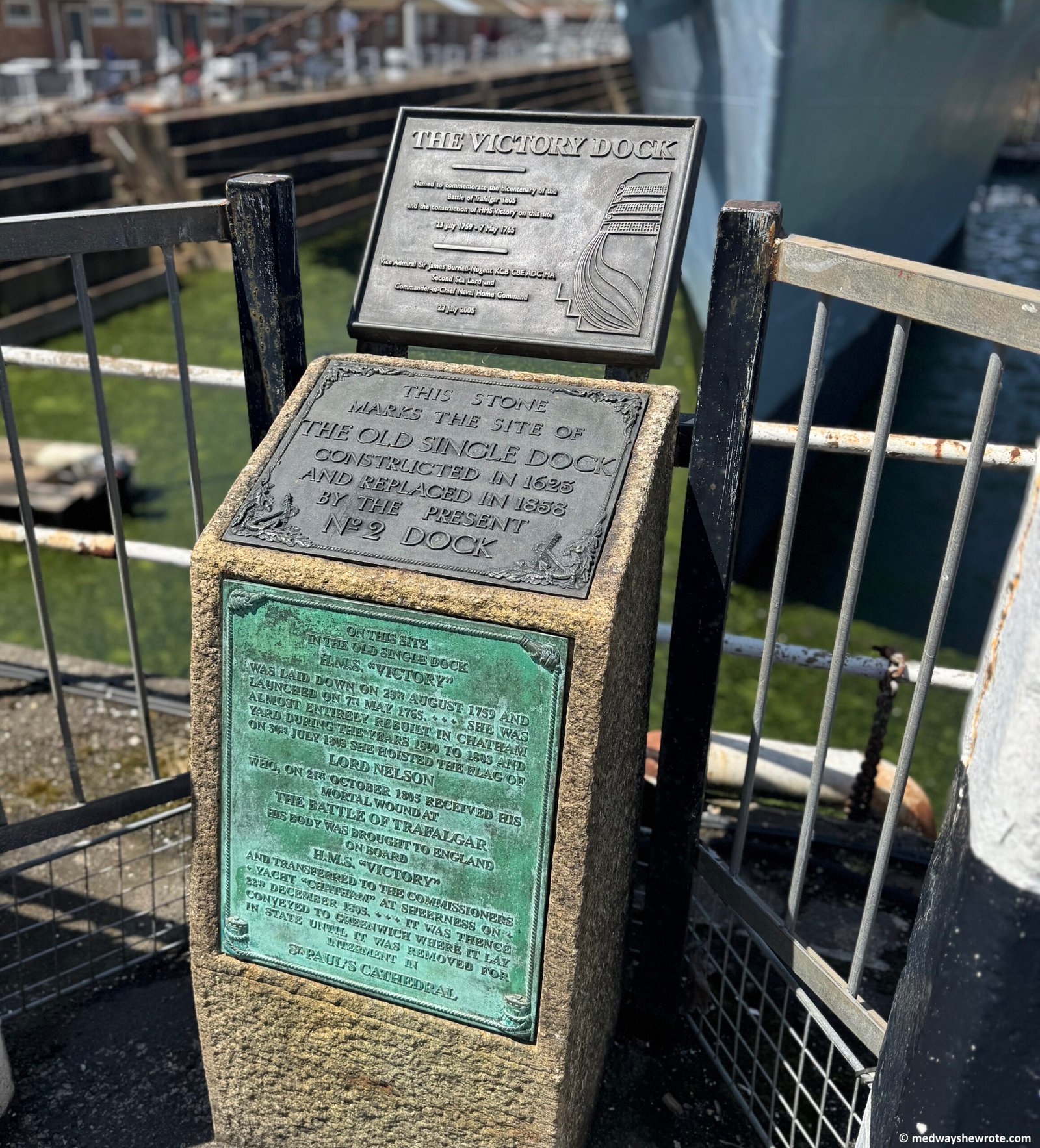
Let me give you a quick, potted history of Medway’s military associations, and why it’s a perfect place to mark Armed Forces Day.
A military dockyard has existed on the River Medway near Chatham since Tudor times. Local dockyard workers built ships that fought the Spanish Armada, and during the Anglo-Dutch wars, Chatham became the main fleet base for the Royal Navy. After the fleet base moved to Portsmouth in the 1800s, Chatham became the country’s primary shipbuilding and repair dockyard. The most famous ship built here is undoubtedly Nelson’s flagship, HMS Victory.
Chatham’s importance continued as sailing vessels were replaced by iron ships and steamships. The first iron battleship to be built in a Royal dockyard was constructed in Chatham – HMS Achilles, launched in 1863. Later, the Dockyard became a major producer of naval submarines; 57 were built at Chatham between 1908 and 1957, including HM Submarine Ocelot (more on that later).
During the World Wars, Chatham was one of three Divisions of the Royal Navy (Portsmouth and Plymouth were the others). In the First World War, 205 ships manned by Chatham Division saw action all over the world, including in several major battles. Over 8,000 men from Chatham Division killed in action are commemorated at the Royal Naval Memorial on the Great Lines. Nowadays, the Royal Navy has a Medway Division of HMS President, the largest naval reserve unit in the country, at Rochester.
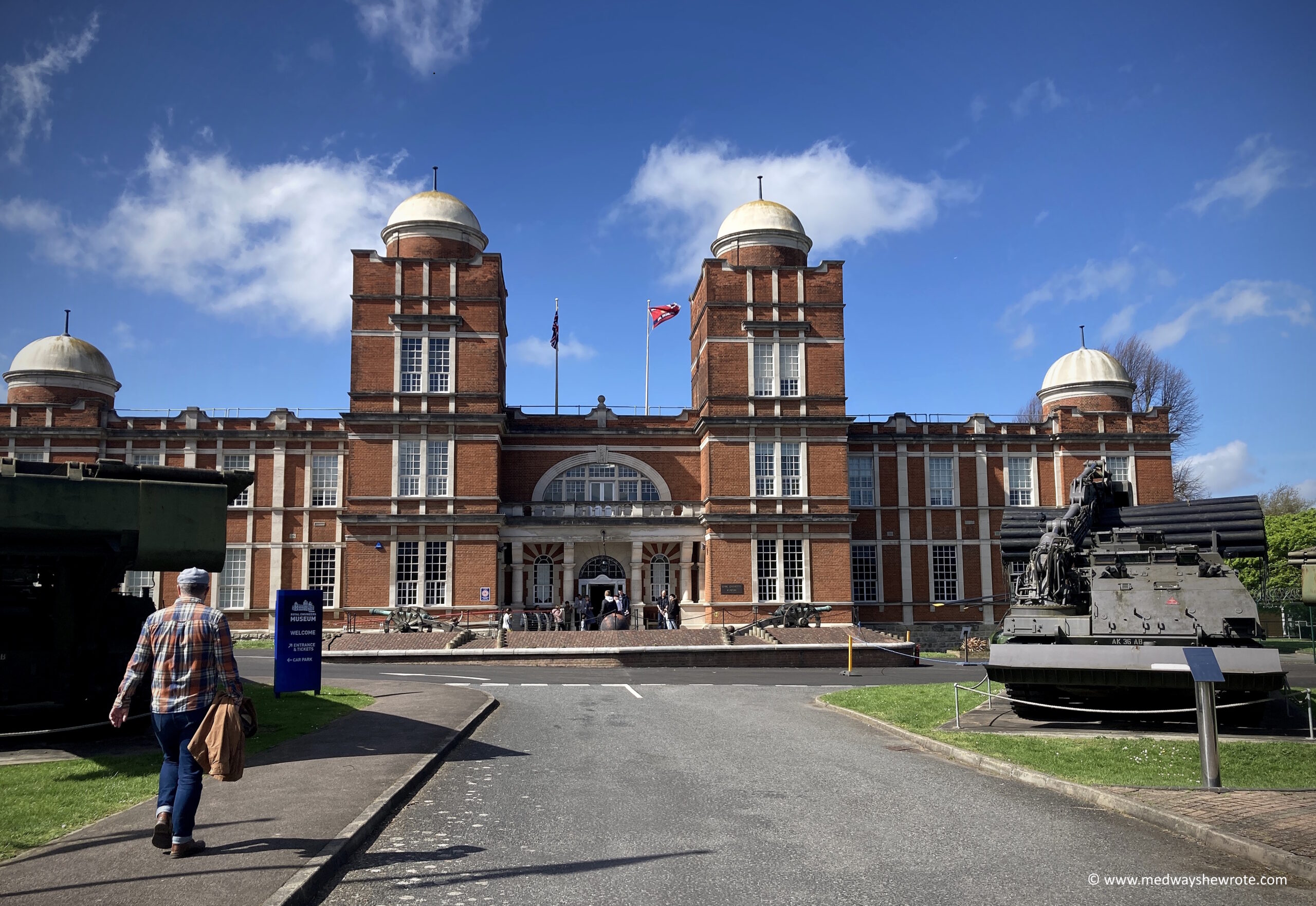
Medway is intertwined with the Army and Air Force too. The Royal Engineers can trace their history back centuries to Gundulf, Bishop of Rochester in Norman times, and they’ve been headquartered at Brompton Barracks since the 1800s. The Royal Engineers Museum is in Gillingham, as is the Royal School of Military Engineering. The Royal Engineers’ work in ballooning and early flight led to the formation of the Royal Flying Corps, which eventually became the Royal Air Force.
There are many more units, formations and regiments across Kent and Medway, all a testament to the area’s long and proud history of military service.
Given Medway’s rich military heritage, it’s no surprise that the first-ever Armed Forces Day was held at Chatham in 2009.
Armed Forces Day
Armed Forces Day is an annual celebration and commemoration of the thousands of men and women serving in the UK’s armed forces. The inaugural Armed Forces Day at Chatham was attended by then-Prime Minister Gordon Brown, the Duke and Duchess of Gloucester, and Chief of the Defence Staff, Air Chief Marshal Sir Jock Stirrup. The Historic Dockyard has continued the tradition since then.
The Man of Kent and I arrived just in time to see the formal parade and Drum Head service. As we passed one of the units on our way to the arena, I heard that admirably clear order boom out from my right, “Armed Forces Day parade! Get. On. Parade!”
What followed was the sort of parade at which the UK excels. A far cry from those weird, power-crazed, tanks-and-torpedoes-rolling-through-the-streets affairs you see on the news sometimes. The Historic Dockyard’s Armed Forces Day parade was a smart, dignified and proud display with just the right amount of pomp and circumstance to make it splendid, but not showy. It was also thoroughly, tremendously, British. Where else in the world would you see veterans carrying colours on parade, then trooping off to enjoy afternoon tea with the local great and good underneath an enormous Union flag (as they rightly deserve)?
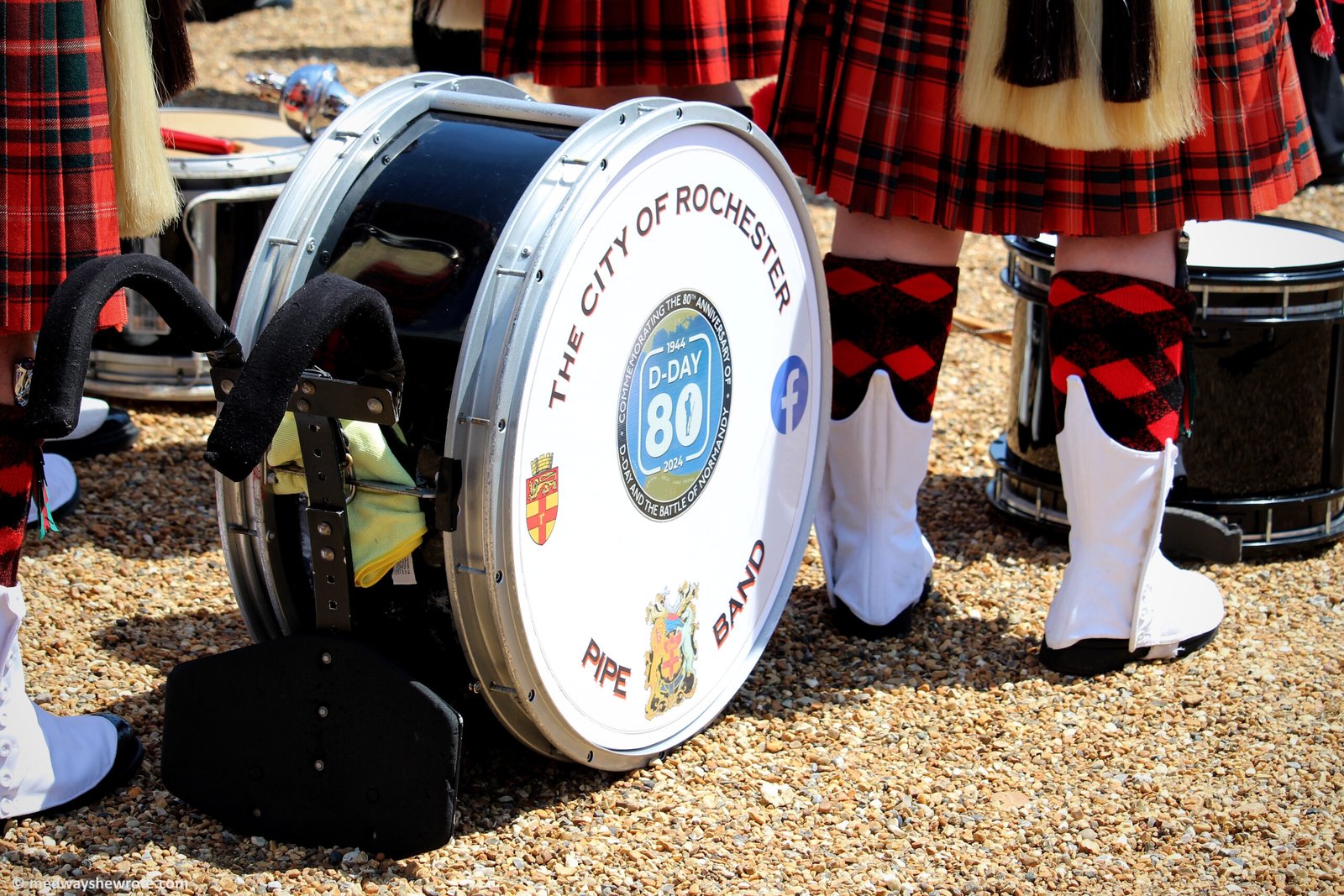
All generations marched in the parade, from cadets to serving forces members, and veterans carrying their regimental colours. Taking part this year were the City of Rochester Pipe Band, 1 RSME Regiment, Chatham Royal Marine Cadets, Medway Towns Sea Cadets, Medway Victory Sea Cadets, Royal Naval Association, Kent Wing RAF Cadets, Service Association Standards, Kent Army Cadets and Armed Forces Veterans. The Mayor of Medway was in attendance alongside local MPs and Medway Council leader, Vince Maple.
There was nary a hint of shade on the parade ground, but the participants showed little sign of wilting despite being in full uniform and regalia. Some concessions were made to the heat; bottles of water had been handed out to everyone taking part, and the speeches were relatively concise as these things go. The speakers seemed to have consciously chosen to balance appropriate remembrance and appreciation of the armed forces with ensuring no one collapsed from heatstroke.
The parade was followed by a ceremony honouring not just veterans and serving members of the armed forces, but the sacrifices and commitment of their families and communities. Brigadier (retired) Peter Gilbert QVRM TD DL VR read the Kohima Epitaph, and Bugler Terry Kallend played The Last Post before a two-minute silence. Prayers and blessings were given, the National Anthem was played, and the parade marched off.
There were plenty of other things to see and do after the parade, but first, The Man of Kent and I had to find some much needed shade. We made a beeline for the nearest indoor activity; the Historic Lifeboat Collection.
The Historic Lifeboat Collection
Now, I knew there were lifeboats on display at the Historic Dockyard, but I had failed to realise on all of my previous visits that Chatham is the home of the Historic Lifeboat Collection, the largest such collection in the whole country!
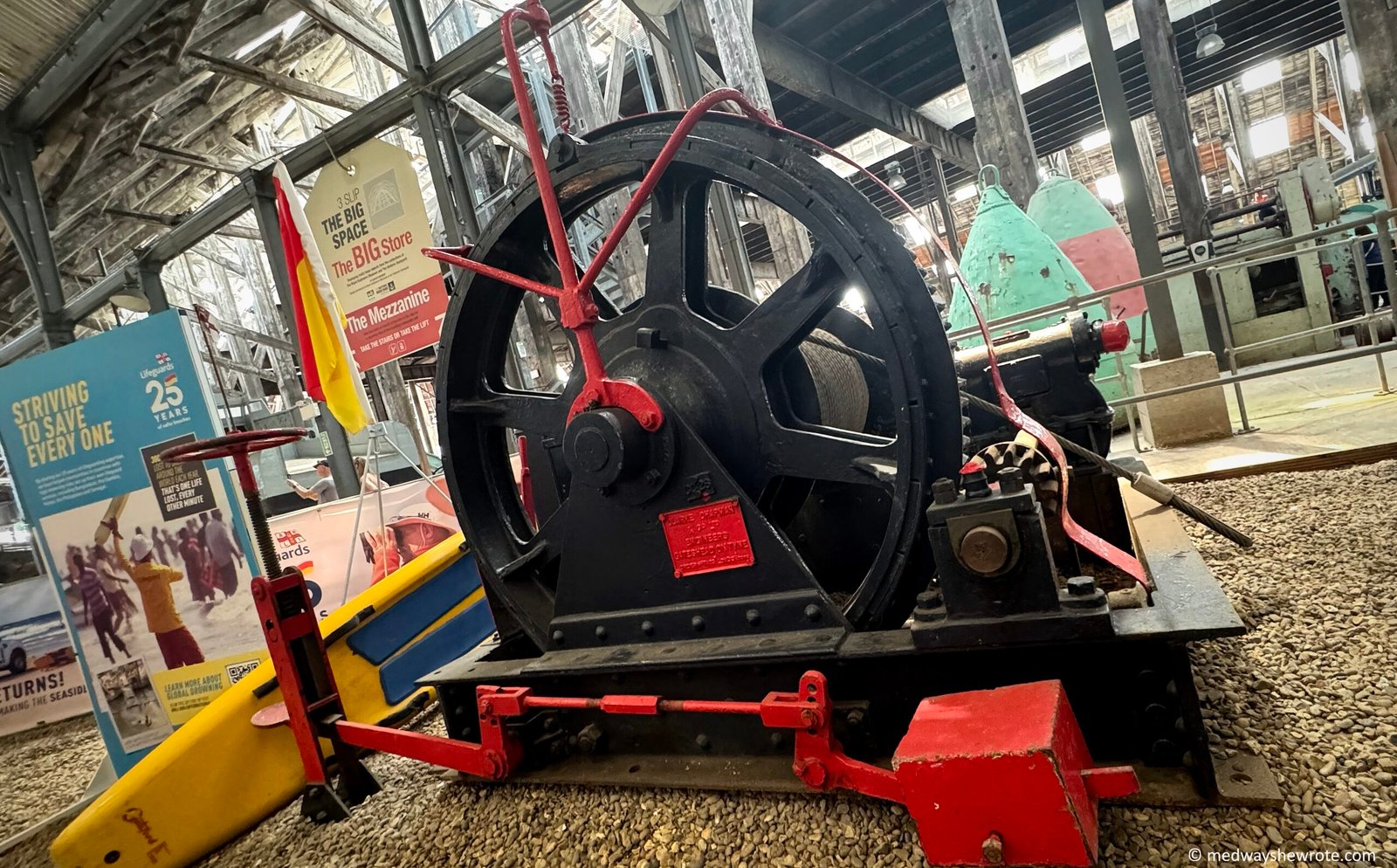
Wherever I go, I keep an eye out for two things; links to Medway, and links to the North East. The Historic Lifeboat Collection had the latter in abundance. This wasn’t just a fascinating look at the history and design of these lifesaving vessels. It was also a trip back to my home region. I had got about five steps in when I spotted the Tynemouth electric winch.
An electric winch might not sound very interesting, but Tynemouth Lifeboat Station was the only one in the whole country that was destroyed by enemy action during World War Two. The electric winch was one of the few things saved from the wreckage. It was constructed by Clarke Chapman & Co of Gateshead, where I come from! After being renovated, the winch was installed at Minehead Lifeboat Station in 1947 and stayed there until 1968.
Here’s another fun fact for you. Do you know why lifeboats are designed the way they are? It’s because in 1851, Algernon Percy, the Duke of Northumberland, held a competition, offering a 100-guinea prize for the best lifeboat design. The Duke was President of the Royal National Institution for the Preservation of Life from Shipwrecks, the predecessor of the RNLI. He was particularly interested in lifeboats because of several marine disasters that had happened in the North East around that time. James Beeching from Yarmouth won the competition, and a modified version of his design became the model for the RNLI fleet. Lifeboats had been around before that of course, pioneered by Henry Greathead from South Shields.
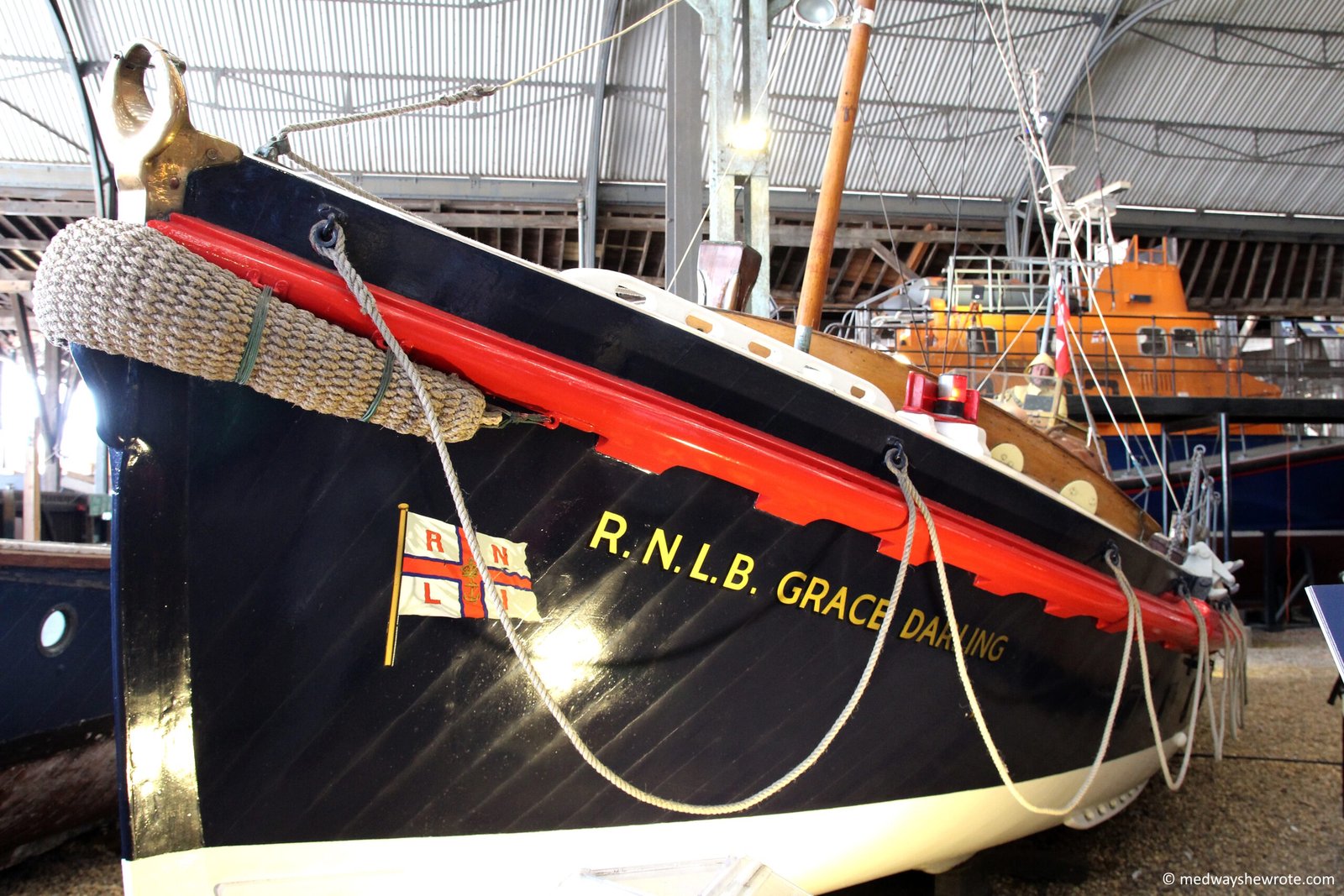
The Historic Dockyard has all shapes and sizes of lifeboat on display, but I was especially excited to see the Lizzie Porter and Grace Darling lifeboats. The Lizzie Porter was based at Holy Island from 1909 to 1925, and at North Sunderland from 1925 to 1936. She saved 77 lives and was awarded the RNLI Silver Medal twice. The Grace Darling lifeboat is named after the woman who heroically rescued nine passengers from the wreck of the SS Forfarshire during a fierce storm in September 1838. She served at Seahouses, near Grace Darling’s home, for 13 years.
After a delightful scamper through the history of lifeboats, and admiring ships from the North East right here in Medway, it was time to brave the sunshine again. I decided to revisit some old vessel friends I hadn’t seen since my last visit: Ocelot, Cavalier and Gannet.
The name’s Ocelot. HM Submarine Ocelot.
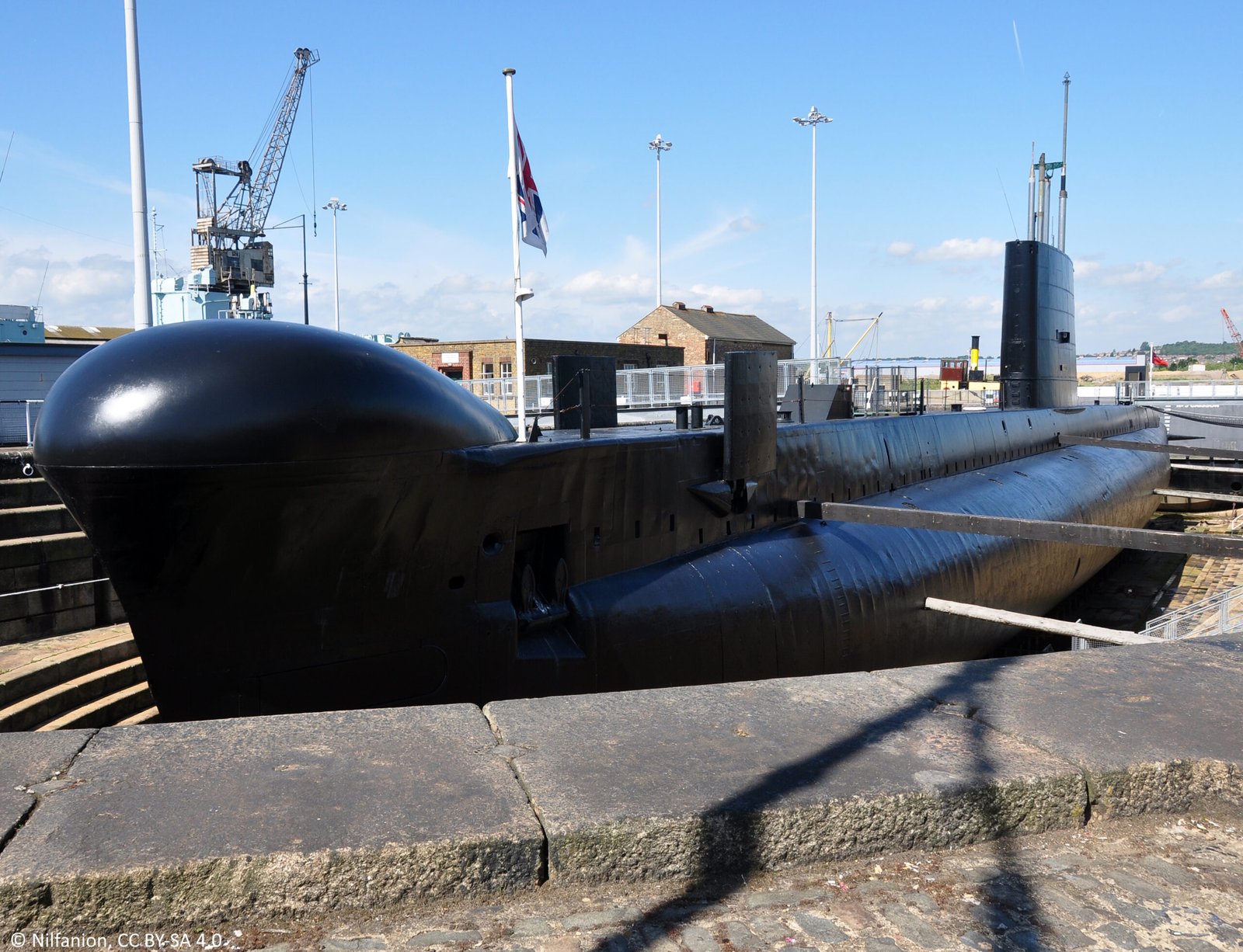
“What a big boat!” exclaimed a charming toddler who had been stopped dead in his tiny tracks by the sight of HM Submarine Ocelot as we walked over.
His astonishment was understandable. Ocelot is an Oberon class submarine and was the last warship built for the Royal Navy at Chatham. Huge, black and stealthy, she gives major James Bond vibes, and perhaps that’s because of her history as a surveillance vessel.
Oberon class submarines were some of the fastest and quietest underwater vessels. Ocelot undertook several top secret, deep sea missions (some of which are still classified to this day!) racking up over 90,000 miles while undercover around the world. She’s an international sub of mystery.
You can go aboard Ocelot and see what life on a sub would be like. Just be prepared to swing yourself through the round bulkhead doors and squeeze along tight corridors. Alternatively, have a read of this brilliant interview with Billy, Ted, Nobby, Dixie and Wacker, who served on Ocelot in the 1960s.
HMS Cavalier
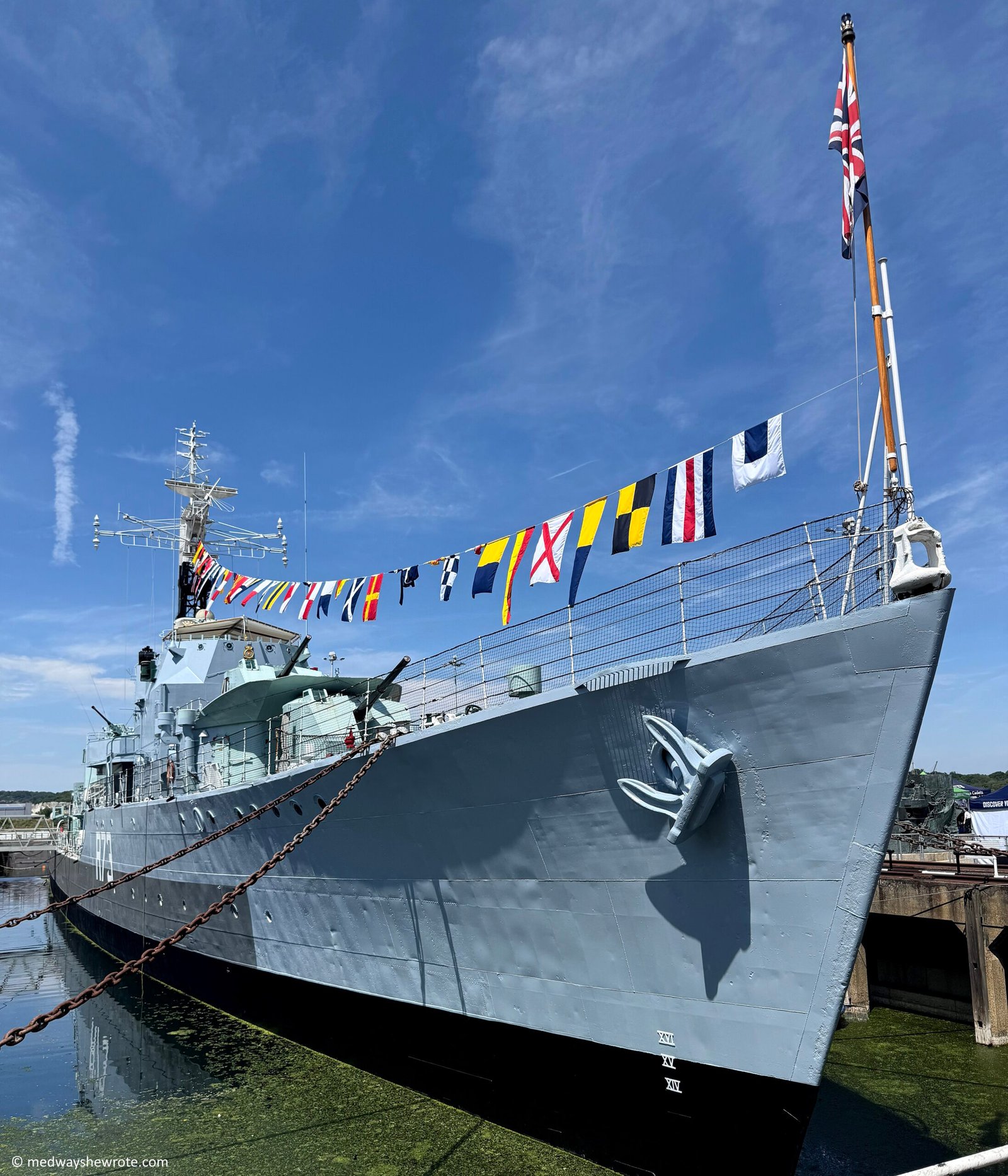
Next to Ocelot is HMS Cavalier, a CA-class destroyer currently residing in No. 2 Dry Dock, where HMS Victory was constructed. She was built by J.S. White shipbuilders on the Isle of Wight. During the Second World War, she earned a battle honour for her role in Arctic convoys and defending troop ships.
Cavalier was recognised as the ‘fastest ship in the fleet’ in her time, and is the only surviving British destroyer to have served in the Second World War. She stands today as the National Destroyer Memorial, commemorating the 11,000 lives lost aboard Royal Navy Destroyers in the conflict. Kenneth Potts’ nearby bronze memorial sculpture includes a Roll of Honour listing all 142 Royal Navy destroyers, and other British Dominion and Allied destroyers, lost during the Second World War.
Interestingly, HMS Cavalier has a connection to the North East. After the ship was decommissioned, Lord Mountbatten campaigned to stop her being sold off or scrapped. Cavalier moved around the country until a permanent home was found for her at Chatham. One of her temporary homes was Hebburn on Tyneside. HMS Cavalier was towed there in 1987, where she was intended to be the centrepiece of a proposed national shipbuilding exhibition centre at the Hawthorn Leslie shipyard. The exhibition centre didn’t go ahead due to lack of funding, and Cavalier was brought back to Chatham in 1999.
HMS Gannet; from Chatham to the White House
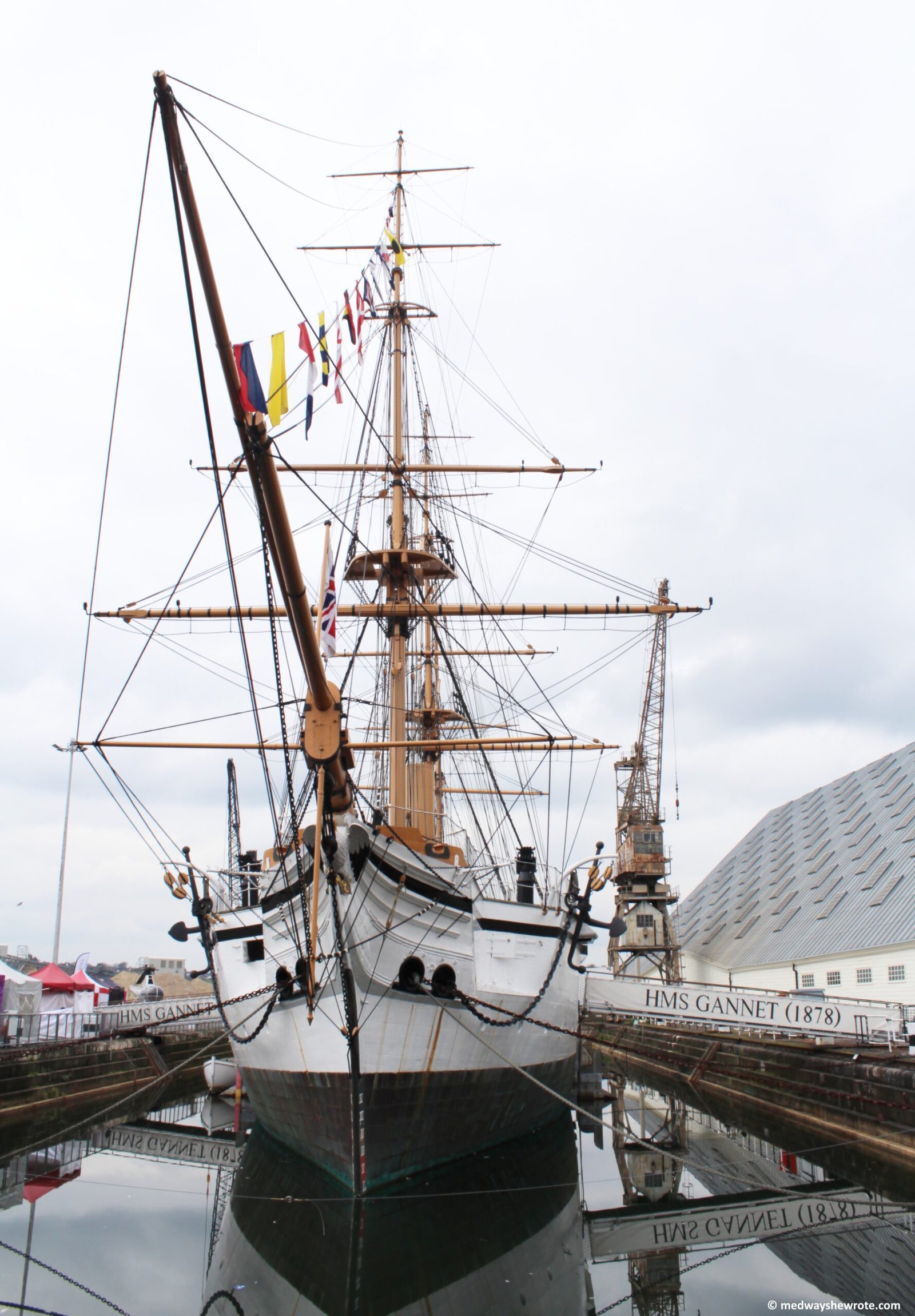
HMS Gannet is a sail and steam-powered ship built in Sheerness in 1878. She’s a beautiful, stately vessel. Standing on her deck makes you want to immediately set sail on a voyage around the world like a Victorian explorer, with a telescope in one hand and a treasure map in the other.
HMS Gannet has been an anti-slavery patrol ship, a survey ship, a drill ship, a training ship, and defended the port of Suakin in the Sudan. When Gordon Brown (then Prime Minister) visited Barack Obama at the White House in March 2009, he gave the President a pen holder made from the timbers of Gannet, reflecting the ship’s role in anti-slavery missions.
Speaking of the White House, did you know that the famous desk in the Oval Office was made at Chatham Dockyard? (Thanks to The Man of Kent for this great piece of trivia!) William Evenden, a joiner at the Dockyard, made the desk, which was given to President Rutherford B. Hayes as a symbol of friendship by Queen Victoria. It’s made from the timbers of HMS Resolute, hence why it’s known as the Resolute desk. Barack Obama kept the HMS Gannet penholder on the Resolute desk throughout his Presidency.
Commissioner’s House, and what the butler (hopefully) didn’t see
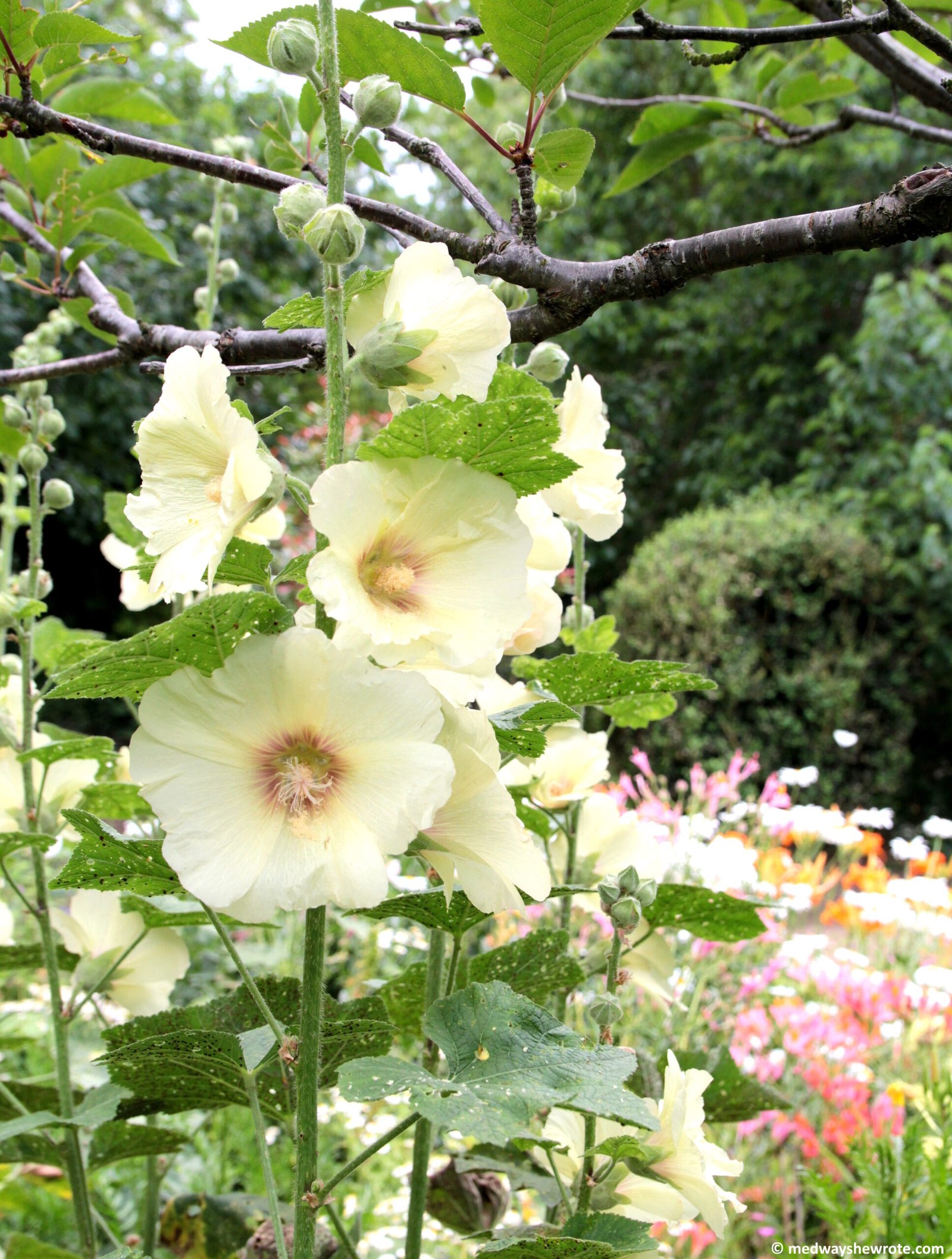
After appreciating ships, it was time for a quick rest. The Commissioner’s garden provided gentle respite from the heat, and a quietish five minutes away from the crowds. Recovering on a bench, The Man of Kent and I listened to the Marconi Band playing Pure Imagination on the bandstand, mingled with sound of the 17th Tonbridge Scout & Guide Band playing tunes in the main arena. The resulting mash-up was quite groovy!
Commissioner’s House has the accolade of being Britain’s oldest surviving intact naval building. Originally built in 1704, it has recently undergone a major restoration programme.
The restoration project has revealed some fantastic treasures from the house’s past, including historic wallpaper, letters and a Jack of Spades playing card that’s over 200 years old. My favourite find has to be two notes found scribbled on a floorboard in the serving lobby. (Heads up – it’s about to get sweary!)
One note reads, “Mr Warren the Admiral’s Butler is a bloody shit + (and) absolute (?) nasty (?) bugger,” and is signed, ‘Jame(s?) (G?).’ The other says, “The Butler is a Damned shiting (sic) bugger + (and) he can kiss our asses.” I’d love to know what the butler did to deserve this!
Show us the ropes
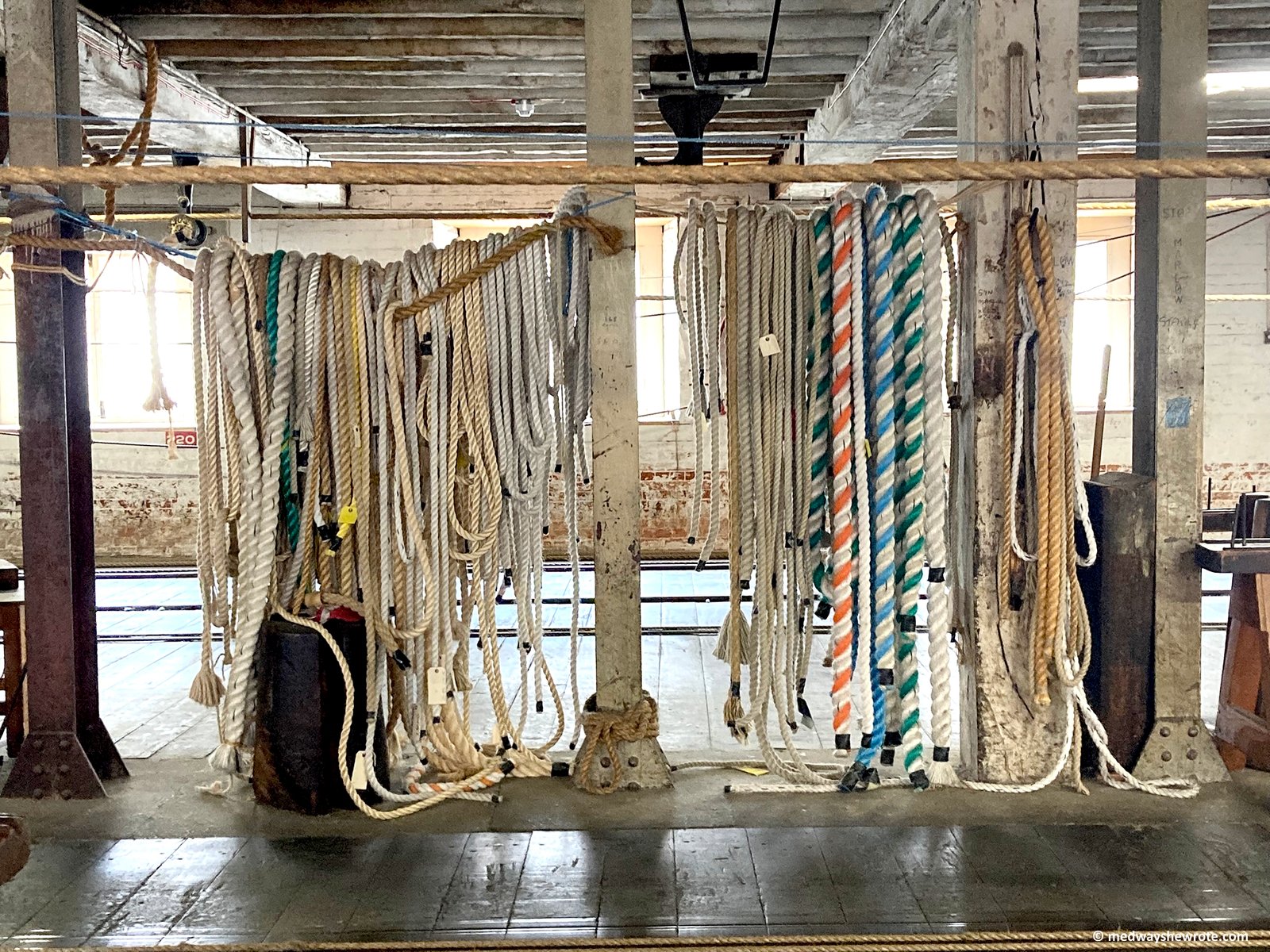
There’s tons of other stuff to see at the Historic Dockyard (though some parts were closed on Armed Forces Day), including exhibitions in No.1 Smithery, the historic railway, the memorial to Chatham Cuffay, and the world-famous ropery.
Chatham is the only one of the original four Royal Navy Ropeyards to remain in operation. Its famous ropewalk is almost a mile long, and recently featured in BBC’s The Repair Shop on the Road.
Chatham’s Master Ropemakers produce and supply ropes for all sorts of domestic and commercial projects, and for Hollywood films, including Pirates of the Caribbean. A ropery tour is a must when you visit, but one of my favourite things about the ropery is something a Dockyard tour guide let me in on a while ago – the names of former workers carved into the brickwork at the building’s far end. Go take a look next time you’re there!
Beating Retreat
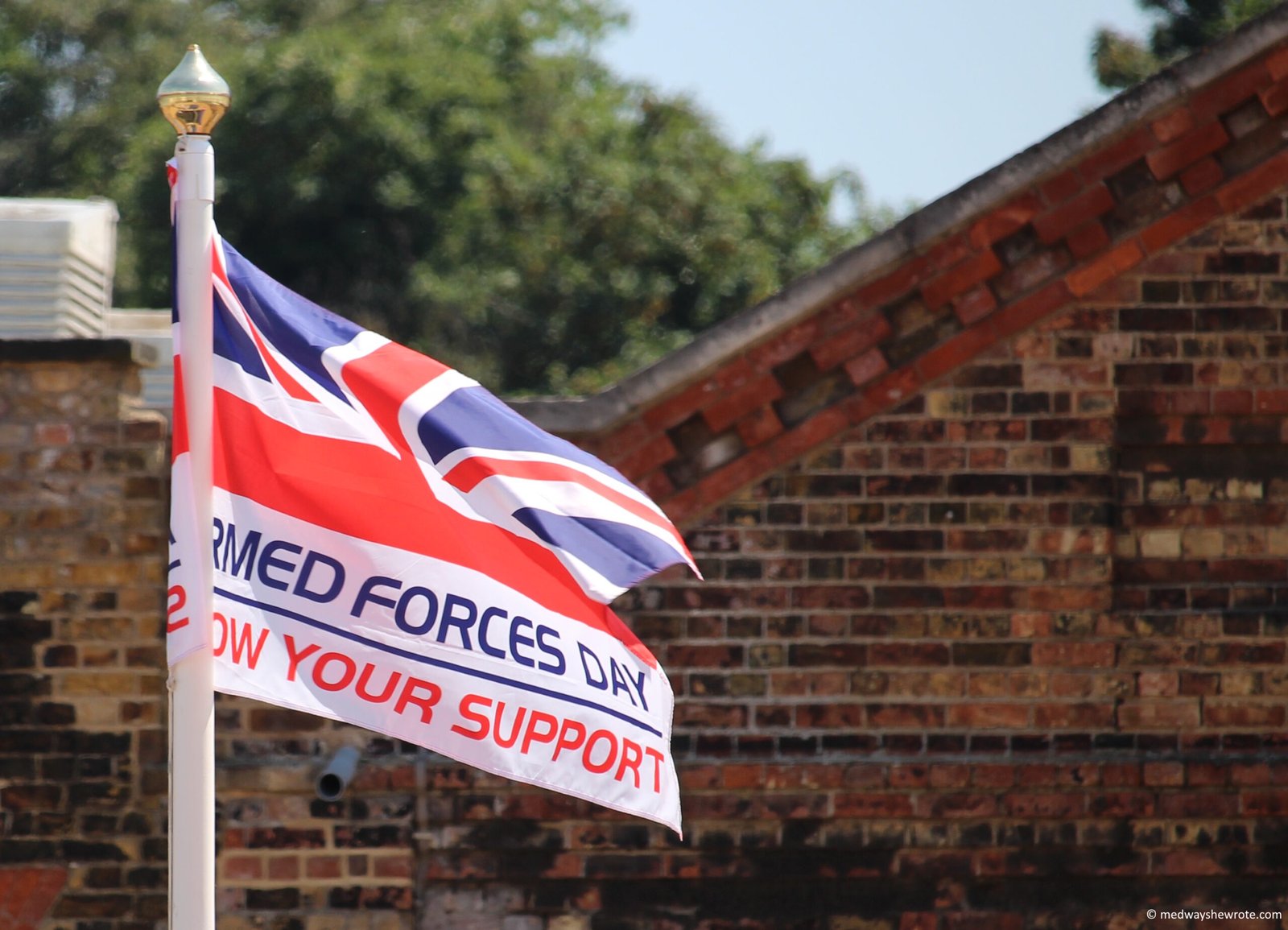
At 4:20pm, it was time for the final event of the day; Beating Retreat.
Beating Retreat is a military ceremony that dates back to the time of James I. In those days, the troops would mark the end of the day by beating drums and parading, before closing the camp gates and lowering flags.
The 17th Tonbridge Scout & Guide Band, led with aplomb, authority and precision by their young leader, and the City of Rochester Pipe Band, provided a final musical fanfare. They were then officially authorised to Beat Retreat and the Armed Forces Day flag was formally lowered.
After that, it was time for us civilians to beat a different kind of retreat. The Man of Kent and I headed back to the house to watch that evening’s England World Cup match, passing several people who were trooping up the steep hill towards The Cannon to round off Armed Forces Day celebrations. On the way back, it started raining. I let myself get soaked. Those raindrops were gentle, blessed relief to my baked Northern skin.
And finally
Armed Forces Day at Chatham’s Historic Dockyard was a big-hearted event with real community feel. The place was jam-packed with local regiments and voluntary associations, music, food stalls, activities and displays. Everyone was enjoying themselves. The children throwing water bombs at soldiers in stocks seemed to be having a particularly good time. Props to the Historic Dockyard for making this event free to attend.
Armed Forces Day events around the country have sometimes copped flak from those who see them as militaristic or glorifying war. Each to their own opinion, of course, but I think that criticism misjudges the motivation for the day. It also doesn’t recognise the breadth of of work the armed forces do besides fighting. Armed Forces Day isn’t about glorifying war or triumphantly gloating about military victories. No sensible person wants war, or armed conflict, or disasters to happen. Most of us, to borrow a phrase from Miss Congeniality, really do want world peace. But unfortunately, that’s not the way the world works. And as long as the world doesn’t work that way, we’ll need brave men and women who are prepared to voluntarily serve and fight in the armed forces, act as peacekeepers in conflict zones, and provide humanitarian and disaster relief around the world.
Armed Forces Day is about acknowledging their service, sacrifice, courage and commitment – past, present and future. Chatham Historic Dockyard’s Armed Forces Day event showed that you can honour that service and sacrifice with heartfelt pride and deep respect, and bring together a whole community to remember, celebrate and have some fun at the same time (goodness knows we all need more of that these days). It was a day that not only made you appreciate Medway’s armed forces and military history, but made you feel proud to be Medway.
If you haven’t been to Armed Forces Day before, go next year and see what it’s all about for yourself. Just take plenty of sunscreen.
Leave a Reply