I found my love by the gasworks croft
Lyrics from Dirty Old Town by Ewan MacColl, club anthem of Salford City FC
Dreamed a dream by the old canal
Kissed my girl by the factory wall
Dirty old town
Dirty old town
Dirty Old Town. Everyone thinks it’s an old Irish folk song because of covers by The Dubliners and The Pogues, but it was actually written by Ewan MacColl about his home town of Salford. MacColl wrote the track in 1949 for his play, Landscape with Chimneys, and Salford’s smoggy, industrial landscape of factories and gasworks inspired the title. Salford isn’t a dirty old town anymore though, and some parts are positively glitzy (hello, MediaCity).
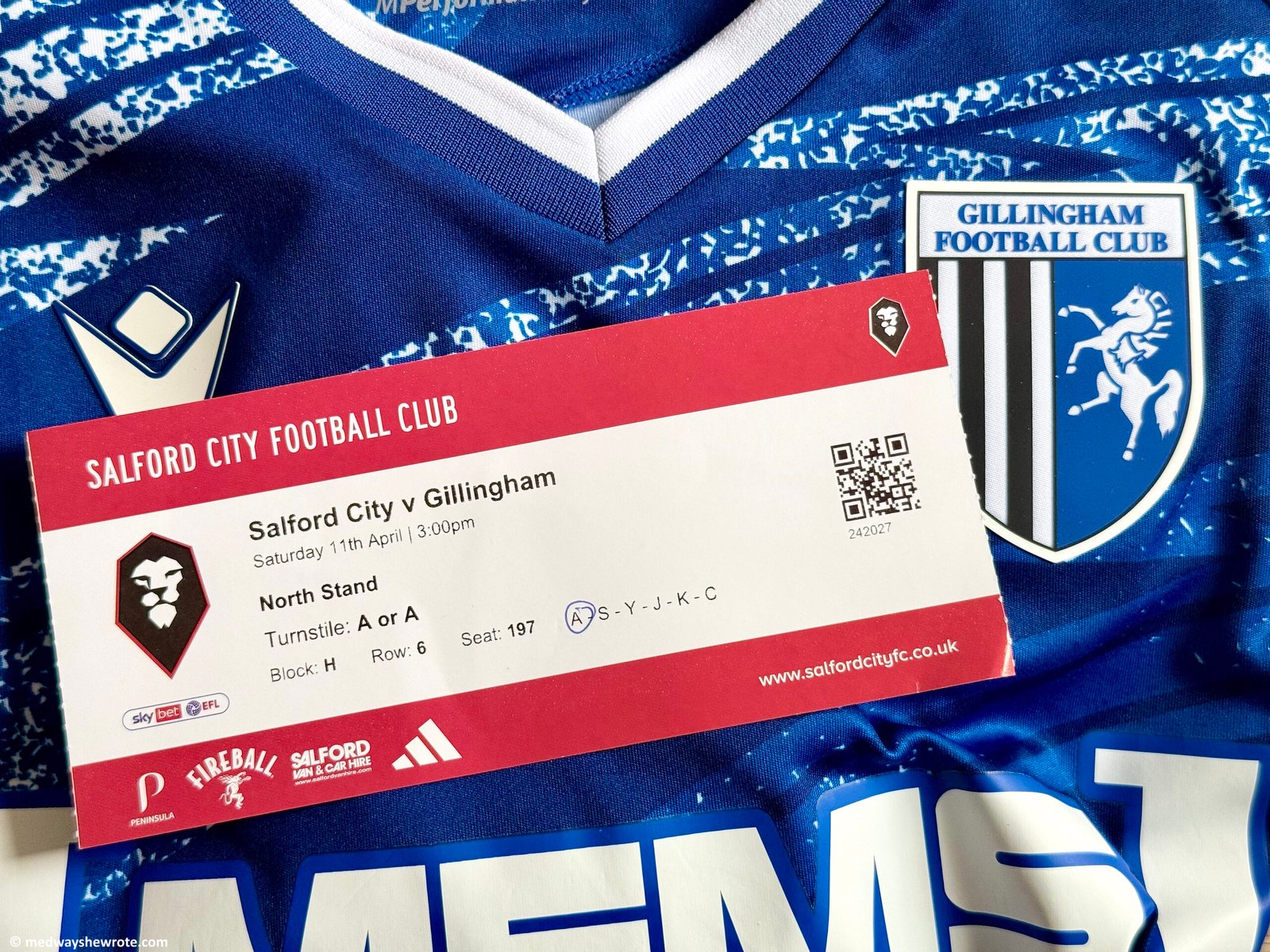
The Man of Kent, being a true Shouting Man, decided that there could be no better way to celebrate his birthday than watching his beloved football team, Gillingham FC. So off we went to follow the Gills over land (but not sea) to the Peninsula Stadium, home of the Ammies – Salford City FC.
Today on Medway, She Wrote: Watching the Gills play Salford City, soaking up football art at The Lowry, and a visit to the National Football Museum. Read on to find out which one of us scored top bins at the Museum, and which football legend we spotted in Altrincham’s Market House.
To Manchester!
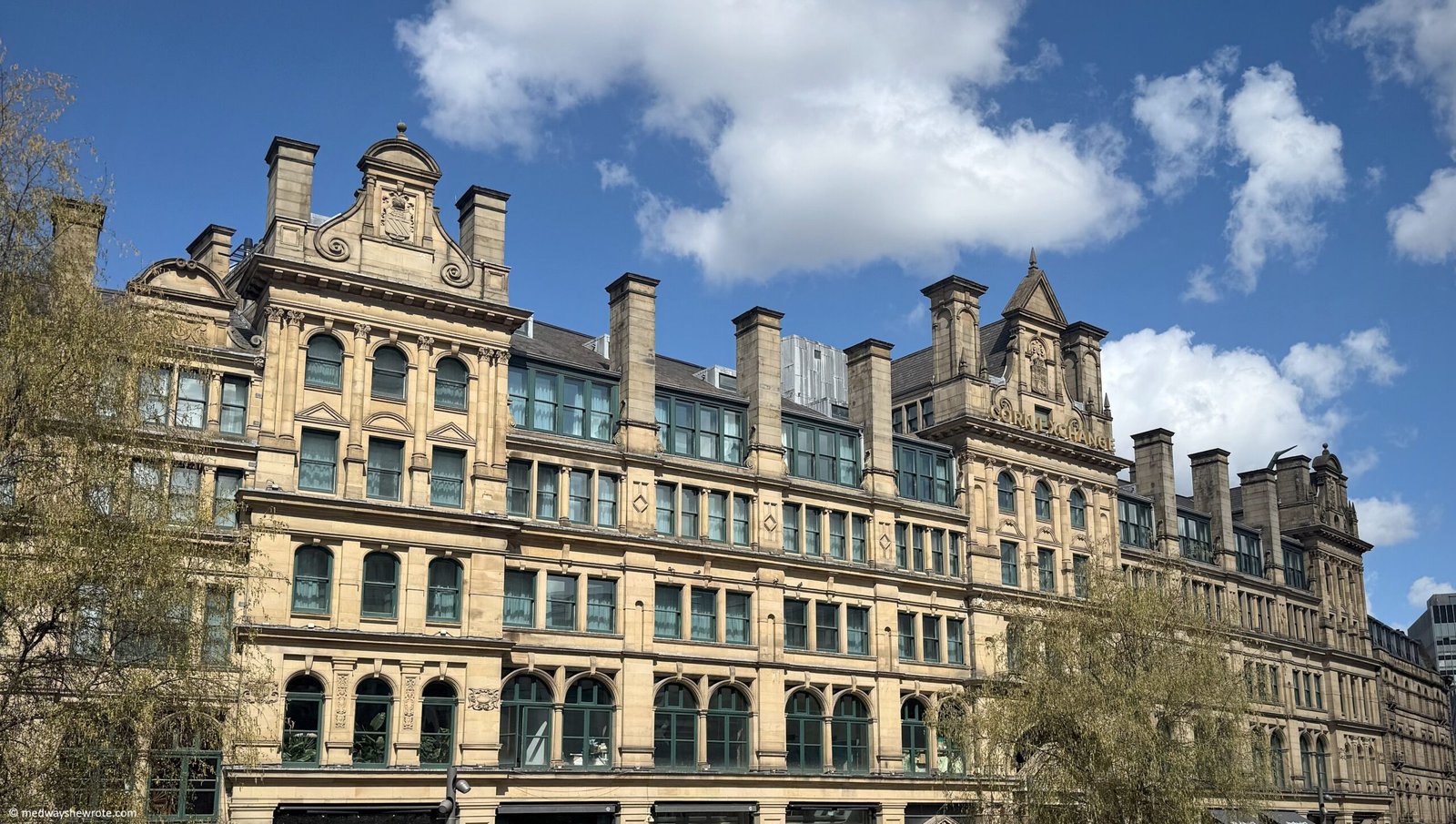
Given Salford’s proximity to Manchester, we decided to make a long weekend of this birthday celebration and visit Manchester properly. We caught up with old friends, enjoyed excellent nosh, visited some great pubs and immersed ourselves in the city’s history and culture. For The Man of Kent, however, no trip to Manchester was going to be complete without visiting…
The National Football Museum
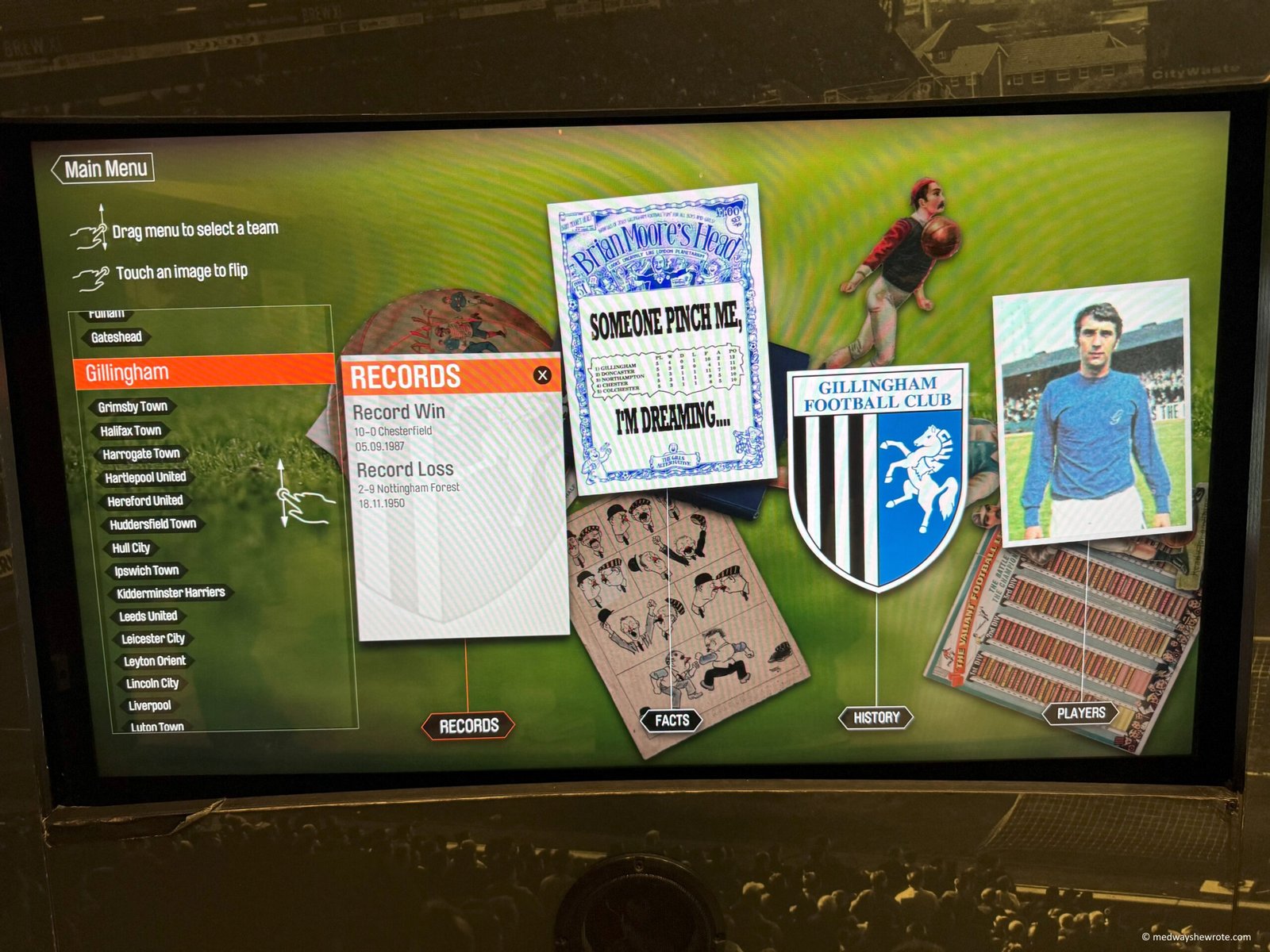
The National Football Museum stands proudly in Manchester city centre. It’s been there since 2012, having moved from its original home in Preston North End’s Deepdale ground. At time of writing, tickets cost £18 for adults and £12 for children but are valid for a whole year. If you’re a Manchester resident, you can visit for free.
The Museum is ram-packed with football memorabilia, exhibits and interactive games. It’s a grand day out for any football fan, but honestly, it’s great fun even if you don’t follow the game.
The first floor is all about the history of football, from Ebenezer Cobb Morley inventing the laws of the game right up to the modern day. You’ll pick up plenty of football trivia here. For example, did you know that in the early 1900s, matchday reporters would use carrier pigeons to send the half-time and full-time scores back to the newspaper office so they could be written up for the evening papers?
You’ll also find out about legends of the game like Bobby Charlton and Stanley Matthews, and football pioneers such as Lily Parr, Arthur Wharton, Walter Tull (born in Folkestone by the way) and more.
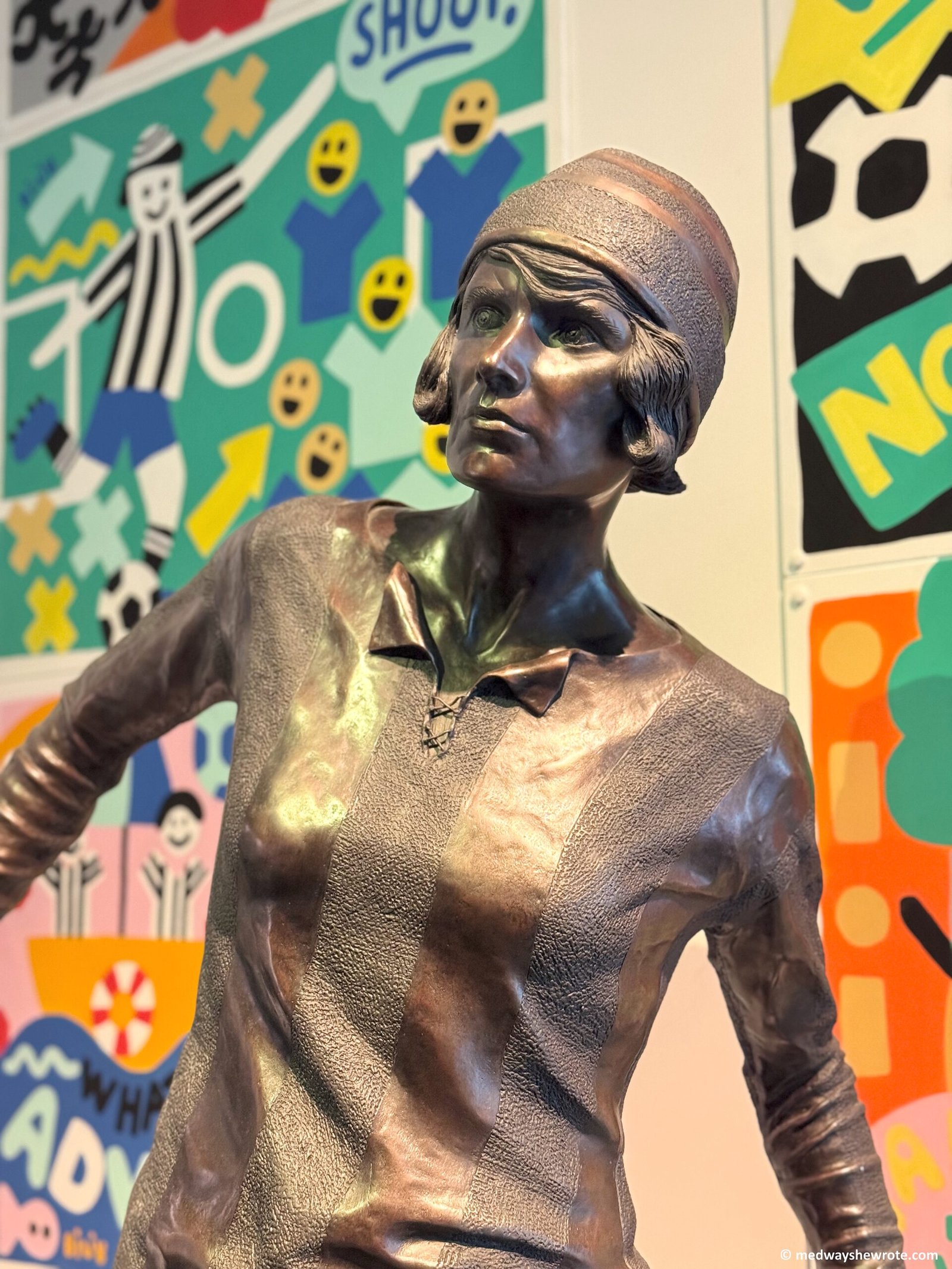
There’s tons of collectibles from football cards, programmes and figurines, to photographs, trophies, signed kit and some brilliant artworks. As a goalkeeper in his local Monday night football game, The Man of Kent made sure to get a picture of Mary Earps’ signed goalie gloves, plus Alessia Russo’s signed shirt (she’s from Maidstone, county town of Kent!) The Royal Engineers are mentioned in the display about the FA Cup, and I enjoyed reading John Motson’s handwritten notes that he used for match commentary.
The temporary Heads, Shoulders, Knees and Goals exhibition (on until 1 November 2026) is a fascinating look at the connections between football and the human body. It includes the massive plaster cast of David Beckham’s foot that was taken around the country for fans to sign after Becks broke a bone just before the 2002 World Cup. A museum guide pointed out to me that one optimistic fan had written their phone number on the cast. Whether Beckham ever phoned them, we don’t know. Sweet Chinese cuju figures showed how to control the ball with different body parts, and I swelled with Geordie pride learning about the vibrating haptic shirts that Newcastle United developed to make matches more inclusive for deaf fans.
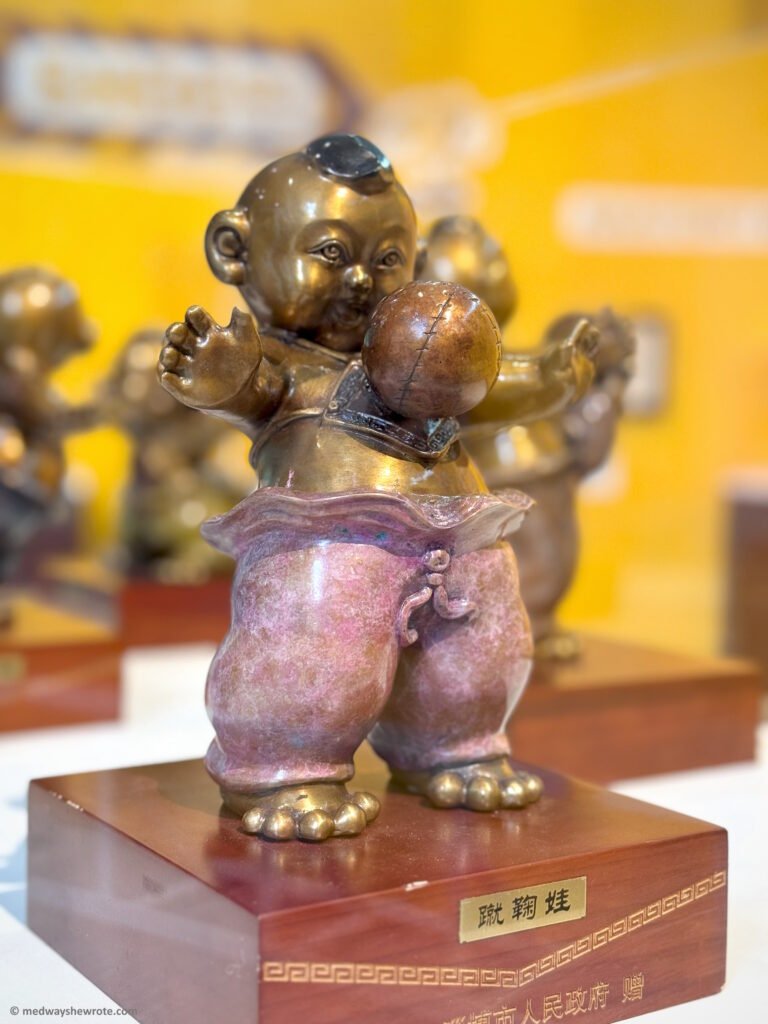
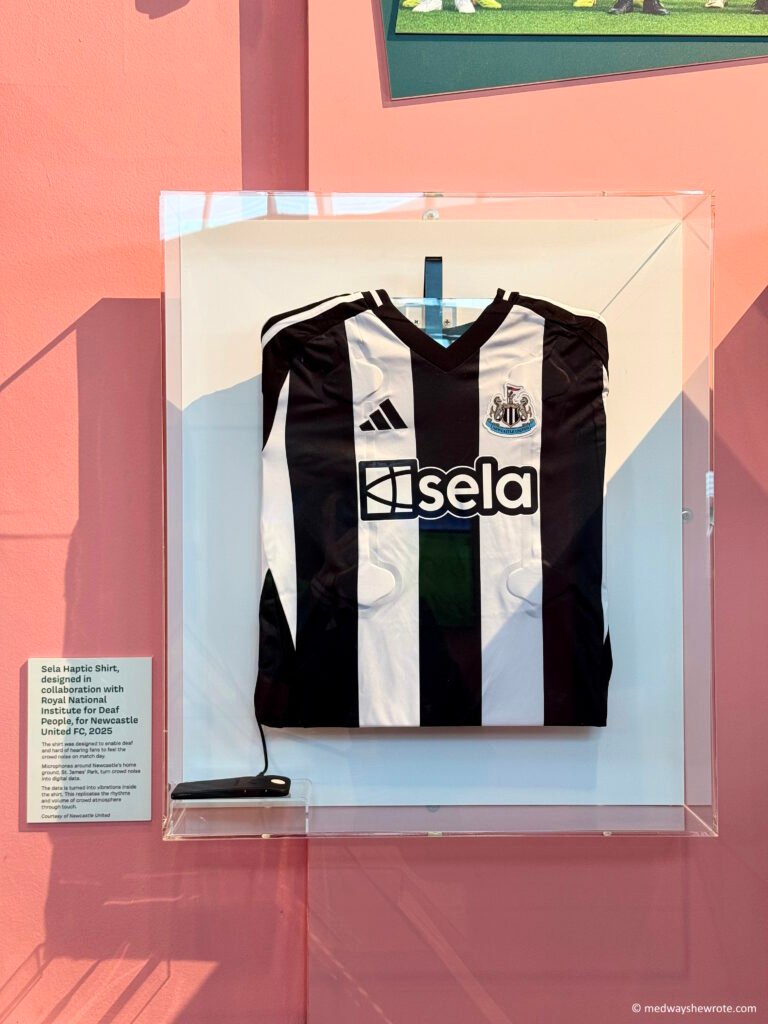
Games and activities include the Commentary Challenge, where you can have a go at being a Match of the Day commentator. Reading the autocue at the right speed to match what’s happening on the pitch is harder than it sounds, I quickly discovered! There’s also table football and Yardball. The Man of Kent’s table football skills, previously honed during many hours of training in the university common room, were a little rusty, but he still managed to soundly beat me.
It turns out I have some previously undiscovered footie skills though. We both had a go at Yard Ball on the Museum’s ground floor, a street football challenge where you have to kick the ball into various unusual goals. The Man of Kent failed to score (to be fair, he’s a goalie, not a striker), but I managed to get the ball into a goal shaped like your typical street bin and score 5,000 points – yesss! Apparently this means I quite literally scored ‘top bins.’ Back in a minute; I’m just going to call Sarina Wiegman…
(Alright fine, it was only one goal out of about 20 opportunities, but I’m keeping the bragging rights. The Man of Kent would wish me to point out that he was wearing ‘the wrong boots’ for this activity. I managed to score wearing completely unsuitable red knee-high boots, is all I’m saying…)
Going to the Match at The Lowry
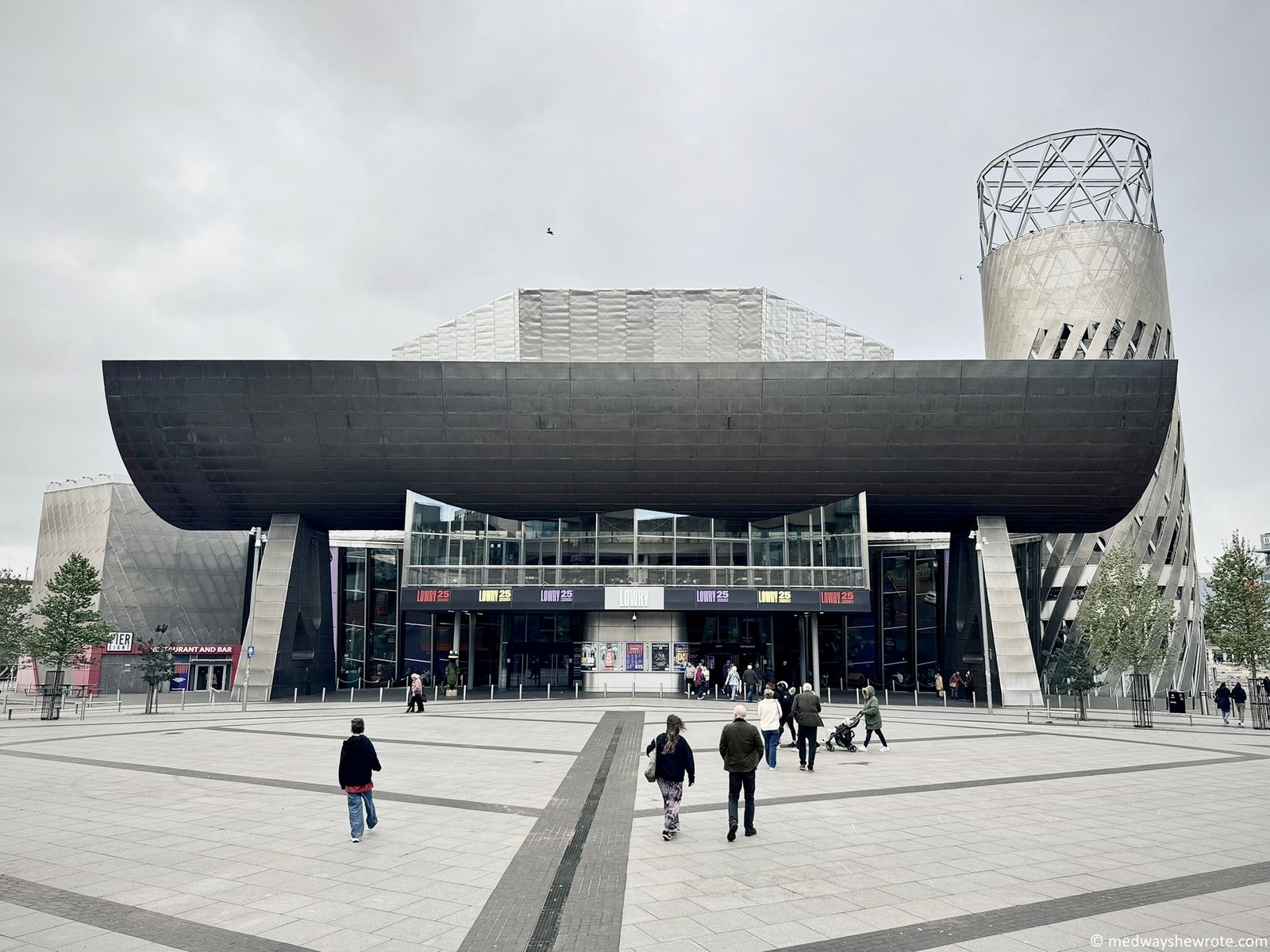
L.S. Lowry studied in Salford and worked in the North West for his entire career. He’s my favourite artist, and one of The Man of Kent’s too. The Lowry theatre and art gallery in Salford has the largest single collection of Lowry’s work, so on match day, we decided to do some pre-football art appreciation.
The Lowry is free to visit, with donations welcome. The gallery isn’t a huge space, but has several of Lowry’s renowned works, including the haunting Father and Two Sons, Man Lying On A Wall, The Cripples and Coming From the Mill. It also has sketches, seascapes, some of Lowry’s personal items, and one of my favourite paintings, Going to the Match.
(The Lowry now has Lowry 360 too, an immersive experience where you are enveloped in the sights, sounds and atmosphere of Going to the Match. Apt, considering we were literally going to the match that afternoon!)
Lowry was a rent collector for the Pall Mall Property Company, a job that took him all over Salford, Pendlebury and other North West towns, which inspired his work. Lowry is perhaps best known for his sombre depictions of factory towns and crowd scenes featuring his trademark stick figures, but was also an official war artist and painted several seascapes while on holiday at Seaburn, near Sunderland.
Going to the Match is one of Lowry’s most famous and popular paintings. It shows crowds surging towards Burnden Park, home of Bolton Wanderers Football Club at the time. The piece beat 1,700 entries to win the painting prize in the FA’s Football and the Fine Arts competition in 1953.
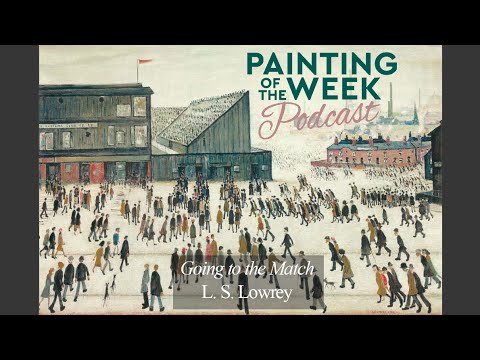
I can see why. Going to the Match is an evocative, timeless painting. The image of the supporters making their way to the game, many already in the stands even though the match hasn’t started, is one that is repeated every Saturday around the country. Just take a wander near Priestfield, home of the Gills, on a match day to see what I mean. As you stand in front of the picture, you can feel the camaraderie and anticipation of the game, and almost hear the crowds on the terraces and fans chatting to each other as they head towards the ground. It’s painted in Lowry’s trademark palette of just five colours, but it’s not a gloomy picture; it’s a hopeful one.
You can look at a painting online, or see a photograph of it, but nothing compares to looking at the real thing; the quality gets lost in translation. If you get the chance to visit The Lowry, go and spend ten minutes admiring this treasure.
Going to the match, literally
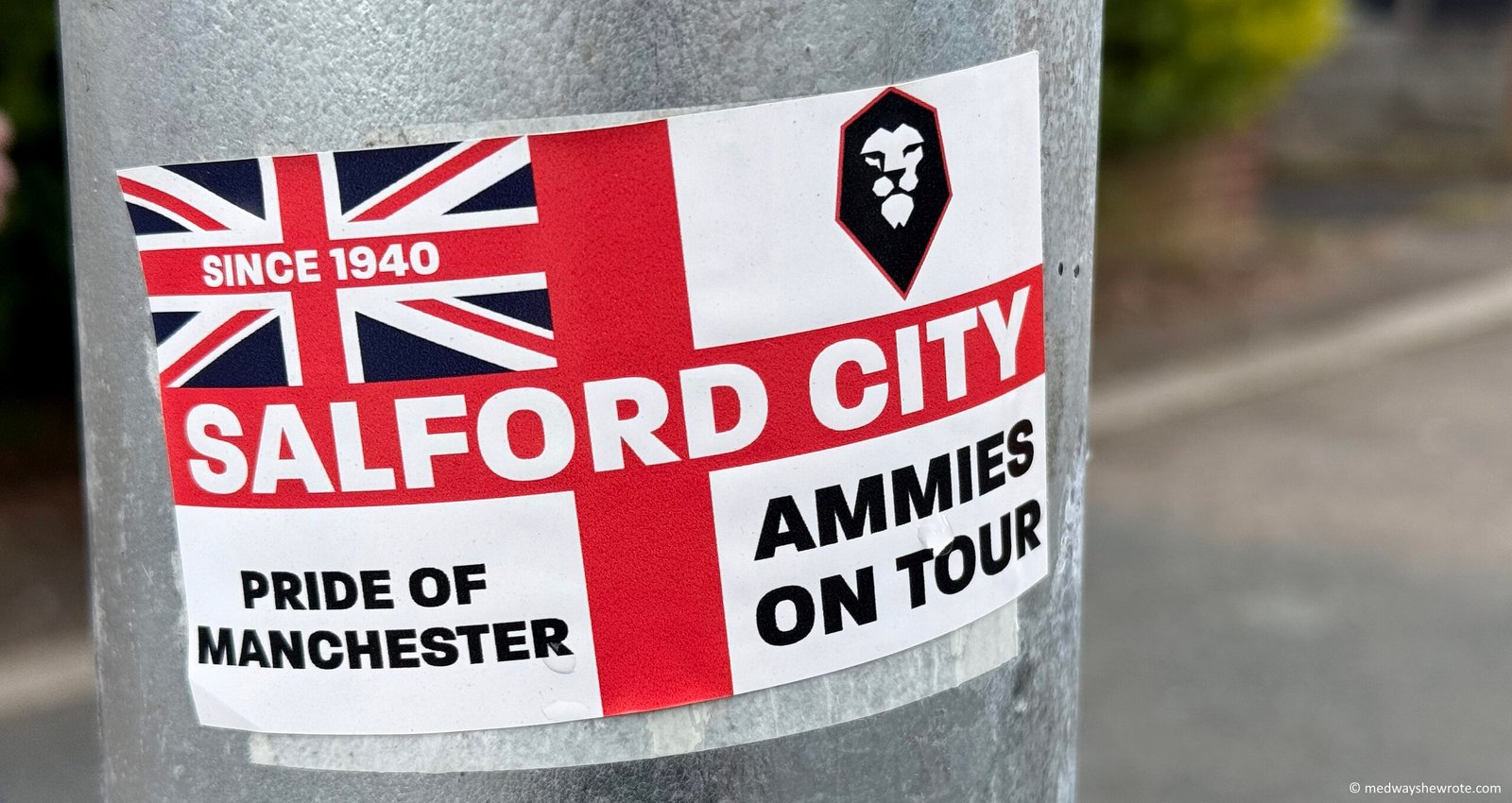
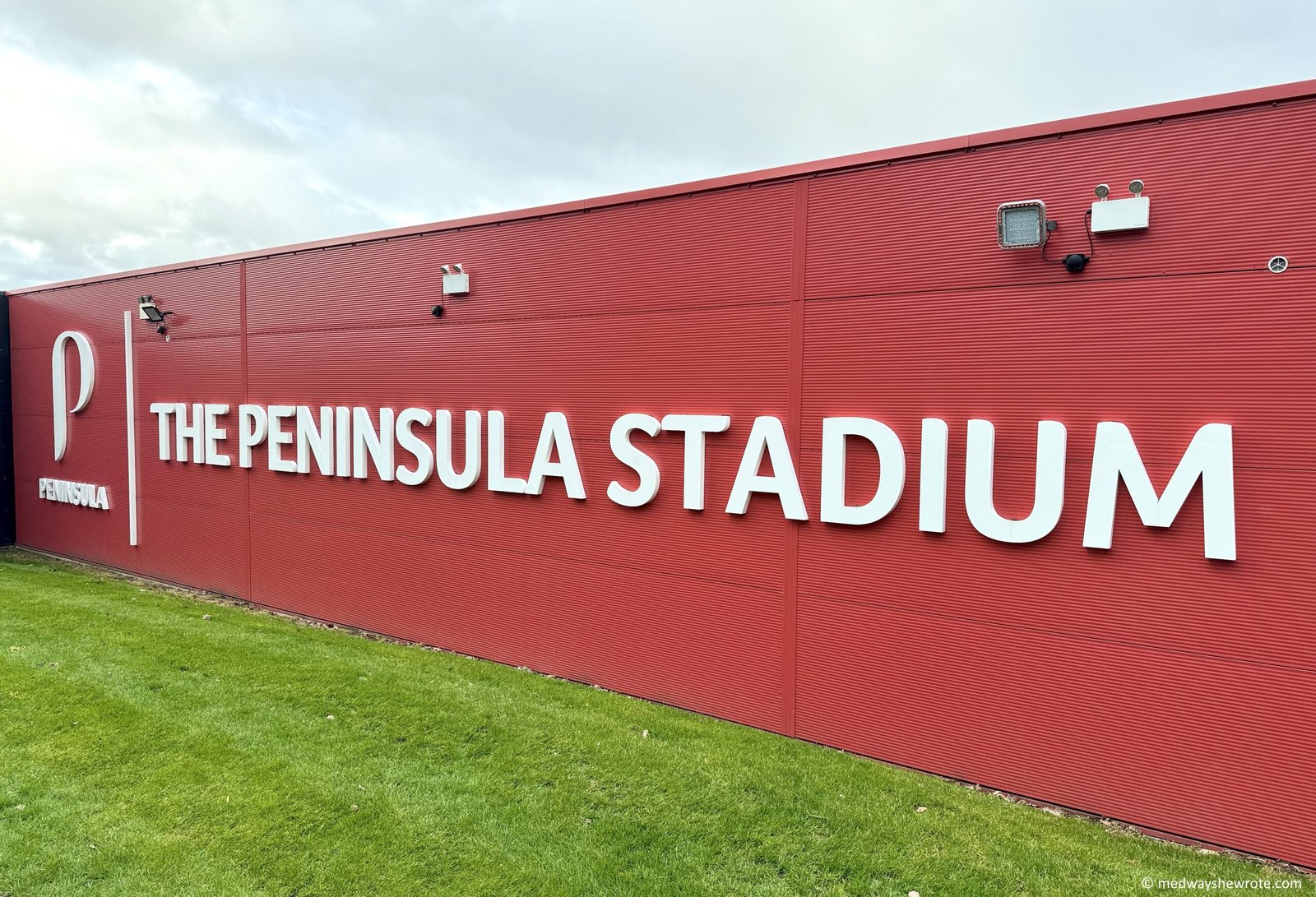
Some fun facts about Salford City FC. Until it was promoted to the Football League in 2019, Salford was one of the largest places in the UK without a league team. The club’s anthem is Dirty Old Town, and its nickname, the Ammies, comes from the team’s former name, Salford Amateurs. Salford City FC has two mottos, three mascots, and two former Man United players as co-owners, David Beckham and Gary Neville. The club’s ground, Moor Lane, is currently called the Peninsula Stadium for sponsorship reasons.
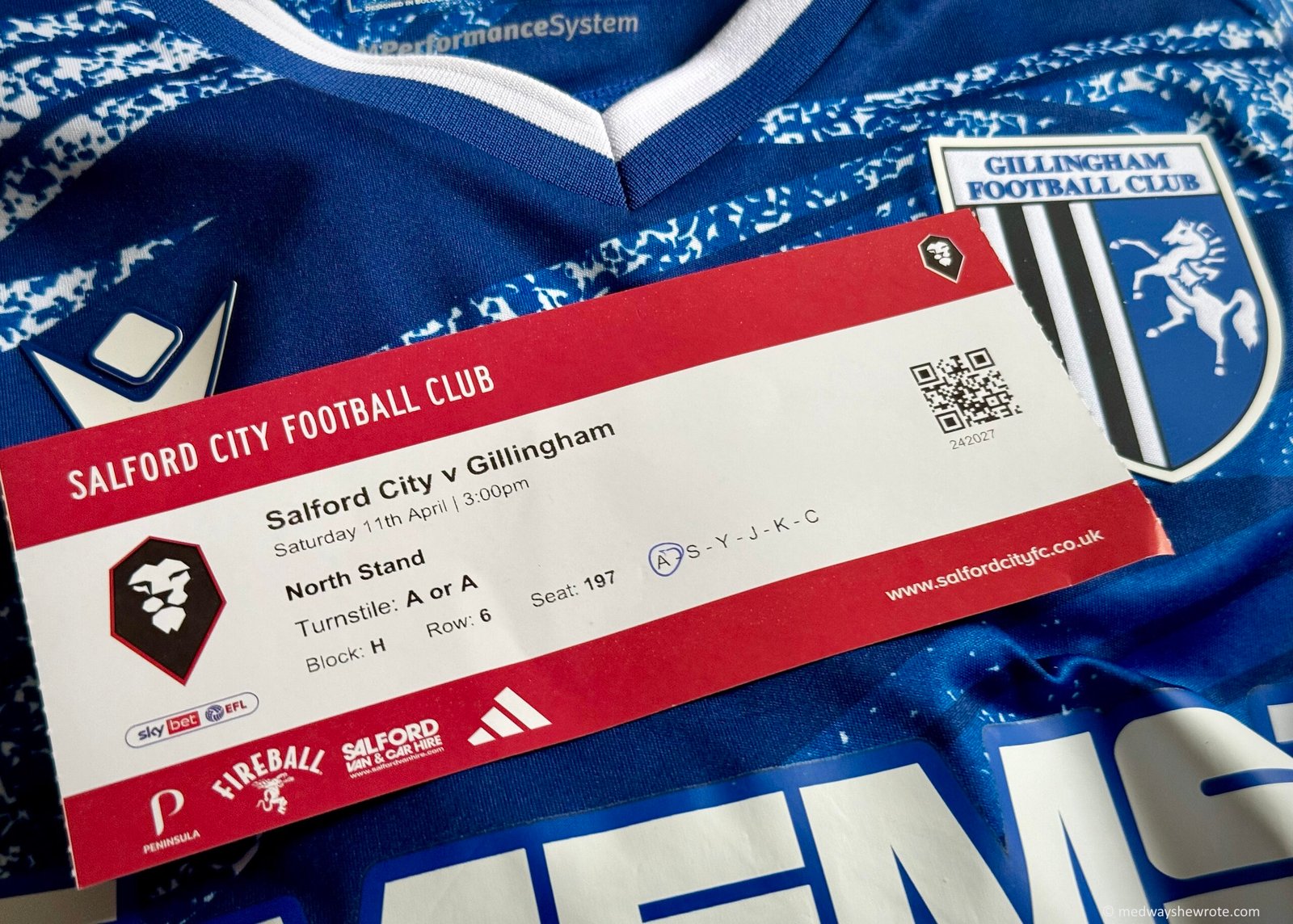
After a post-exhibition coffee and lunch at The Lowry, two buses from Salford Quays and a short hike up Moor Lane itself, we arrived at the Peninsula Stadium. As Salford is celebrating its centenary as a city in 2026, match tickets were a bargainous £1.40 per person – the equivalent of what a ticket would have cost in 1926.
Right. Time to go all Trent Crimm and attempt to write a match report. Please note that this is just my two penn’orth from the perspective of a football muggle. If you want actual proper analysis, please see the excellent Gills in the Blood TV and the ausgezeichnet German Gills. Or take The Man of Kent down the pub for a chat over a pint.
The tactics in the first half of the match were familiar from the few occasions I’ve seen the Gills play; hoof the ball up the pitch and hope for the best. There were many long balls and much head tennis, which was not helped by the windy conditions. Salford seemed to have the energy and knack for taking full advantage of the wide and sloping pitch, whereas Gills looked tentative and lackadaisical. Every time a ball was passed it seemed the receiving player was on a five-second delay, leaving too much space for Salford to swoop in and nick the ball. Lucky we didn’t concede, in my humble opinion.
The second half was better. Whether that was because the wind was behind the team instead of in front, the effects of a half-time Lucozade, or because manager Gareth Ainsworth had dished out the hairdryer treatment at half-time, I don’t know, but suddenly Gills had some energy and attack. Bradley Dack coming onto the pitch later on in the half further galvanised the performance. Young Seb Palmer-Holden tried a Hail Mary shot at goal in the closing minutes but was too far away. I liked his ambition but he should’ve passed to a (rightly furious) Dack who was closer and had a better chance at a goal.
The match ended 0-0, which is pretty good considering Salford had won their previous five home games.
Football grounds have their own kind of cold that seeps right into your feet bones and bum bones and finger bones. By the end of the first half I was standing shoulders hunched, hands stuffed into pockets like a figure in one of the Lowry paintings we’d seen that morning. Having things to clap in the second half meant I had circulation back in my fingers; now I just needed a brisk march down Moor Lane to get my feet warmed up again. Warming up continued alongside post-match analysis at The Rat & Pigeon back in Manchester.
Manchester continued
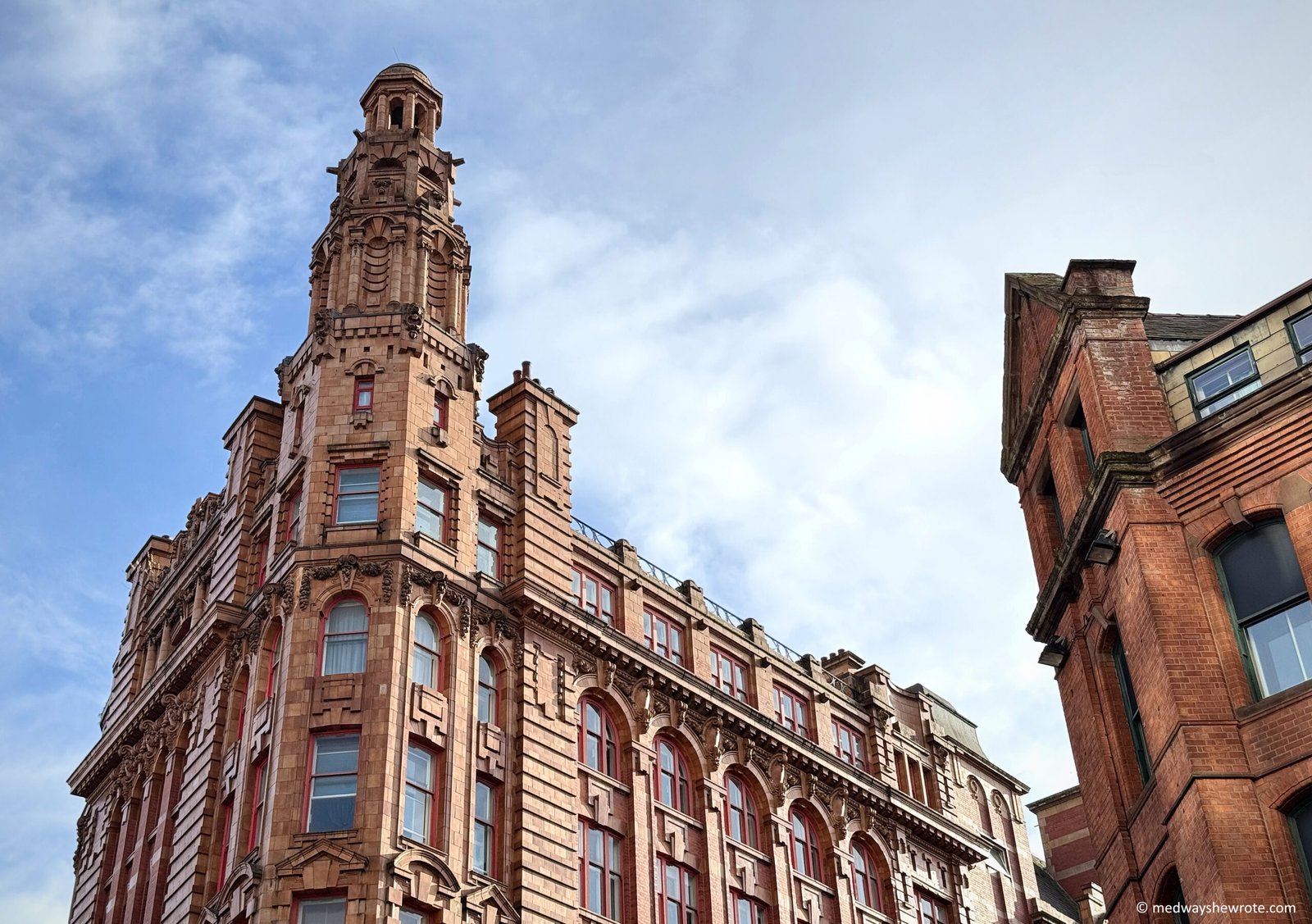
No football-related activities were planned for Sunday, but the theme continued nonetheless. In the morning, we caught the tram out to Altrincham to meet friends. We headed into Altrincham’s Market House for a mid-morning coffee, where the chaps immediately clocked Manchester United legend Ryan Giggs at a nearby table. Altrincham is apparently a popular choice of residence for footballers. Singer Morrissey also lives in the town (we went past his house!)
Back in Manchester, we spent Sunday afternoon meandering around the Northern Quarter. We happened across the Makers’ Market near the Manchester Craft and Design Centre, where The Man of Kent’s eye was caught by a stall selling prints of each club’s most famous players as Subbuteo figures (also available at the NFM shop). Inevitably, The Man of Kent bought the Gillingham version as a birthday present to himself. Now we just need to find the perfect frame in Gills blue.
And finally
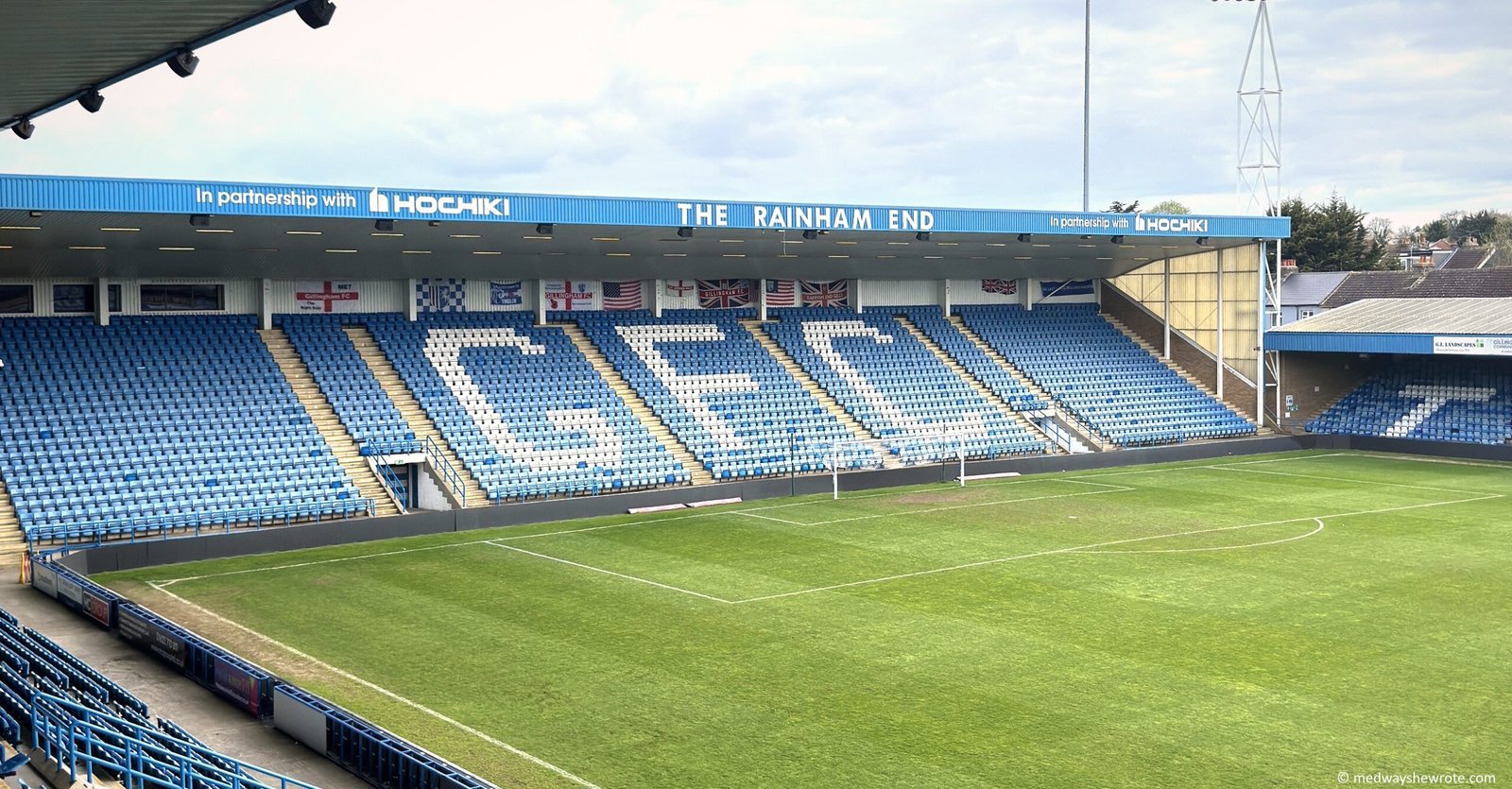
As I write, Gillingham have two matches left of the current season; away to Barnet on Saturday, then back to Priestfield to play Shrewsbury. Gills have managed to stay in League Two for next season, which will mean plenty of away games in the North West. I reckon I’ll get good use out of that National Football Museum ticket.
Like so many Gillingham seasons, this one started promisingly and nosedived in the middle. Usually they perk up towards the end of the season, but not this time. In mid-September last year, Gills had made it 20 games undefeated and hopes were high. That feels like a fever dream now, and all eyes are on next season. Star player Bradley Dack has signed a new contract, and the club has released a cute video that encapsulates the hope at the heart of every Gills fan – that next season will be better. That next season, the sleeping giant will wake, actually.
Leave a Reply