“It is to be the grandest building in the whole of these parts.”
James Jershom Jezreel
Have you ever seen the TV series Grand Designs?
It’s a show on Channel 4, hosted by Kevin McCloud, about people building homes that are unusual, groundbreaking and often grand in scale. Sometimes the designs are beautiful structures that enhance the landscape around them, blending quietly into their surroundings. Sometimes the buildings are bizarre or just plain ugly, leaving you wondering, ‘What were they thinking?’ But every design is unique, even if not to your particular taste. Having Kevin McCloud describe your design as having ‘integrity’ is the highest possible accolade on the show.
The show has garnered a few tropes over the years. Vast structures that spiral way beyond budget. Builds that go over deadline by months, if not years. Owners whacking terrifying amounts of money on credit cards to fund the project. Kevin McCloud commenting wryly on the ambitious nature of the design or timetable. I say all of this with affection; it’s a great show.
There have been several Grand Designs in Kent. The Garden of England has attracted many intrepid self-builders looking for a few spare acres on which to construct their dream house. But once upon a time, long before Channel 4 started documenting such things, Gillingham was home to a very grand design indeed. A structure that was intended to be “the grandest building in the whole of these parts.”
That building was Jezreel’s Tower. It stood at the top of Chatham Hill, dominating the Medway skyline. Jezreel’s Tower wasn’t just famous locally. It was famous nationally. As well-known and recognisable as the Angel of the North, or Stonehenge, or Blackpool Tower. It was so famous, it was one of the British landmarks used in an advertising campaign for Shell Oil. It featured on postcards, and has been immortalised in song by local bands Tundra and The Khybers.
In March 1961, 65 years ago, the grandest building in the whole of these parts was torn down. It had put up decades of resistance, mightily withstanding many attempts to have it demolished, but was eventually battered into the ground thanks to an act of colossal municipal short-sightedness.
Today on Medway, She Wrote: Jezreel’s Tower – Gillingham’s missing landmark; the charismatic religious leader who created this grand design; and how I might never have found out about any of this, were it not for Percie’s postcard.
In the beginning, was the internet
Amazing, the things you find on the internet.
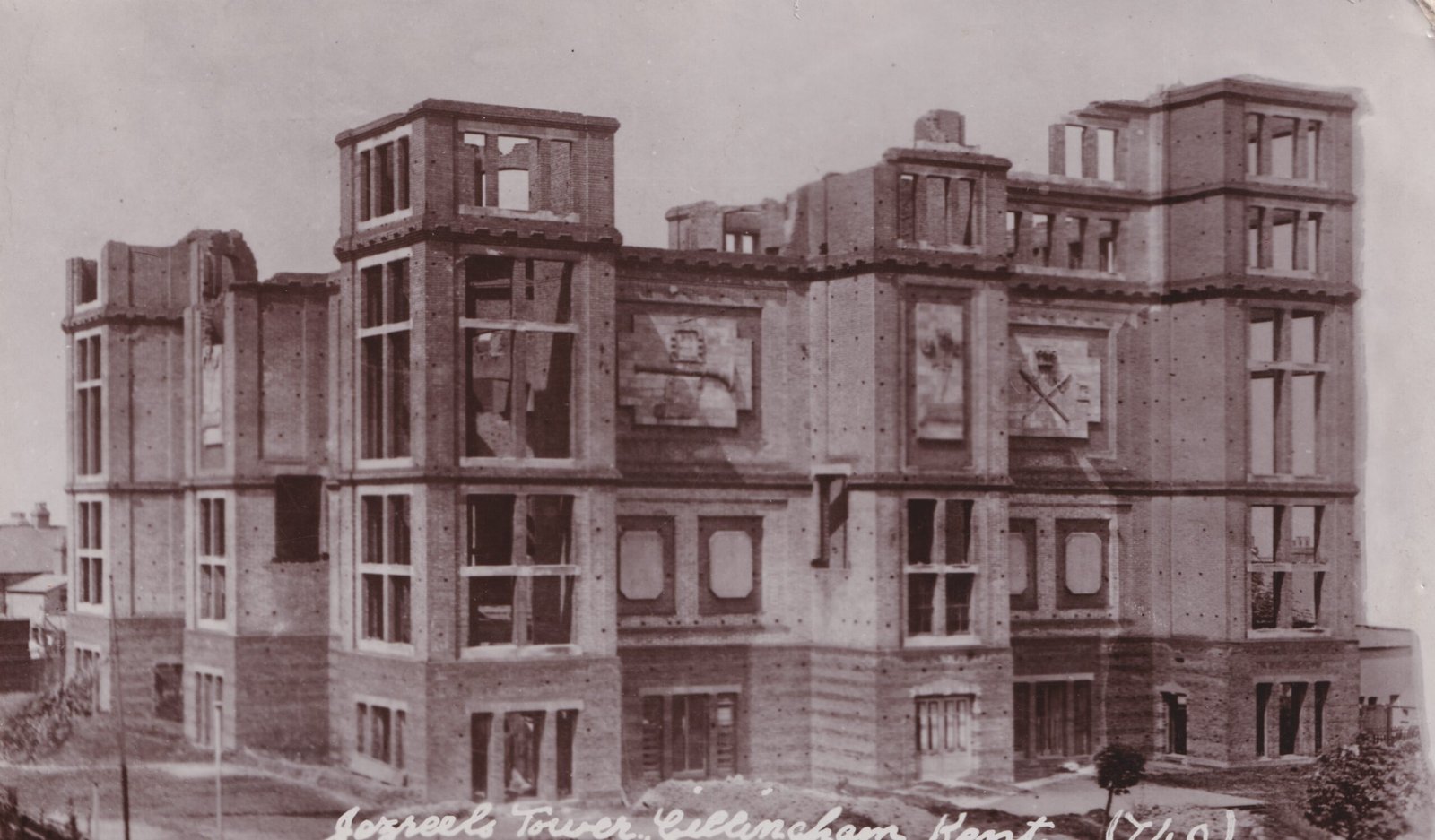
Once upon a time, I was on eBay looking at a vintage Gillingham FC pin badge for The Man of Kent’s birthday present. As you may know, when you click on something on eBay, the site shows related items it thinks you will like. The related items eBay showed me that day included more Gills merch and several vintage postcards of Gillingham town centre. There were postcards of the high street, the old Palace cinema, and other local scenes. And one titled, ‘Jezreel’s Tower, Gillingham.’
I paused. Jezreel’s Tower? I’d never heard of it before.
The postcard showed a massive, square chunk of a building with towers and huge windows standing in what looked like fields. The sort of building you couldn’t possibly miss if you went past it. I wondered where in Gillingham it was, assuming it must be on the outskirts of the town somewhere. I asked The Man of Kent, but he’d never heard of it either. Mysterious.
I clicked on the postcard for a closer look. That brought up more related items; more postcards showing various views of the same place, Jezreel’s Tower. It was clearly a famous building, a local landmark. But how come I had never seen or heard of it, having lived in Gillingham for nearly twenty years?
Most of the postcards for sale were unused, but one had a message on the back. An intriguing message. This particular postcard was sent from 112 Balmoral Road, Gillingham, on 16 April 1915 and read:
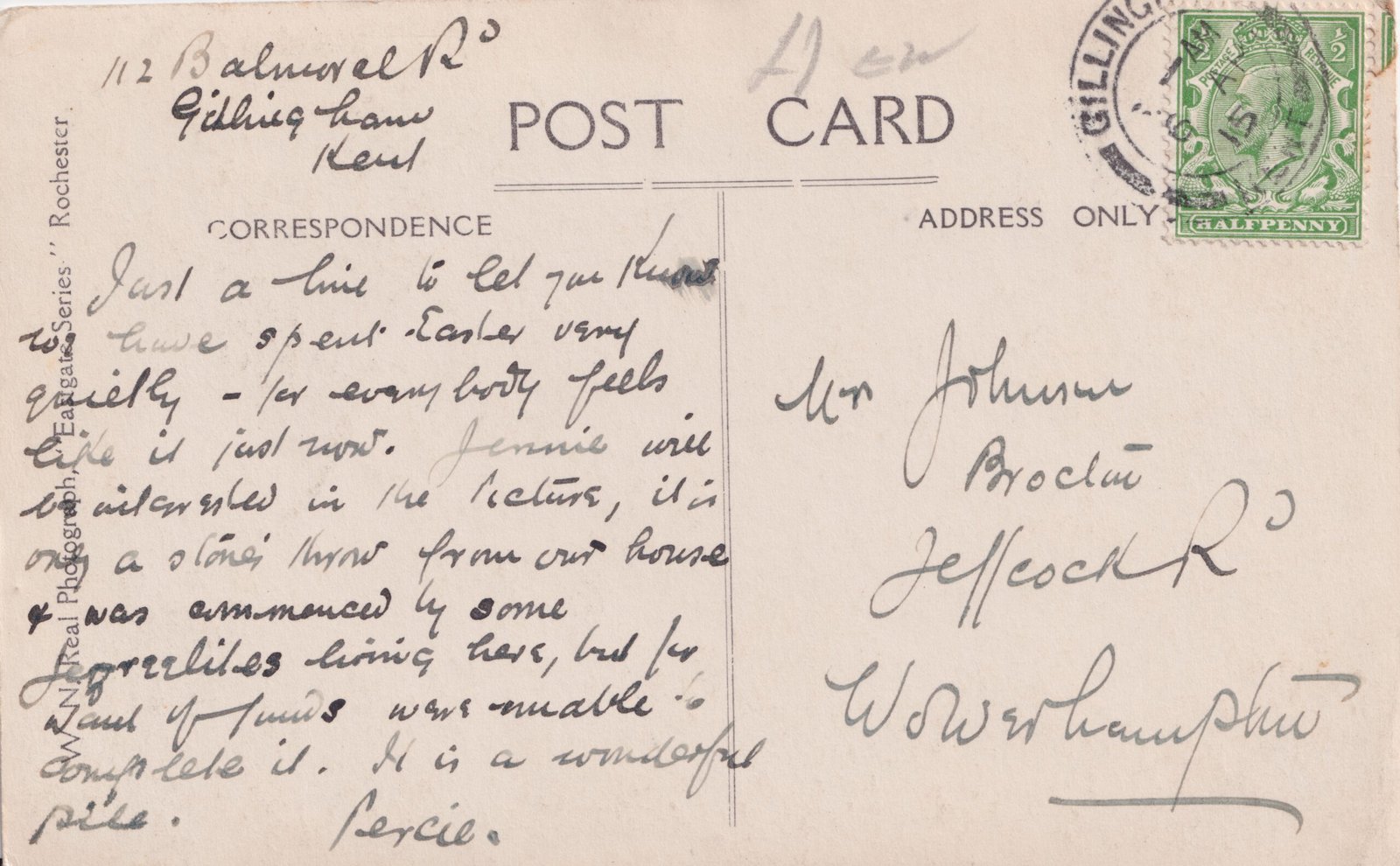
“Just a line to tell you we have spent Easter very quietly – for everybody feels like it just now. Jennie will be interested in the picture, it is only a stone’s throw from our house & was commenced by some Jezreelites living here, but for lack of funds were unable to complete it. It is a wonderful pile. Percie.”
Only a stone’s throw from Balmoral Road? That’s just a few minutes from my house! So where on earth was this showstopper of a building?
A swift bit of googling later, and I was in the middle of one of the most fascinating stories I had ever come across – that of James Jershom Jezreel, and Jezreel’s Tower.
I decided to buy Percie’s postcard. It felt like a piece of buried internet treasure, a fellow Gillingham resident writing about this strange and unusual building over one hundred years ago. I bought a couple of others for good measure. But I couldn’t leave it there. I needed to know more.
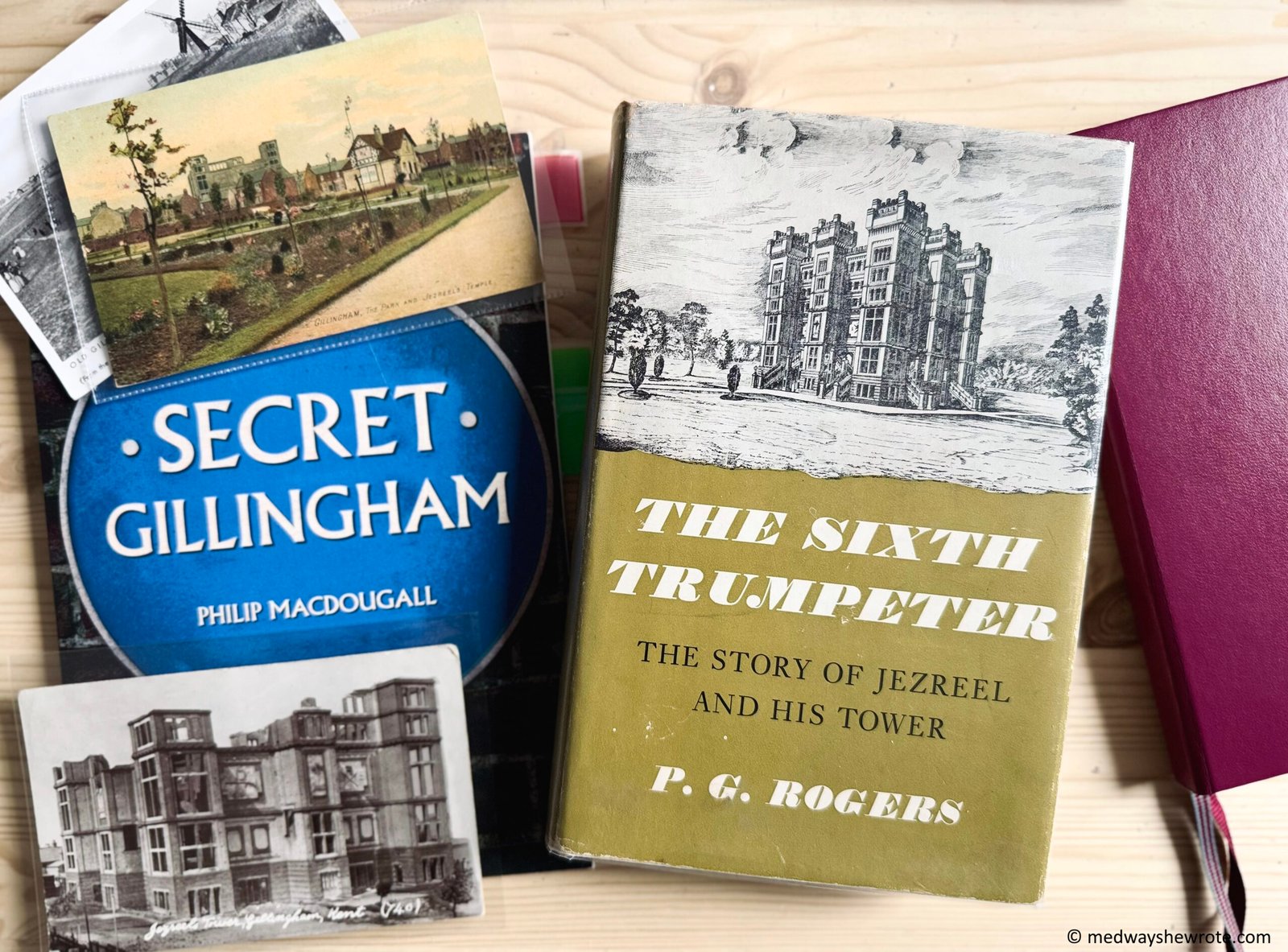
A few weeks later, important research materials arrived. The Man of Kent bought me Secret Gillingham for Valentine’s Day, because love is not batting an eyelid when your other half starts ordering a load of postcards of a random building from eBay, then buying them a book related to it. Meanwhile, I had tracked down a copy of P.G. Rogers’ superb book on the subject, The Sixth Trumpeter.
It’s fair to say I went deep down the rabbit hole on this one. Keep reading, and you’ll see why.
But let’s start at the beginning. The story of Jezreel’s Tower begins with a man, known sometimes as ‘The Stranger’ or ‘The Messenger’: James Jershom Jezreel.
The mysterious James Jershom Jezreel
James Jershom Jezreel started out as James Rowland White. Little is known about his early life or his family history. He arrived in Chatham in 1876 as a soldier in the 16th Foot (Bedfordshire Regiment).
Whilst in Chatham, this quiet and serious man learned of a small religious group called The New House of Israel. They followed the teachings of Joanna Southcott. Southcott was a prophetess who claimed to receive divine visions, and sold ‘seals of the Lord’ that she said would guarantee the buyer eternal life come the end of the world. After her death, she left behind a sealed wooden box, with instructions to open it only at a time of national crisis and in the presence of 24 bishops of the Church of England. Bonkers? Maybe, but she attracted followers all over the country, including in Medway.
James White became an apparently ardent member of the New House of Israel. But appearances were not what they seemed. One Christmas Eve, the group’s leader, Mrs Head, received the shocking news that James White had declared himself ‘the Messenger of the Lord’ and wanted all the group’s members to assemble on Christmas Day to hear extracts from his own religious manuscript, The Flying Roll. Understandably, she was not amused and White was immediately booted out. The problem was, the members – including Mrs Head’s own relatives – decided to leave and throw their lot in with James White. Ouch.
Having reinvented himself as ‘the Messenger of the Lord’, James White started using the name ‘James Jershom Jezreel’ (‘Jershom’ and ‘Jezreel’ are both derived from the Bible). Jezreel claimed his mission was to gather together the 144,000 people who would be granted eternal life come the end of the world according to the Book of Revelation.
According to Jezreel, members of the 144,000 in England would be saved first. Handy! Even more conveniently, England would be the place where the 144,000 would eventually gather. Specifically, they would gather in Medway.
Location, location, location
Jezreel was determined to make Gillingham the headquarters of his new movement, which was called ‘The New and Latter House of Israel.’ After a long, hard slog to attract more followers in Britain, and a worldwide missionary tour, converts started to arrive in this little Medway town. They became known as the Jezreelites.
James Jershom Jezreel seems to have had quite the magnetic personality. There are no known photographs of him, but he is said to have been around 6ft tall, well-built, with luxurious long hair and beard. He was a well-dressed, diplomatic, tactful man. According to P.G. Rogers, even people who later left the Jezreelite sect would describe him as a true gentleman. He was also a persuasive speaker: by 1885, Jezreel had 1,400 followers in Medway alone.
As well as being a compelling preacher, Jezreel was a savvy entrepreneur. Followers who joined the sect would put their money into a central treasury. Jezreel used the funds to invest heavily in Medway real estate. He bought a meeting hall that could seat 200 people at the junction of Nelson Road and Napier Road in Gillingham, where services were held for the Jezreelite community and the public. Jezreel and his wife moved into Woodlands, a country house on Woodlands Road. This was turned into Israel’s International College, a religious school for children that also offered tuition in music and practical subjects.
Open air public services were held in the fields beside Woodlands, and they weren’t your average church service. Jezreel appears to have been something of a showman, and he knew how to attract a crowd. The public services were free, advertised widely, and quickly became renowned for their excellent musical performances. Edward Hutchings, a Gillingham resident, described his memories of Jezreel’s services at Woodlands for the Chatham Observer in 1946:
“Thousands of people came. He [Jezreel] had a wonderful orchestra of violins, harps and strings. He was very particular about the quality of the music, and brought down Mr Chapman, the conductor at the Crystal Palace.”
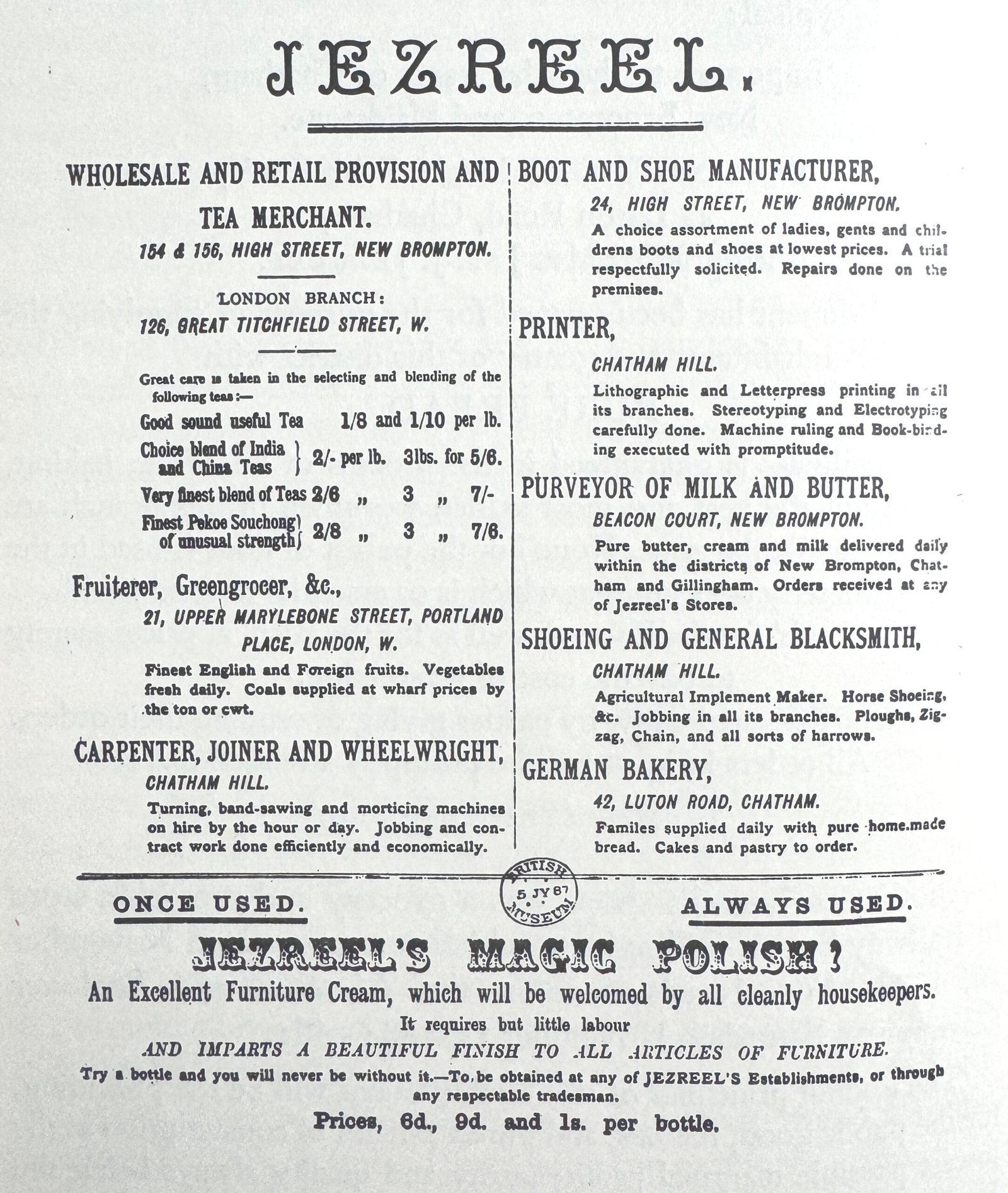
Jezreelite shops started popping up over all the place too. There was The New German Bakery at 42 Luton Road, a wholesalers and tea merchant on New Brompton High Street that sold, among other things, ‘good, sound, useful tea,’ and several businesses on Chatham Hill, including a printer, blacksmith, carpentry, joinery and wheelwright. There was also a grocers on Railway Street, and branches of the stores in London.
Thanks to these thriving businesses, Jezreel was raking it in, which meant he could start work on his grand design; Jezreel’s Tower.
Jezreel’s Tower: Gillingham’s original grand design
Now it’s all very well saying you’re going to gather together 144,000 people destined for eternal life, but once you’ve managed to persuade them to up sticks, travel to Gillingham and give you all their money, you’re going to have to put them somewhere. But where? The average Medway terrace is not going to cut it.
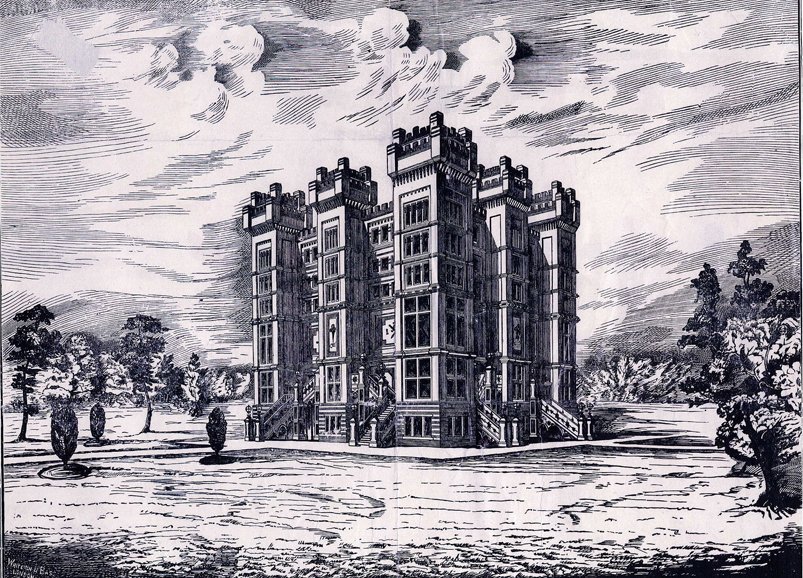
Jezreel selected a large site at the top of Chatham Hill as the ideal location for the Jezreelite headquarters. His ambitious plan was to build a perfect cube, with yellow brick walls and eight towers, with the emblems of the sect emblazoned on the walls. The entire ground floor would be devoted to twelve large printing presses that would churn out copies of The Flying Roll and other religious literature. A circular amphitheatre that could accommodate 5,000 people would stretch almost to the top of the building, underneath a 94ft glass-domed roof.
Other exciting features would include a turning 45ft-wide lantern in the glass-domed roof, a circular, revolving platform for the choir that could be raised 30ft high, and gas and electric light throughout. The building was 124ft long on all sides, and 120ft high. Astonishingly, the architects had to talk Jezreel down from making it even bigger.
Kevin McCloud would have had a field day with this one.
If, like me, you read measurements such as ‘120ft high’ but struggle to imagine what that would look like in real life, let me tell you that 120ft high is humungous. An absolute unit of a building. In fact, Jezreel’s Tower was so obscenely ginormous that during the Second World War, there were rumours the Government would demolish it, because otherwise it would help the Luftwaffe locate Chatham Dockyard. I thought that was a bit far-fetched until I found this aerial shot of Gillingham in 1936:
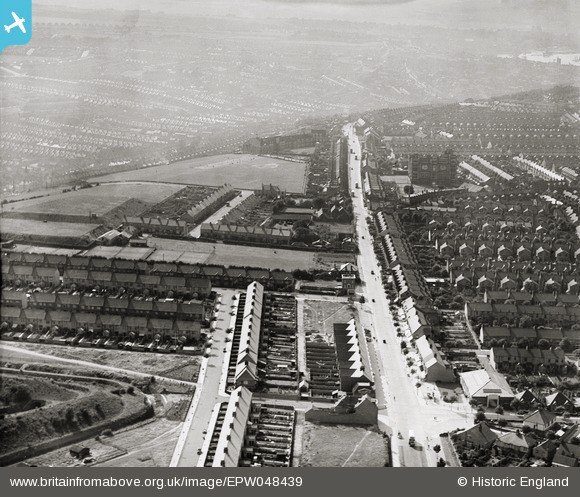
Source: Britain From Above
In true Grand Designs style, a building of this scale was not going to be cheap. The cost was estimated at £25,000 – around £4 million today. Eek. Doing well financially though he was, Jezreel didn’t have that sort of cash lying around, so he decided to do the work in stages, aiming to have the whole Tower completed by 1 January 1885. If you’ve watched Grand Designs, you’ll already know where this is heading…
Over budget, behind schedule – and Jezreel unexpectedly departs
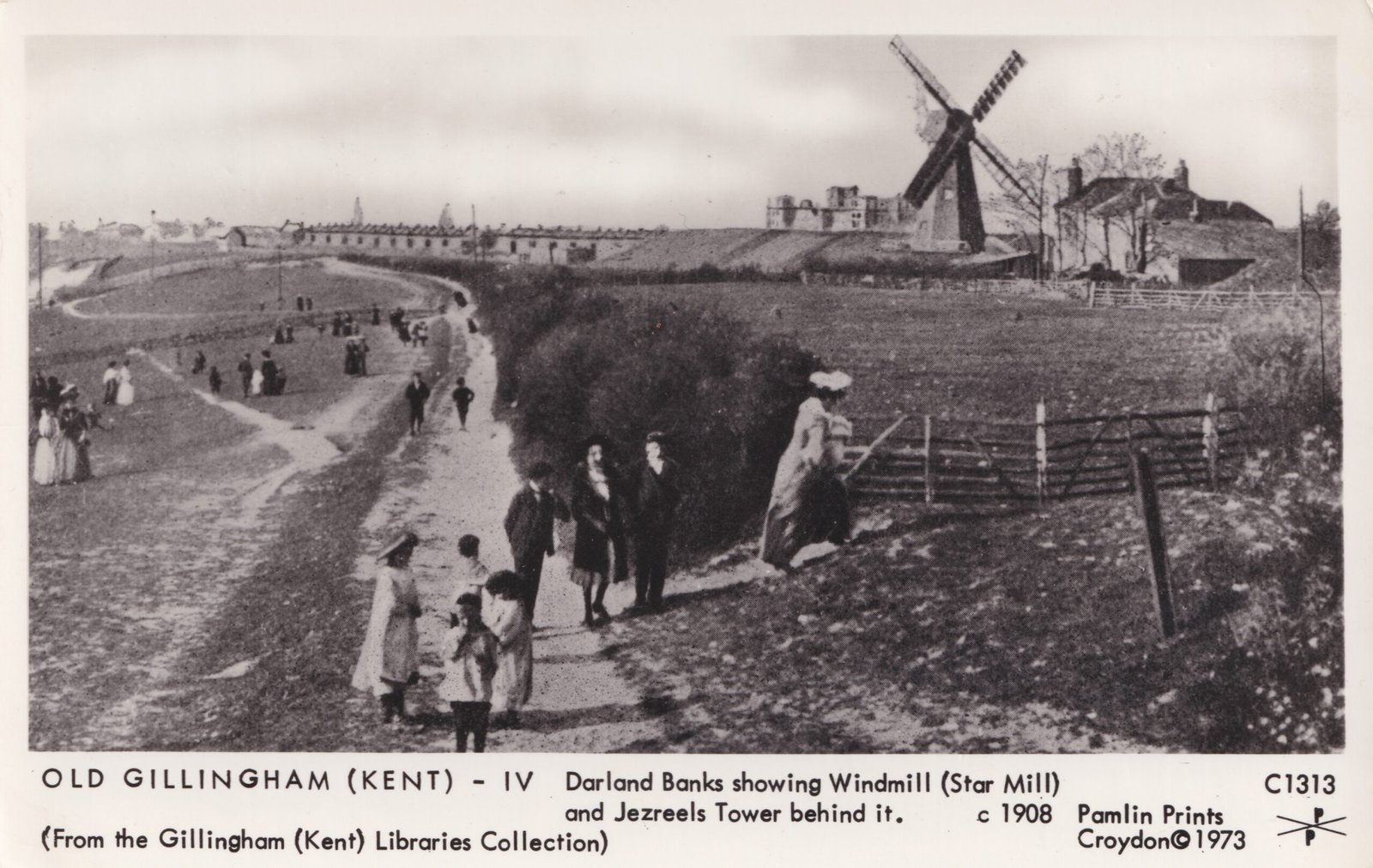
As well as raising money from local businesses, Jezreel wrote to followers all over the world encouraging them to sell up and move to Gillingham to help raise money for the Tower, stating in one letter “let all convert everything into gold, and bring all they can with them in the way of cash, but no more luggage than is necessary.” Unbelievably, it worked! Money started pouring in, and work began.
Sadly, Jezreel never got to see the Tower finished. He died on 1 March 1885, with only the foundations and basements completed, and was buried in Grange Road cemetery in Gillingham.
Jezreel’s death led to a leadership struggle, from which Jezreel’s wife (originally Clarissa Rogers, but known to the sect and locally as Queen Esther), emerged victorious. A shrewd businesswoman, fashionista and formidable leader, she took over aged just 25.
Having consolidated power, Queen Esther had various legal and financial matters to resolve, not least funding the ongoing work on the Tower. Thanks to profits from her own magazine, The Messenger of Wisdom and Israel’s Guide, and funds from Jezreelite converts at home and abroad, the cornerstone of the Tower was laid on 1 September 1885. The whole exterior was completed by June 1887. Though the building didn’t have a proper roof at that point, the ground floor was complete and the printing presses up and running.
But in May 1888, disaster struck again: Queen Esther died. She was buried alongside James Jershom Jezreel at Grange Road cemetery. Her death created so much local excitement that the date of her funeral was kept secret to prevent a horde of gawkers turning up.
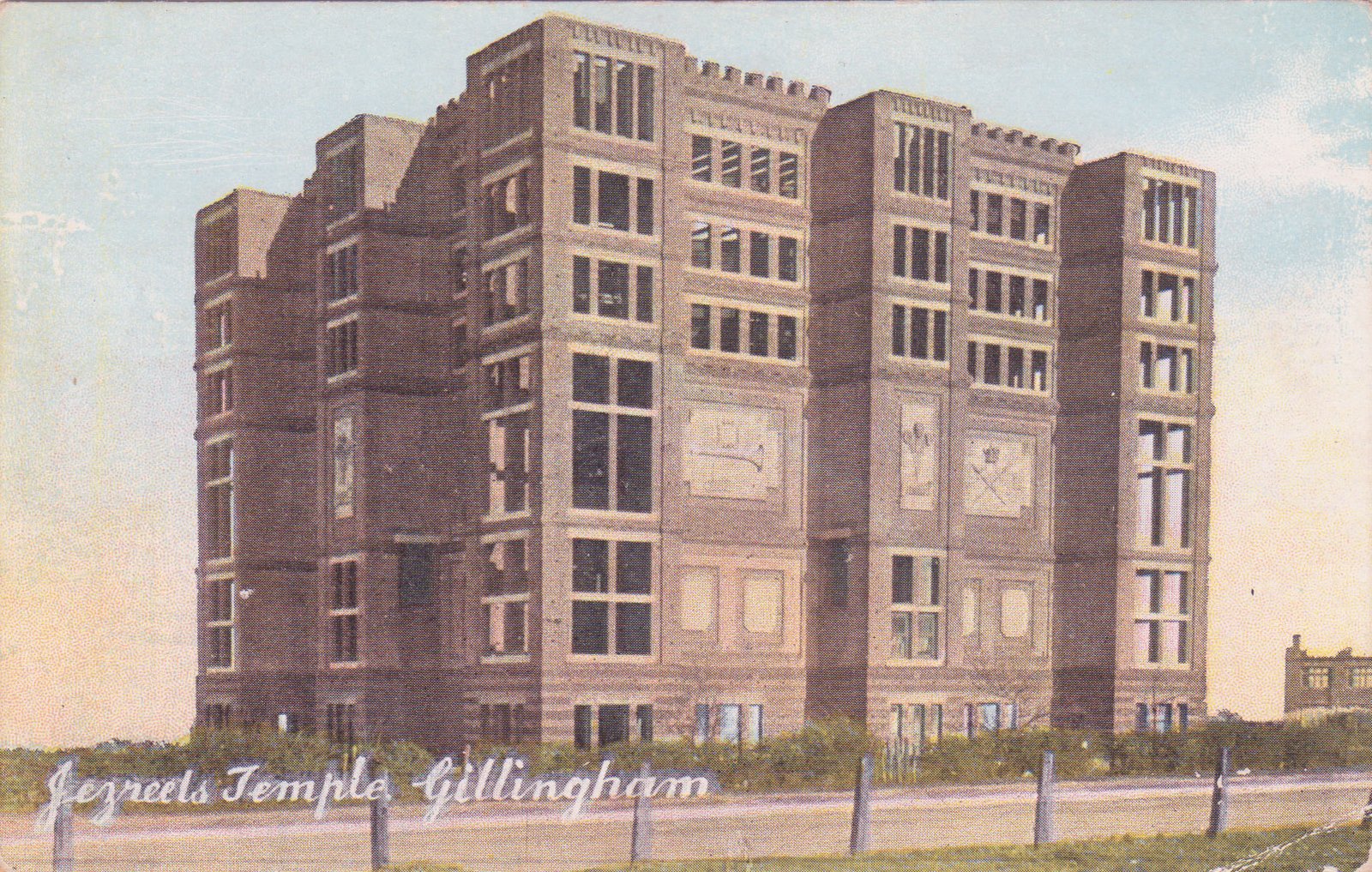
After Queen Esther’s death, the Jezreelites had major problems: leadership struggles, declining followers, not to mention a few public disputes that kept the local press occupied. The biggest problem however, was cash flow. The Tower still wasn’t finished and it was going way over budget. Around £4 million (in today’s money) had already been spent, and it was estimated that another £3 million would be needed to complete it.
Getting a loan to fund the works was impossible, because surveyors agreed that the value of the finished building would be less than the amount needed to complete the project. Meanwhile the builder, Mr Naylar, hadn’t been paid, so he obtained a court order for possession of the property. He allowed the Jezreelites to continue to use it for a small rent, but as their income and followers continued to decline, they couldn’t keep up payments. Naylar sold the property in 1905 to a trio of local businessman.
The new owners arranged for a local builder to demolish the Tower down to the second floor. Despite all hell breaking loose when the building crew turned up – resulting in a physical fight and the police being called – the Jezreelites were forced to admit defeat and move out. Publication of Queen Esther’s Messenger magazine ceased as a result, and Israel’s International College at Woodlands closed down. The Jezreelites also lost Woodlands House, which came into the possession of famed inventor, Louis Brennan, creator of one of the first-ever guided torpedoes and founder of the Brennan Torpedo Works in Gillingham.
Although the Jezreelites briefly returned to the Tower thanks to the efforts of so-called ‘Prince Michael’, a follower from Detroit who managed to get together enough money to rent it for a few years, the Jezreelites left for good in 1909. The Tower wasn’t demolished though; the builder who had been hired to knock it down went bust, so it was placed in the hands of a caretaker.
From Grand Designs to a Tower Under The Hammer
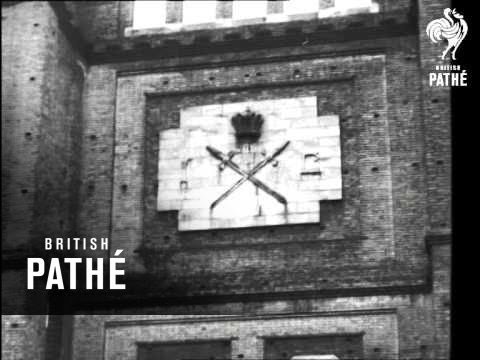
Even after the Jezreelites moved out, the Tower continued to attract local and national interest. It was one of several British tourist attractions included on a series of poster adverts for Shell petrol. It featured on BBC radio programmes, Pathé newsreels and – as we have seen – was a popular subject for postcards.
In 1913, this iconic part of the Medway skyline went up for sale at auction, but failed to meet the reserve price. Incredibly, given how hard the Medway towns were bombed during both world wars, Jezreel’s Tower survived unscathed. In 1920, Gillingham Town Council was offered the opportunity to buy it for £2,500 (around £140k today) but refused. The site was taken over by the Gillingham Cooperative Society shortly afterwards.
The Cooperative Society adapted the Canterbury Street buildings into a factory and shops. The interior of the Tower was turned into hard tennis courts, and there were rumours in the late 1950s that the Association of Kent Cricket Clubs might take it over as an indoor cricket school.
In 1959, the Cooperative Society decided to put the Tower up for sale. Before putting it on the market, they offered it to Gillingham Town Council for a nominal price so that it could be preserved, given its historical and local importance. The Council, despite being given a second chance to take over this remarkable building for a bargain price, turned them down. The Cooperative Society subsequently sold the Tower to a local businessman, who planned to demolish it completely. The wrecking crew moved onto site in 1960.
But Jezreel’s Tower wasn’t going down without a fight.
Jezreel’s Jinx
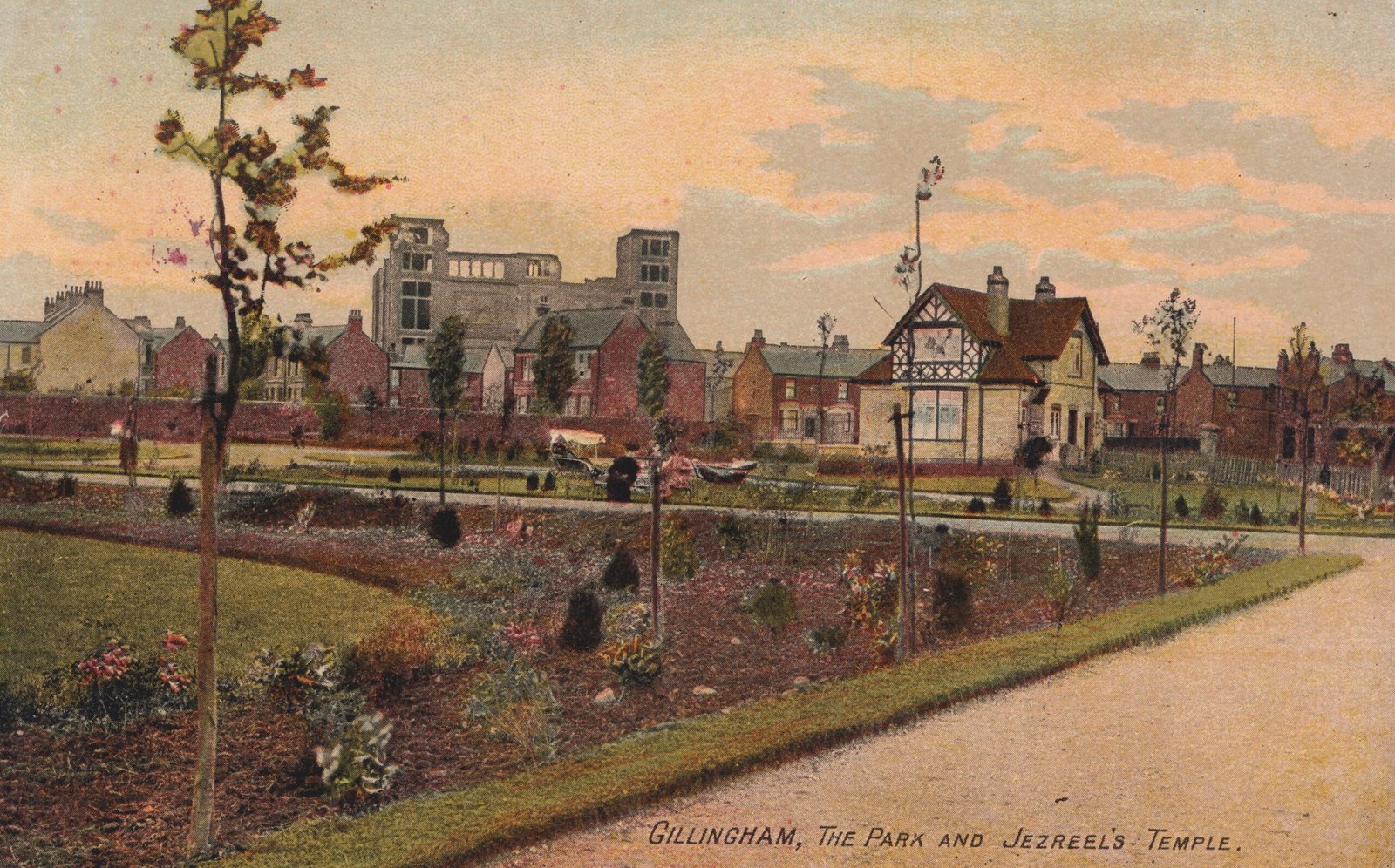
Now, seeing as Jezreel’s Tower was intended to withstand the end of the world and all the fire and brimstone that would bring, it’s not surprising it was “built like a fortress” in the words of one local builder. Jezreel had insisted on using materials that were as indestructible as possible, including concrete and steel. Building the Tower had been hard enough. Taking it down was going to be a task of biblical proportions.
A series of unfortunate events during demolition started talk of a curse, ‘Jezreel’s jinx’, that would befall anyone who tried to damage the Tower. At least two building firms went bust trying to demolish it. Houses in neighbouring Eva Road were damaged when a 50ft section of wall came down. Tragedy struck again when a young lorry driver, Harry Makepeace, was killed when tons of masonry collapsed without warning. He was just 23.
Several Gillingham residents had written to the local papers expressing their dismay at the loss of the Tower. I can understand their feelings. It may have been a big brute of a building, but the Tower was part of the Medway furniture, like Rochester Castle and the Pentagon Centre today.
Not everyone was sad to see the Tower go, however. One neighbour, Mrs Jessie Weller of Eva Road, was quoted in the Chatham Observer of 24 June 1960 as saying:
“I shall be glad when it’s gone, as we shall be able to get the air better, and see the sky!”
The Tower was eventually completely demolished in March 1961. According to P.G. Rogers, the demolition produced 6,000 tons of rubble, some of which was used as foundation for the new Medway bridge near Rochester.
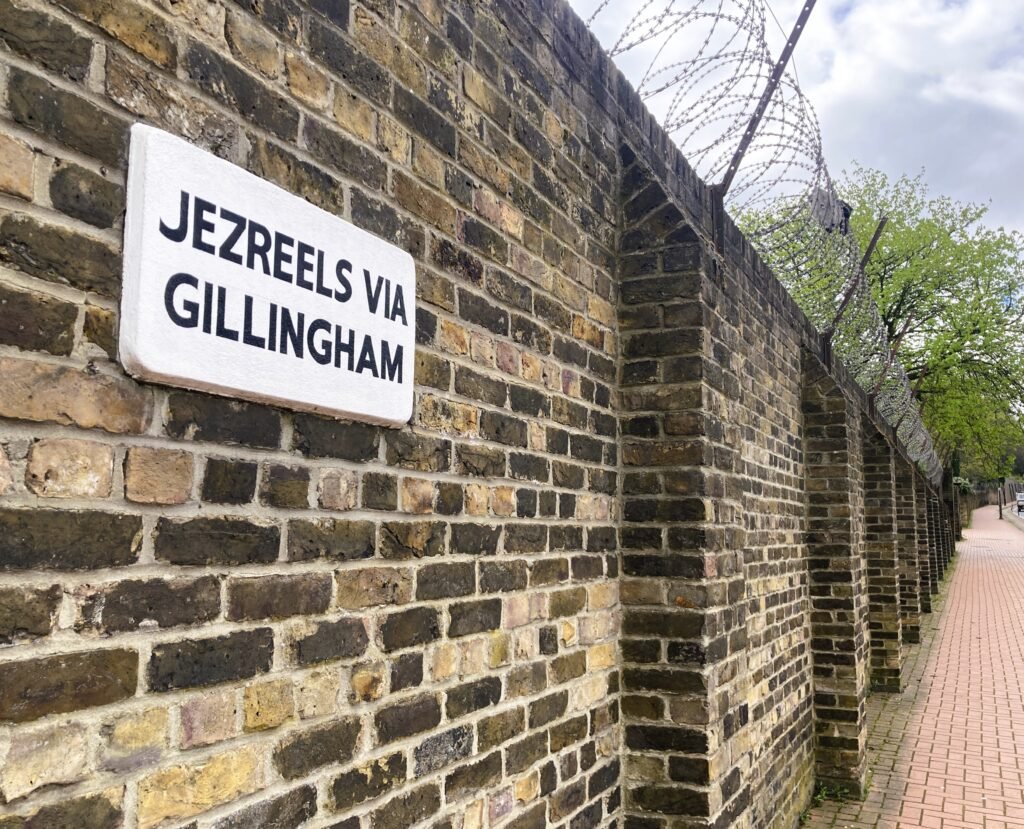
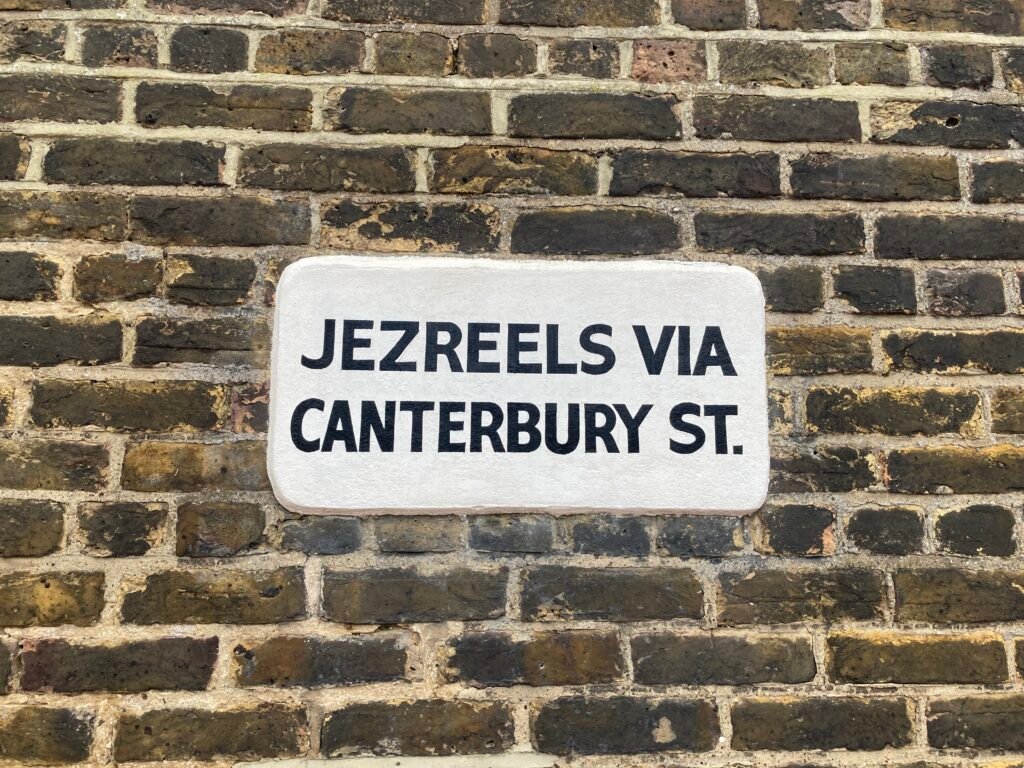
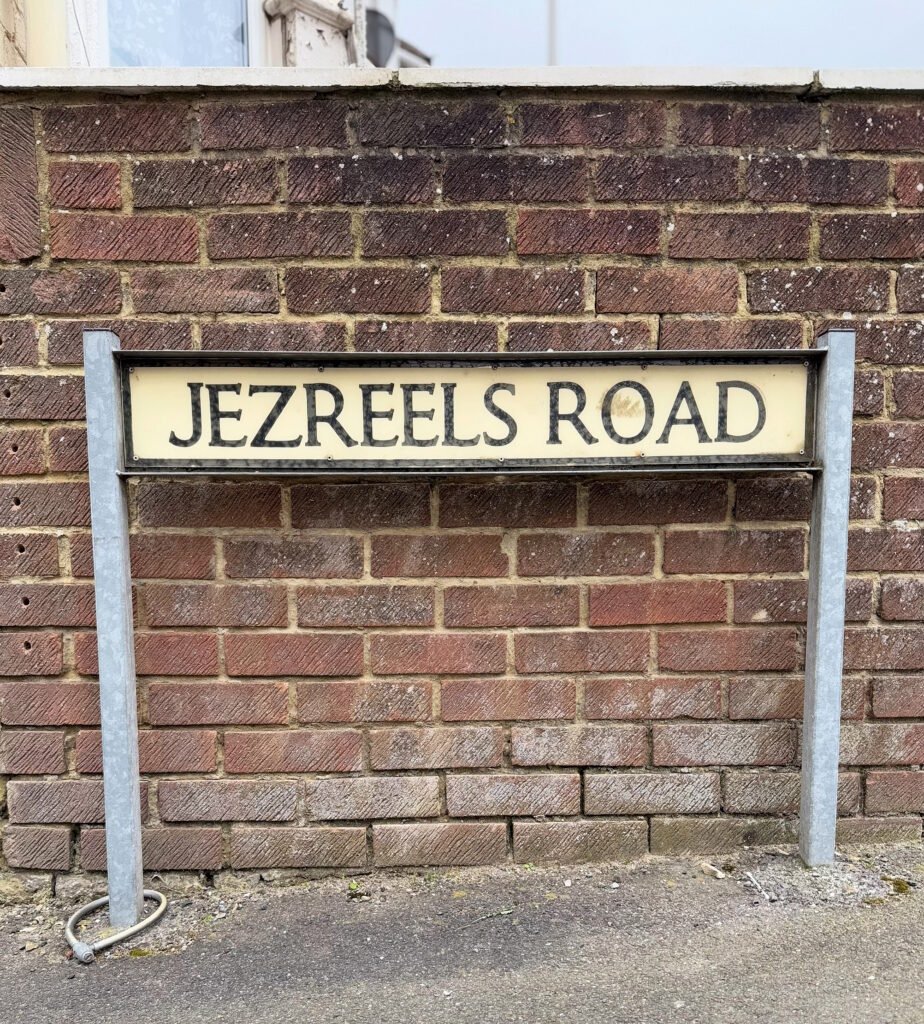
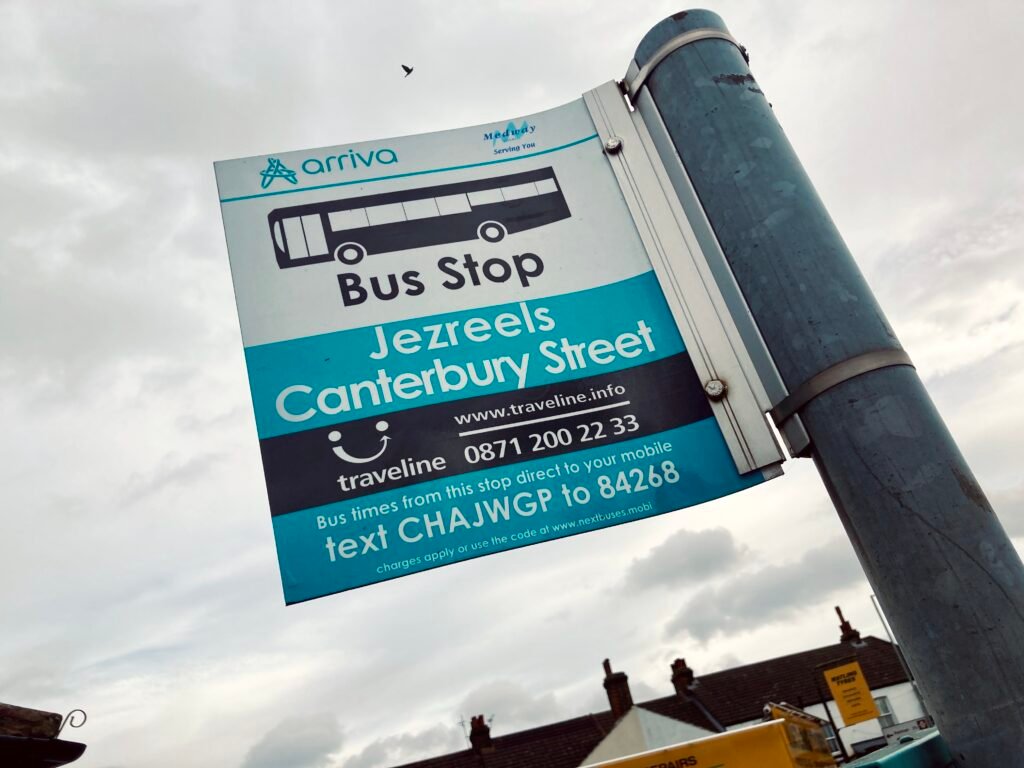
Although some remnants of the Canterbury Street buildings continued as shops until 2008, those have since been replaced by houses. Nowadays, if you visit the site where the Tower once loomed, there’s nothing left to see, and Jezreel’s only exists on local bus stops and street names. The Tower, and its history, has been completely obliterated.
Gillingham’s missing history
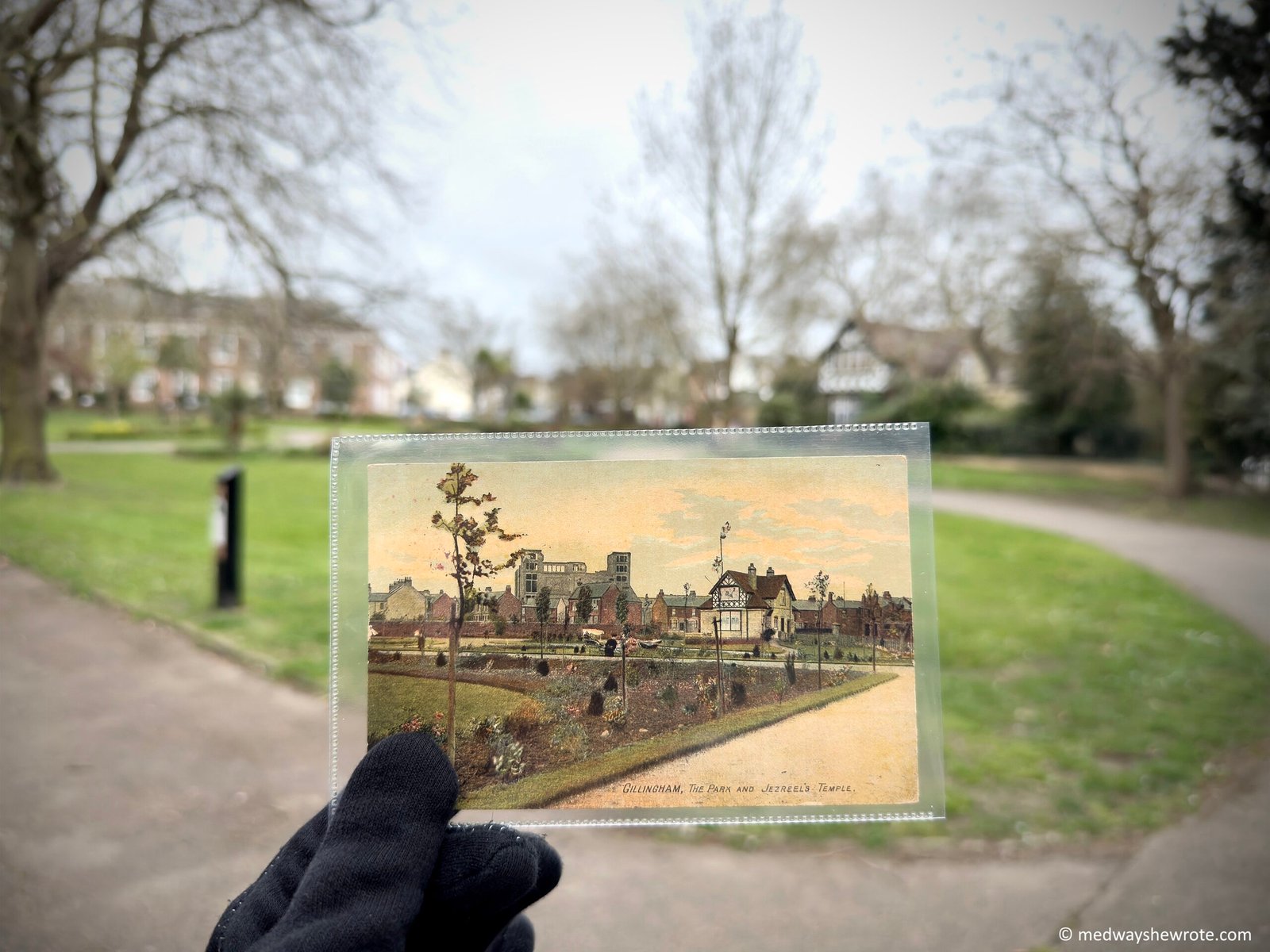
Every episode of Grand Designs ends with Kevin McCloud, standing in one of his trademark jackets, doing a piece to camera with his reflections on the building. Often this involves some reference to the integrity of the design.
I can’t speak about the architectural integrity of the Tower, or the personal integrity of James Jershom Jezreel. Whether you regard Jezreel as a charismatic leader and entrepreneur, or a wily rogue with delusions of grandeur who exploited people’s religious sensitivities, you cannot deny he had ambition. He left a monumental mark on the Medway landscape; Jezreel’s Tower.
Every good story needs a villain, and as far as I’m concerned, the villain of this story is Gillingham Town Council. It could have bought this magnificent building for a song, preserving its history for future generations. Instead, it let the opportunity slip through its fingers, not once, but twice.
Writing about the Town Council’s decision not to buy the Tower, P.G. Rogers says, “Future generations…will surely condemn the refusal.” Too right. Nowadays, a building like Jezreel’s Tower would be listed, or looked after by the National Trust or English Heritage. Or possibly bought by some greedy corporate developer and turned into flats or a hotel or something. I suppose Gillingham Town Council at least saved it from that fate.
But, apparently taking the approach of in for a penny, in for a pound when it comes to historical vandalism, Gillingham Town Council didn’t stop there.
It bought Woodlands House from Louis Brennan in 1912, which was used as Gillingham Museum until the Council closed it down in July 1956. The house was left to decay, and then demolished.
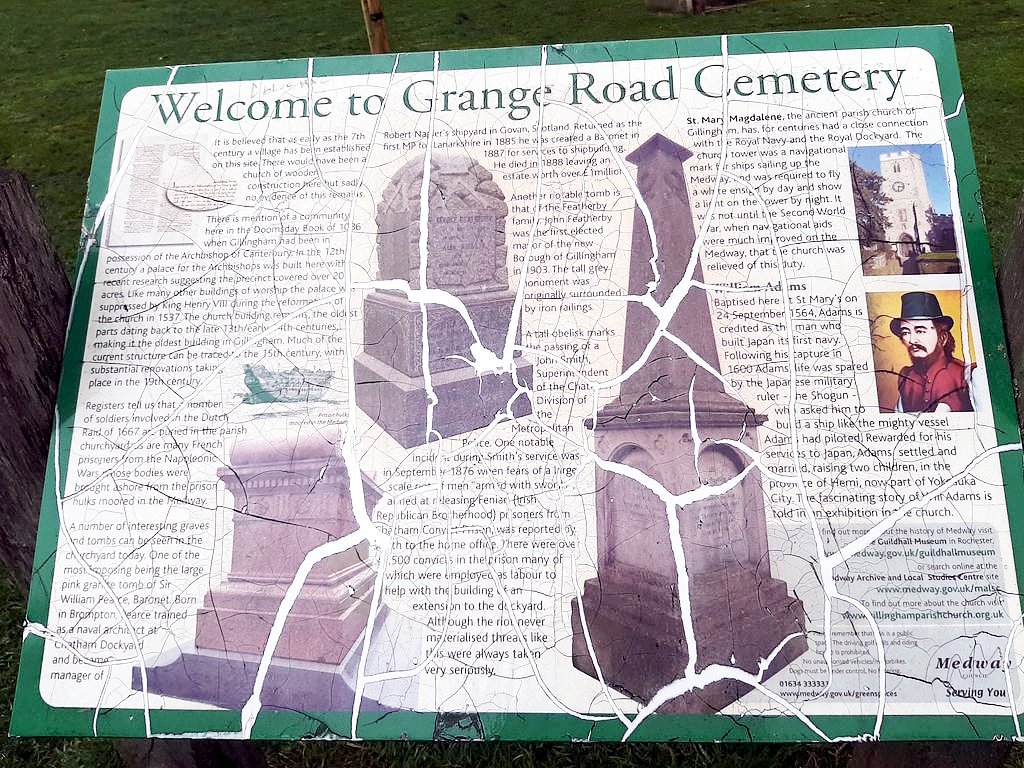
Jezreel and Queen Esther were buried in Grange Road cemetery. In the 1960s, Gillingham Town Council turned the cemetery into a park and got rid of most of the headstones. Those that remain have been relegated to a dank, gloomy corner of St Mary Magdalene’s churchyard or left to tumble down. A neglected information board gives some details about local historical figures buried there, but doesn’t mention Jezreel or Queen Esther. I think about them lying there forgotten every time I walk through the park to The Ship pub, probably trampling all over their graves.
So Jezreel’s Tower: bulldozed.
Woodlands House: flattened.
Grange Road cemetery headstones: gone (mostly).
I’m sure that Gillingham Town Council had its reasons for not saving Jezreel’s Tower. It was 1959, there were serious housing shortages, and modern high-rise buildings were all the rage. Perhaps Jezreel’s Tower was too much of a throwback to be worth saving. Plus it wasn’t exactly structurally sound and apparently the pigeons roosting there were a nightmare. But at the same time, it was a deliberate choice to consign an iconic piece of Medway’s history to the dustbin. Where’s the integrity in that?
And finally – over to P.G. Rogers
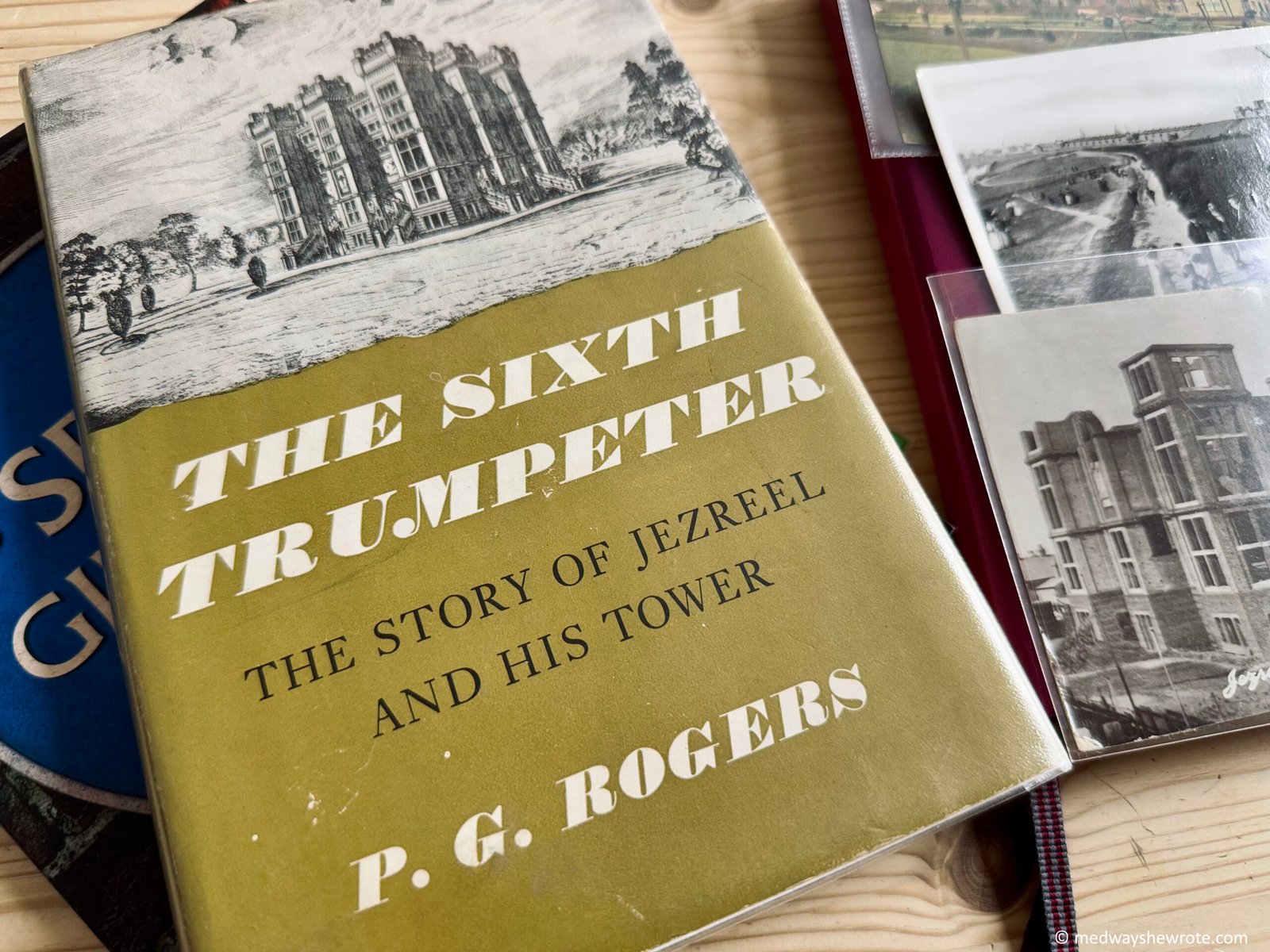
Can you miss somewhere you’ve never been in real life? I have only seen Jezreel’s Tower in pictures. I have no personal connections to the Jezreelites. But somehow I feel a sense of loss. I wish I could go and gaze upon that ‘wonderful pile’ as Percie described it in his postcard, thinking about the Jezreelites who were so intertwined with Gillingham, yet lived so separately.
Where Gillingham Town Council failed in protecting Jezreel’s Tower and the memory of the Jezreelites, P.G. Rogers succeeds spectacularly. His book, The Sixth Trumpeter, is a brilliant, pacey history of the Jezreelites, full of drama and cliff-hangers. A proper page turner. I cannot recommend it enough.
It’s thanks to Percie of Balmoral Road that I began researching Jezreel’s Tower, and thanks to P.G. Rogers that I was able to gather the history of it. Percie’s postcard started this story, so it’s only fair that we end with P.G. Rogers, to whom this blog owes a great deal. I leave you with his stirring words:
“Though, aesthetically-speaking, the tower was not an architectural masterpiece, it had, nevertheless, a certain grim, brooding majesty that was all its own. It was, also, in the truest sense of a much-abused word, unique. Gillingham had within its confines something of which there was no like anywhere else in the world. It was a picturesque memorial of a strange myth which had brought the town frequently into the news for three-quarters of a century…The familiar bulk of the tower, silhouetted against the skyline on the top of Chatham Hill, visible for miles, was a sight that always induced a nostalgic pang in the returning traveller; and it seemed impossible that it should ever disappear.”
But disappear, it did.
Thanks for reading! I’m fascinated by this part of Medway’s history and I’d love to hear your thoughts about it. Feel free to post in the comments, or drop me an email (medwayshewrote (at) gmail.com). If you enjoyed this post, you can subscribe to be notified of new ones using the subscribe button at the bottom of the page. You can also follow Medway, She Wrote on Instagram.
Further reading and listening (and pictures!):
- The Sixth Trumpeter by P.G. Rogers
- Secret Gillingham by Philip MacDougall
- Jezreel’s Tower, Gillingham, Kent (The Folly Flaneuse, 5 August 2022)
- Jezreels Temple, Gillingham (Inexpensive Progress, 24 January 2019)
- The Story of Jezreel’s Tower (History of Rainham, Kent)
- A Kentish Garland by Tundra (contains the song, ‘Jezreels’) (Spotify)
- Fullalove Alley by The Khybers (contains the song ‘Jezreel’s Tower) (Spotify)


Leave a Reply